World
Angola Positions Itself as a Key Trade Link Between Africa and Asia-Pacific
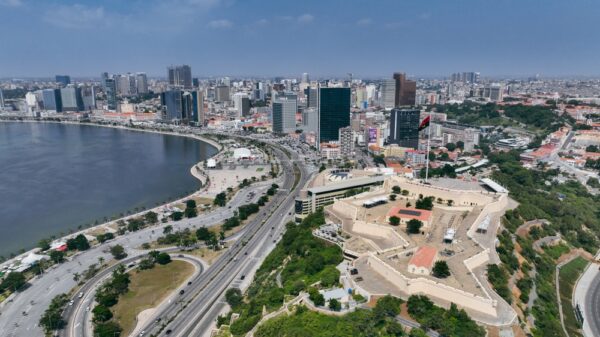
Angola's port city of Lobito is emerging as a major industrial hub, ranking as the country's second-largest port and serving as the starting point for the internationally backed Lobito Corridor. Over the past two decades, the city has grown steadily in strategic importance, connected by the Benguela Railway to mineral-rich regions of the Democratic Republic of the Congo and Zambia, from which cobalt and copper are transported for export.
Historically, Angola's economy relied heavily on oil exports from terminals and offshore reserves near Cabinda and Luanda. However, the collapse in global oil prices in 2014 triggered a severe economic downturn, prompting the country to pursue a more diversified economic model. This shift has positioned Angola to play a growing role in global trade, particularly as a supplier to Asia-Pacific markets.
Angola has also made significant progress in reducing its debt to China, lowering total borrowing from a peak of $45 billion in 2000 to about $12 billion today. The country has consistently repaid its loans without restructuring, often paying more than required, an approach often referred to as the 'Angola Model.' For loans not tied to oil revenue, Angola has sought alternative repayment arrangements to maintain fiscal stability. In March, it announced a debt-for-education swap with the World Bank's Multilateral Investment Guarantee Agency, converting debt repayments into funding for education programs across all 21 provinces, with a focus on increasing school attendance among girls. The $400 million agreement was finalized in late July, and disbursements to more than 30 schools have already begun, benefiting over 32,000 students.
The country has also gained new prominence internationally. The energy crisis in the Gulf region, which disrupted supplies to parts of Asia, created new opportunities for Angola. In January, President João Lourenço inaugurated a large aluminum plant in Bengo Province that produces 240 tons of ingots daily, helping offset a supply shortfall caused by disruptions at the Strait of Hormuz. Additionally, a $2 billion investment is underway to build an Ammonia-Urea complex powered by Angola's natural gas reserves, expected to begin producing about 4,000 tons of fertilizer per day when it opens in 2027.
Angola's trade relationships are expanding beyond traditional partners. Countries such as Australia, Vietnam, and Hong Kong are expected to increase imports from Angola, particularly in the oil sector, while also exploring broader economic cooperation. Vietnamese Prime Minister Lê Minh Hưng has called for stronger ties with Angola, especially given Angola's recent chairmanship of the African Union, and suggested Vietnam could serve as Angola's gateway to ASEAN markets. China remains Angola's second-largest African trading partner, largely due to oil exports, while South Korea has also expressed interest in deepening ties amid shifting global energy supply chains.
The Lobito Corridor is central to these developments, offering a potential link between Africa's mineral and energy resources and Asian manufacturing and technology sectors. A memorandum of understanding among the European Union, the United States, and the African Development Bank has already attracted investment interest, including from Asian partners.
President Lourenço has pushed for economic reforms to improve transparency, strengthen institutions, and encourage private investment. Angola's investment promotion agency has reportedly received hundreds of proposals spanning agriculture, logistics, manufacturing, and tourism. The Lobito Corridor is also expected to help resolve longstanding infrastructure bottlenecks that have hindered exports, particularly for minerals from Zambia and the DRC that are vital for battery storage, electronics, and low-carbon technologies.
While oil still contributes significantly to Angola's GDP, natural gas is increasingly viewed as a transitional energy source supporting industrial growth. The state energy company Sonangol is expanding refining capacity, including plans for a new plant near Lobito, aimed at reducing reliance on imported fuel and creating skilled jobs. Hydropower also plays a growing role in the country's energy mix, supported by existing dams and river systems that provide reliable electricity for industrial development.
Despite this progress, challenges remain. Diversifying an economy long dependent on oil, building strong institutions, and attracting sustained private investment will require continued effort and international cooperation. Analysts suggest that Angola's approach to debt management and infrastructure development, particularly through projects like the Lobito Corridor, could serve as a model for how emerging economies reshape their roles within global supply chains, especially in relation to the Asia-Pacific region.