Sports
Kane’s Ballon d’Or Win Highlights Ongoing Biases in Football’s Top Award
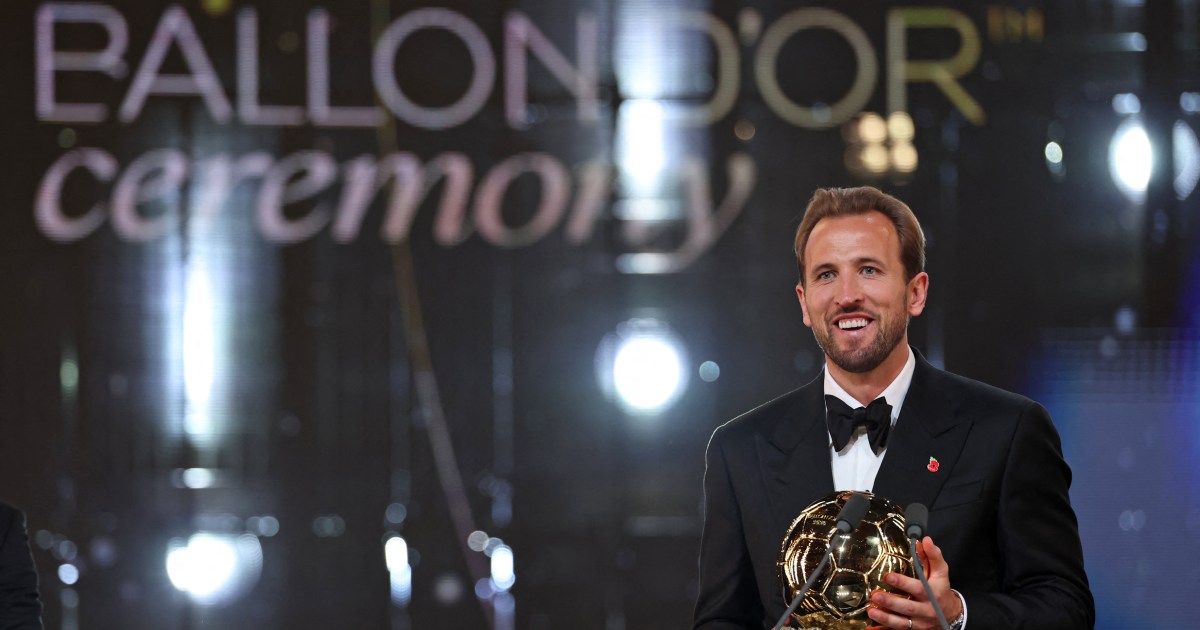
Bayern Munich striker Harry Kane became the first Englishman to win the Ballon d’Or since Michael Owen in 2001, but his victory also raises questions about how individual excellence is measured in a team sport. For much of the past two decades the award has been dominated by the rivalry between Lionel Messi and Cristiano Ronaldo, who together have won 13 of the 17 trophies awarded between 2008 and 2025. Messi holds a record eight wins, while Ronaldo has five.
The growing commercialisation of the Ballon d’Or has shifted its focus from pure sporting merit to the marketing power of individual players. Steve Martin, founding partner of MSQ Sport + Entertainment, told The Athletic that the award’s dynamic has changed because athletes now build their own brands and fanbases, independent of their clubs. Former Swiss defender Ramon Vega criticised the monetisation of the prize, arguing that it distracts from the question of what constitutes individual excellence.
The award has also historically favoured attacking players. Only one goalkeeper, Russia’s Lev Yashin (1963), and a handful of defenders—including Italy’s Fabio Cannavaro (2006), Germany’s Franz Beckenbauer and Matthias Sammer—have ever won. Cannavaro, after his 2006 win, said that goalkeepers and defenders deserve recognition when they deliver outstanding performances.
European dominance is another long‑standing issue. For nearly 40 years only European players were eligible. The restriction was lifted in 1995 to allow players of any nationality at European clubs, and in 2007 it was opened to players competing anywhere in the world. Despite this, only one non‑European, Liberia’s George Weah (1995), has won the award. Weah, who praised his hard work, expressed surprise that no other African player has won since.
Cameroon’s Samuel Eto’o, a former Barcelona and Inter striker who has won multiple Champions League titles, has also been criticised for never receiving the award. Jose Mourinho, who managed Eto’o at Inter, said in 2019 that Eto’o deserved a Ballon d’Or.
France Football, the award’s organiser, runs an international voting panel of journalists from 100 countries who select a winner from a shortlist of 30 players. However, geographical representation among voters does not guarantee recognition of talent outside Europe and South America.
The article argues that the Ballon d’Or should reflect excellence across all positions and continents, and that its commercial appeal should not override its original purpose of honouring footballing achievement.
The views expressed are the author’s own and do not necessarily reflect Al Jazeera’s editorial stance.