World
UNODC Highlights Rapid Evolution of Transnational Organized Crime at COP13
By Today News Hours Editorial Desk
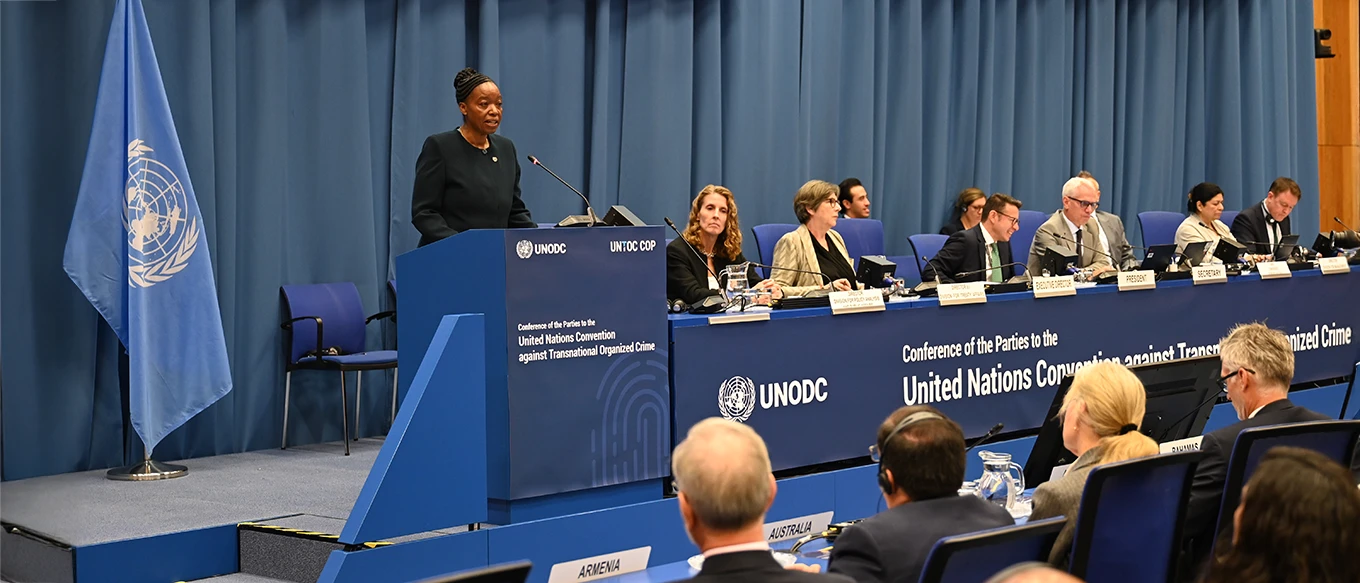
Vienna, 19 October 2026 – Monica Juma, Executive Director of the United Nations Office on Drugs and Crime (UNODC), spoke at the opening of the 13th Conference of Parties (COP13) of the United Nations Convention against Transnational Organized Crime (UNTOC). She warned that transnational organized crime is rapidly evolving, citing examples such as artificial intelligence used in large fraud schemes, 3D‑printed firearms, and the convergence of different crime types. "Organized crime is finding new ways to turn vulnerability into profit, leaving no region, no country, and no person untouched," Juma said.
Juma noted that while the drafters of the UNTOC in 2000 could not have foreseen these innovations, the treaty has provided 195 state parties with a shared framework to define and criminalise serious offences. It has helped bridge differences between national laws, reducing gaps that criminals can exploit. "Even the strongest compass cannot move us forward on its own. A treaty is only as effective as our willingness to put it into practice," she added.
The UNTOC Review Mechanism, which evaluates implementation, has completed ten reviews in the past year. Juma urged countries to build on this progress and to adapt the mechanism to the changing criminal landscape, emphasizing the need for greater efficiency, agility, and sustainability.
UNODC also produces research and assessments to help states understand evolving criminal markets, emerging vulnerabilities, and the intersection of illicit activities. The organization supports countries in translating this knowledge into action through joint operations and law‑enforcement capacity building.
During COP13, where more than 2,000 participants from over 130 countries will gather, Juma encouraged participants to "carry forward the spirit and vision that gave birth to the UNTOC for a world where criminals cannot hide from the law, where justice can travel across jurisdictions, and where humanity is safer from crime and exploitation."