World
Qatar Urges Stronger Global Cooperation to Tackle Complex Organized Crime
By QNA
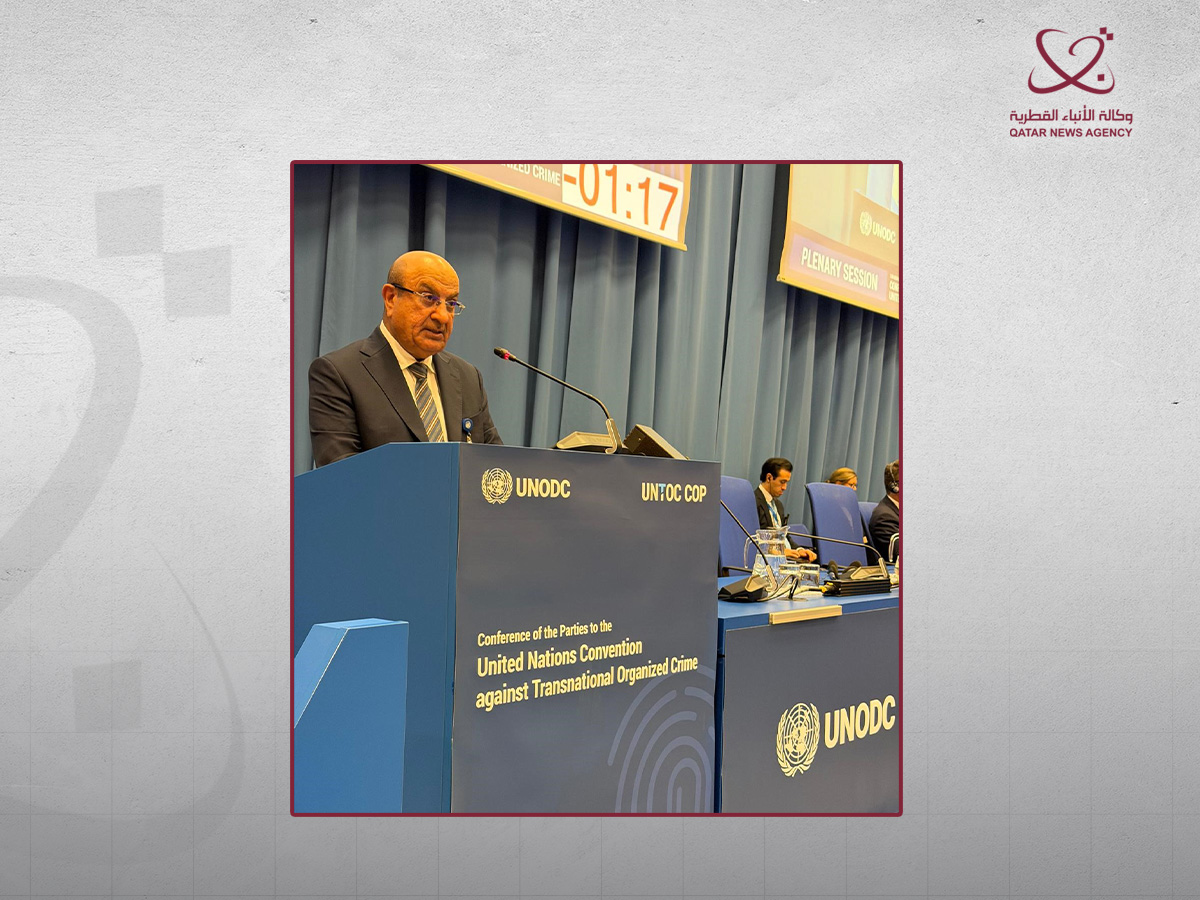
Vienna, October 20 – Qatar’s delegation, led by Dr. Abdullah Al Mal, called for enhanced international cooperation and multilateralism to address the growing complexity of transactional organized crime, which is increasingly linked to corruption, drugs, money laundering and terrorism. Speaking at the 13th session of the Conference of the Parties to the United Nations Convention against Transnational Organized Crime (UNTOC) in Vienna, the head of Qatar’s delegation highlighted that the transnational nature and organization of crime, and its connections to other criminal activities, pose a major threat to national and collective security, undermine sustainable development and the rule of law, and endanger state security.
Dr. Al Mal stressed that coordinated responses, stronger multilateral cooperation and the proper implementation of international conventions—especially the UNTOC—are essential. He noted progress made through international cooperation in implementing the convention and its protocols since the previous session, and cited reports from the UN Office on Drugs and Crime (UNODC) presented at the current session.
Qatar was among the first countries to ratify the UN Convention against Cybercrime and urged other states to sign and ratify the treaty to accelerate its entry into force and strengthen collective capacity to combat cybercrime. The delegation also highlighted growing international awareness over the past two years of risks posed by crimes affecting the environment and illicit trafficking of cultural property, underscoring the importance of international conferences in strengthening cooperation.
The delegation noted Qatar’s accession to the Convention and its Protocol to Prevent, Suppress and Punish Trafficking in Persons, and its subsequent joining of the Protocols against the Smuggling of Migrants and the Illicit Manufacturing of and Trafficking in Firearms in March 2026. At the national level, Qatar has consolidated its position among the world’s safest and most stable countries through a comprehensive approach to crime prevention that combines preventive measures, enhanced training and capacity‑building for law‑enforcement institutions, greater community participation, and efforts to strengthen public trust, social cohesion, and citizenship values.
Qatar’s longstanding partnership with the UNODC was reaffirmed. The country hosted the 13th United Nations Congress on Crime Prevention and Criminal Justice in 2015, which adopted the Doha Declaration, and subsequently entered into an agreement with UNODC to implement a global program translating the Declaration’s commitments into practical measures and projects. Qatar also cooperated with UNODC in establishing the Regional Center for Combating Cybercrime in Doha, inaugurated in 2023, which provides capacity‑building, training, research and innovation services to countries in the region and the developing world.
Qatar remains committed to supporting UNODC and its activities, having been among the first countries to support the United Nations Voluntary Trust Fund for Victims of Trafficking in Persons. Dr. Al Mal affirmed Qatar’s readiness to continue working closely with the Office under its new leadership, particularly in capacity‑building and technical assistance for developing and least‑developed countries.
The delegation concluded by emphasizing that enabling UNODC to continue providing technical assistance and strengthening member‑state capacities requires adequate financial and administrative resources, and that investing in crime prevention is an investment in future generations, peace and the well-being of all.