Business & Finance
Eagle Hills to Launch Residential and Tourism Projects in Damascus and Latakia
By Ahmad Fallaha, Fareed Rahman
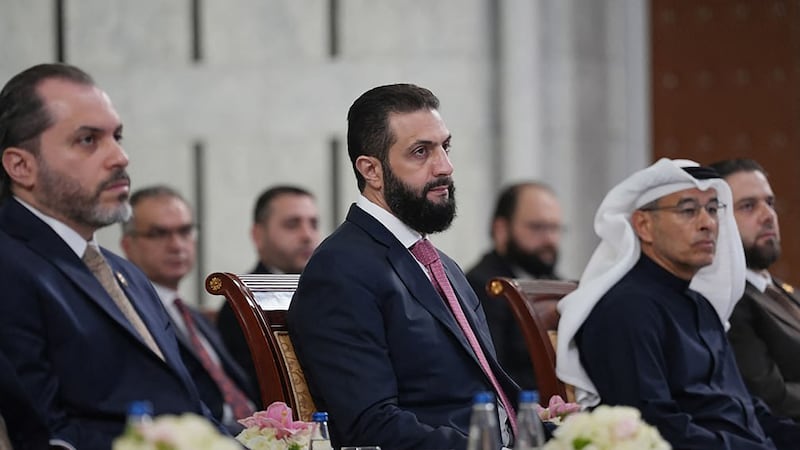
Abu Dhabi‑based Eagle Hills is moving forward with two major projects in Syria, a residential and tourism development, under a framework agreement signed with the Syrian government. The total investment for the projects in Damascus and Latakia has not been disclosed, but the Arab News Agency reported that they will create more than 40,000 jobs. The agreement was signed on Monday at the People’s Palace in Damascus in the presence of President Ahmad Al Shara, Eagle Hills, and Syria’s ministries of Public Works, Housing and Tourism. It covers the Tadamun Towers development in Damascus and the Eco Life tourism project in Latakia. The developments will combine housing, services and employment opportunities and will involve Syrian companies and skilled professionals, said Mohamed Alabbar, founder and chairman of Eagle Hills, at the signing ceremony. “We hope these projects will become communities where people can find suitable homes, good services, job opportunities and a decent life,” he said. He also urged Syrians inside and outside the country to invest in Syria and participate in its reconstruction, stressing that domestic expertise would be important to the projects. Alabbar has previously said he is looking to invest as much as $18 billion in Syria, with projects worth between $5 billion and $7 billion on the Syrian coast and up to $11 billion in Damascus and its surroundings. Demand for housing remains strong in Syria as the country focuses on rebuilding its economy and attracting more investment. Syria aims to build or rehabilitate two million homes by 2035 to address housing shortages. The country plans to fund projects through a mix of government investment, private capital, new partnerships and foreign investment. It is expected to provide land owned by the General Housing Establishment while private investors will develop projects and infrastructure to increase housing supply. More than 1.7 million Syrians are estimated to have returned to Syria between December 2024 and April 2026 following the overthrow of Bashar Al Assad’s regime nearly two years ago, according to the United Nations refugee agency, UNHCR. UAE‑based Arada also plans to build a $7 billion “UAE‑style” mixed‑use real estate project in Syria over 10 years. The new project in the west of Damascus will have 11,000 homes, including residential apartments, villas and town houses, branded residences, 500 hotel rooms and 1,000 serviced apartments. Two schools, a hospital, offices and retail units will also be built as part of the development. There is strong demand for “good‑quality homes” in Syria, driven by residents and foreign citizens living abroad, said Ahmed Alkhoshaibi, group chief executive of Arada, to The National. “You have the local current demand, which is very strong for good communities. And you also have Syrians living outside, who want to invest, or have a home or holiday home in the country. So that demand will continue to grow,” he said.
Frequently asked questions
What projects are included in Eagle Hills' framework agreement with the Syrian government?
The agreement covers the Tadamun Towers residential development in Damascus and the Eco Life tourism project in Latakia.
How many jobs are expected to be created by the Eagle Hills projects in Syria?
The projects are expected to create more than 40,000 jobs.
When and where was the framework agreement signed?
The agreement was signed on Monday at the People’s Palace in Damascus.