World
Indonesia's Wealthiest Families Shift Investments Abroad Amid Political Tensions with Prabowo Government
By 이수민
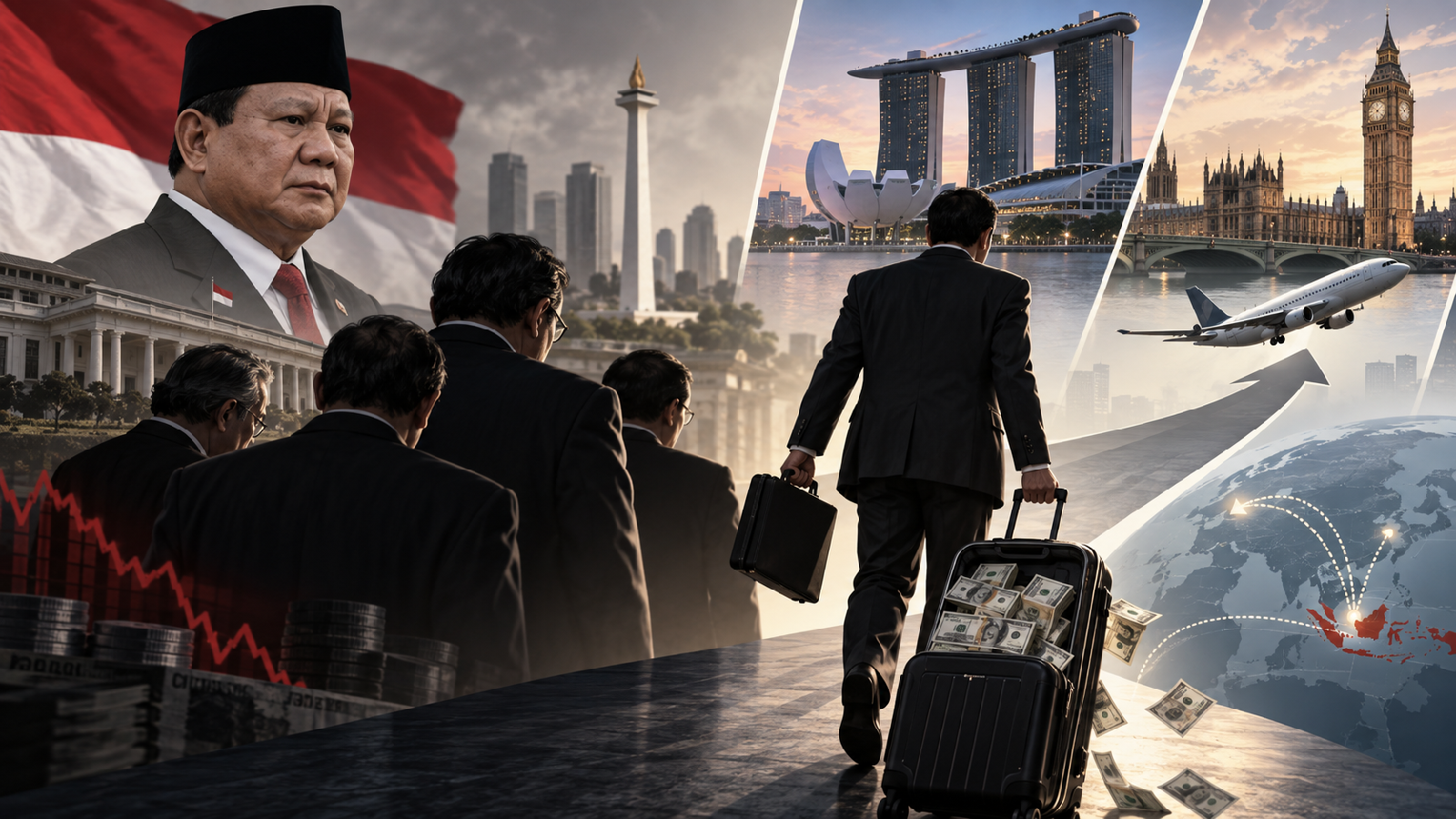
The Hartono family, Indonesia's richest family with an estimated net worth of $30 billion (about 40 trillion won), has poured nearly 2 trillion won into overseas investments, marking a significant departure from its traditionally domestic-focused business strategy. Industry observers say the move reflects growing unease among Indonesian business leaders since President Prabowo Subianto took office.
According to a Bloomberg report published on the 7th, the Hartono family has invested at least $1.4 billion (approximately 1.87 trillion won) abroad through roughly nine subsidiaries based in Singapore and London. The family's assets—spanning banking, tobacco, and real estate—had historically been concentrated within Indonesia, making this overseas push notable.
The family's international expansion accelerated in late 2023, when Singapore-based Evergreen Hill Enterprise acquired a U.S. specialty paper business for $669 million. The following year, the same entity purchased an Austrian tobacco paper manufacturer for 360 million euros (about 560.2 billion won). Corporate disclosures in Singapore and Indonesia identify PT Eragraha Pirantime, wholly owned by the Hartono family, as the sole owner of Evergreen Hill.
The Hartono family, built up under the late Michael Bambang Hartono and his younger brother Robert Budi Hartono, holds core assets including tobacco company Jarum and Bank Central Asia (BCA), Indonesia's largest private bank. The family has also diversified into electric vehicle distribution, dairy farming, and restaurants. Unlike other Indonesian tycoons—such as Sukanto Tanoto, Prajogo Pangestu, Low Tuck Kwong, and the Salim family—who have long held assets in Singapore and Hong Kong, the Hartonos had previously kept most of their wealth domestic.
Sources indicate the family continues to expand overseas holdings, including investments in Singapore-based financial software firms, and is reportedly considering further acquisitions. One unnamed source described the strategy as an effort to diversify revenue streams into other currencies, citing instability in Indonesia's economic environment and excessive domestic concentration as risk factors.
Bloomberg attributes the shift to political and economic uncertainty since President Prabowo took power. Laura Schwartz, senior Asia analyst at risk consultancy Verisk Maplecroft, noted that increased government intervention in the economy has heightened uncertainty across major industries, with inconsistent treatment of business leaders further unsettling investors.
Capital outflows from Indonesia have continued since Prabowo's inauguration in October 2024. The rupiah has hit record lows this year, and foreign investors have net-sold approximately $4 billion in Indonesian equities—about four times last year's net sales. Major foreign banks have withdrawn $640 million in capital from the country since Prabowo took office.
Investor confidence has also been shaken by frequent leadership changes at key economic institutions, including the abrupt removal of Finance Minister Sri Mulyani Indrawati and the recent resignation of central bank governor Perry Warjiyo. Concerns have grown over the government's expanding economic influence following the creation of Danantara, a sovereign wealth fund led by Prabowo that has absorbed most state-owned enterprises, raising fears of excessive state control over financial services and raw materials sectors.
Tensions between the Hartono family and the Prabowo administration reportedly contributed to the overseas investment push. The government has pressured wealthy families to purchase low-interest