World
Israeli Outposts Fuel Rising Violence and Land Seizures in West Bank
By Leila Warah
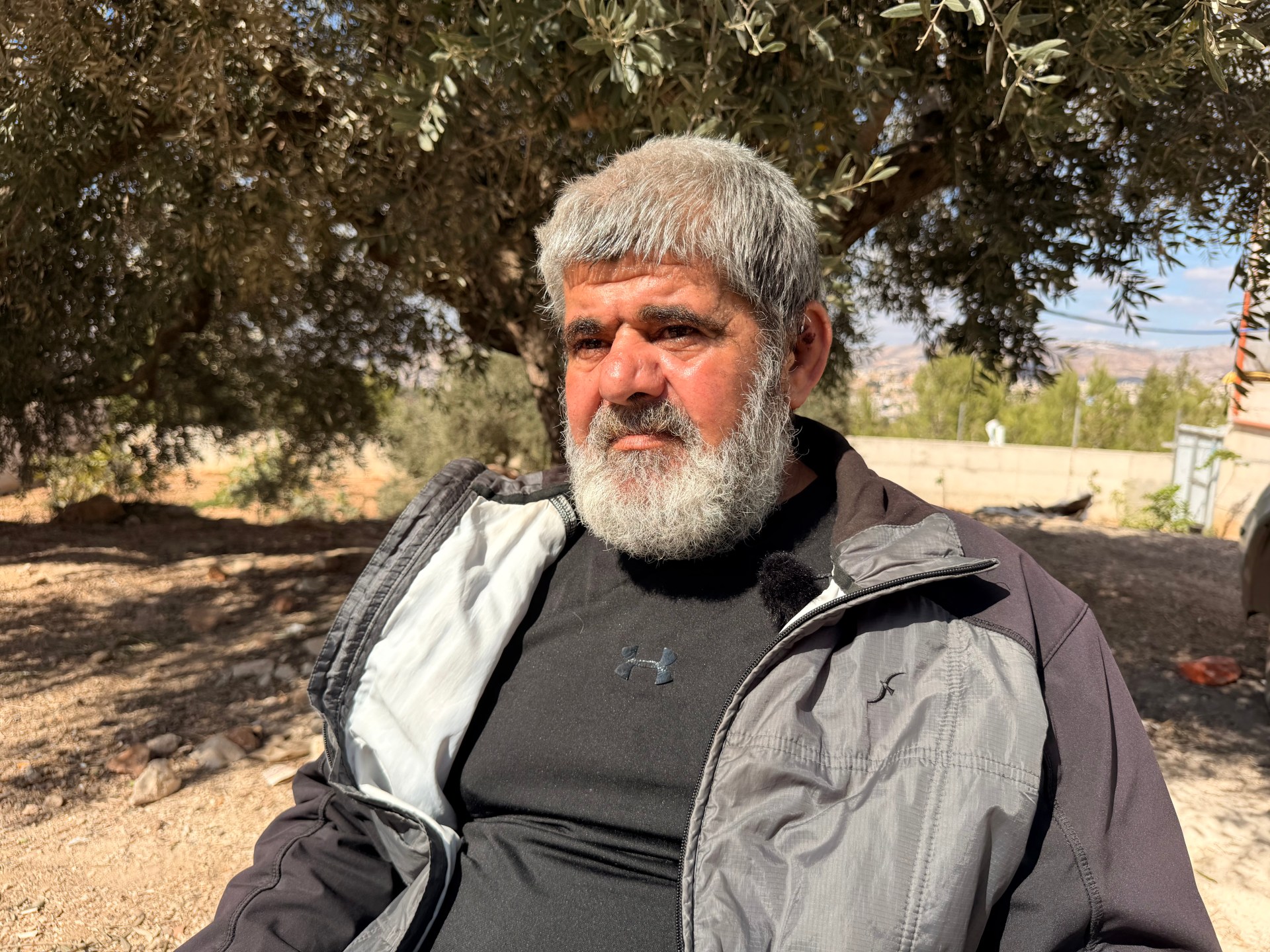
In Beita, a Palestinian village southeast of Nablus, the traditional olive‑harvest season has been disrupted by violent attacks from Israeli settlers. On October 14, Musa Bani Shamsa and his 17‑year‑old son were surrounded by masked men who carried pistols, knives, pipes, sticks and a hammer. Shamsa, who showed bruises and stab wounds, said the attackers beat him and his son for about 20 minutes until they were left on the ground. He and his son later lost consciousness. The attackers came from an Israeli outpost on the adjacent hill. Three days after the assault, Shamsa’s son was still unable to speak.
Settler violence has increased sharply across the occupied West Bank. Since September 1, the United Nations Office for the Coordination of Humanitarian Affairs recorded more than 200 attacks on Palestinian farmers, exceeding the total number of similar assaults for the entire season last year. Shamsa reports that farmers have adapted by harvesting earlier, blocking roads with stones, and watching from rooftops. When settlers approach, families flee, but the precautions offer little protection.
The expansion of Israeli settlements is driven largely by outposts, which often start as a flag, a tent or a livestock pen on Palestinian land. These outposts are illegal under international law and under Israeli law until approved by the government, yet many receive state support before formal recognition. In 2024, settlers established 62 new outposts, backed by 75 million shekels ($20 million) in government funding. The government has also channelled at least 100 million shekels ($30 million) to outposts and farms for security equipment and infrastructure, according to the Israeli NGO Peace Now. In March, Israel’s security cabinet approved 34 new settlements, including 10 existing outposts, and provided water and electricity infrastructure before final planning approval.
In Beita, the Evyatar outpost, first established in 2013, was authorised as a settlement in 2024. Since then, three smaller outposts have emerged around it. Rabee al‑Sharafa, a Beita resident, said settlers initially draw power from lines near the village before infrastructure is formally extended to them. He described the settlers’ policy as a “policy of slow surrender,” noting that in March, 10 masked men armed with sticks, machetes and axes attacked a family and threatened to kill its members if they did not leave. The family fled. Another home was emptied in June, and since early October, settlers have targeted a third, cutting off its electricity and water.
Palestinians report that they have no protection or recourse. The Israeli army protects settlers, and Palestinians rarely obtain justice through the legal system. When residents try to defend their homes, settlers “immediately bring the army against you,” al‑Sharafa said. The law is also used to seize land. Israel applies Ottoman, British and Jordanian laws alongside its own military orders to declare areas “state land” or to expropriate land for “public purposes.” Tafakji, a cartographer and expert on borders and settlements, said many settlements have been established on land claimed as state land.
Shamsa fears that if violence forces farmers to abandon their olive groves, Israel could eventually claim them as state property. He kept a tent on his land for about six years, but settlers demolished it. He said that if he abandons the land for a few years, settlers could cut down the trees and use that to claim the land belongs to the state.
Criminal complaints rarely lead anywhere. Of the police investigations into settler violence monitored by the Israeli rights group Yesh Din from 2005 to 2023, 94 percent were closed without an indictment. Shamsa asked, “Who are we supposed to complain to? Complain to the one oppressing you?”
Frequently asked questions
How many new outposts were established in 2024?
62 new outposts were established in 2024.
How much government funding was allocated to outposts in 2024?
75 million shekels ($20 million) were allocated to outposts in 2024.
What percentage of police investigations into settler violence were closed without indictment?
94 percent of police investigations were closed without indictment.