Politics
Youth‑Led Protests Undermine Macron’s Centrist Base Ahead of 2027 Election
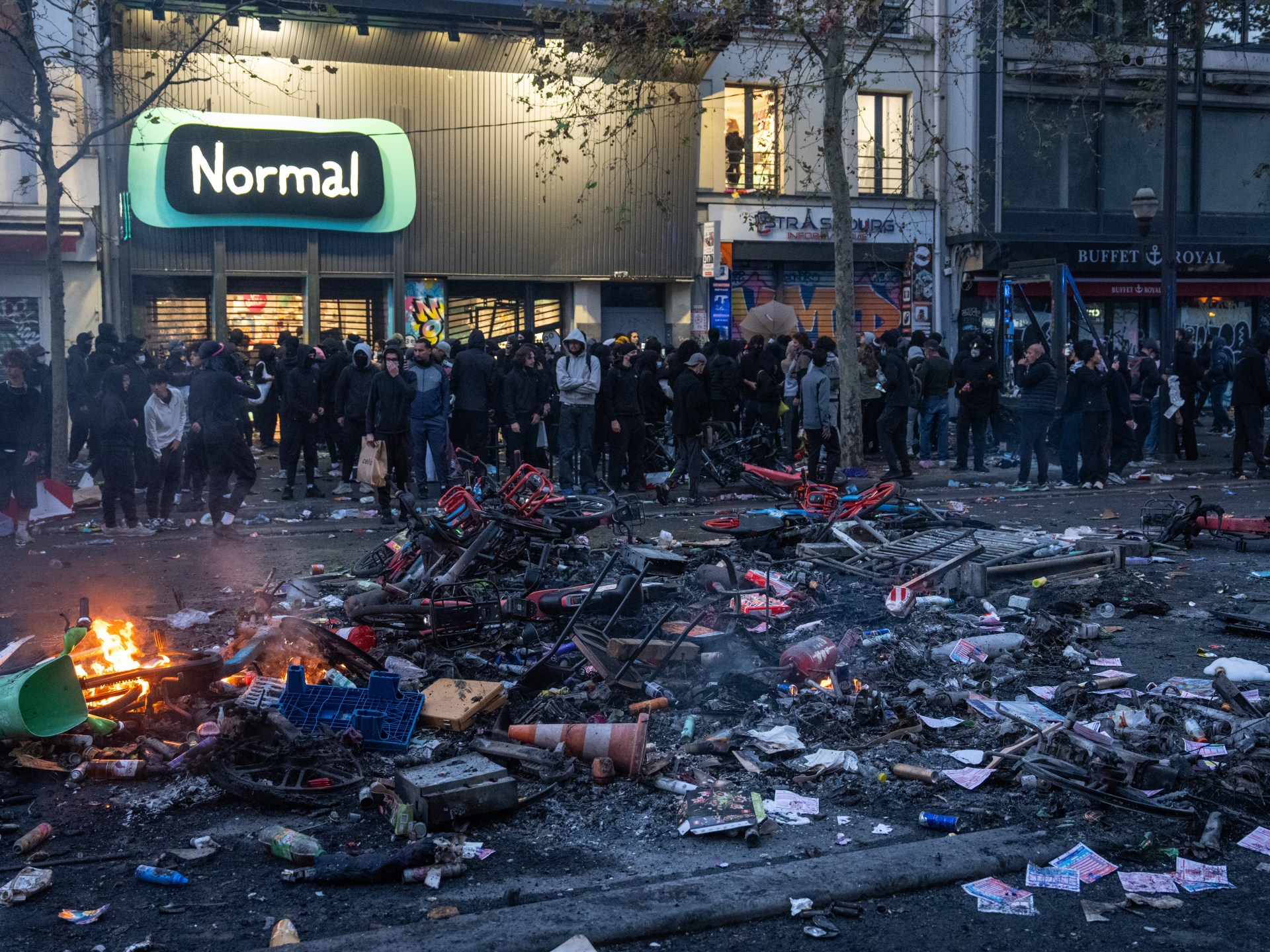
After violent nationwide protests, President Emmanuel Macron addressed the nation on Sunday night, calling for accountability from those who destroyed property or looted and warning that those who sought to undermine the republic would be held responsible. He also criticised rioters while acknowledging student demands for education reform. A 20‑year‑old student from Ivry‑sur‑Seine, Yanis, said Macron’s speech was “usual ‘bla bla bla’ without concrete proposals” and that protests would continue each weekend.
The unrest, which erupted in mid‑September, has sharpened political divisions ahead of France’s 2027 presidential election. The populist‑left leader Jean‑Luc Mélenchon has embraced the student movement, while far‑right Marine Le Pen has framed the disorder as a crisis of security. Centrist Prime Minister Sébastien Lecornu has accused the extreme left of inciting violence as a “warm‑up round” for the election.
Polling indicates that both the far left and far right could play a central role, but there is little consensus on the nature of the change demanded by the public. Macron, who has served two terms, will be constitutionally barred from running again.
Political analyst Beligh Nabli, a professor of public law at UPEC‑Paris XII, said candidates must address young people with a substantive message. Since the protests began, students have demanded better schools, more teachers and a more equitable system. The movement has expanded beyond schoolyards, tapping into broader social and economic anxieties.
Mélenchon’s party, La France Insoumise (LFI), has strongly supported the student movement, and an OpinionWay poll for Les Echos found that 49 percent of voters aged 18‑24 back him—a 10‑point increase from 2022. Some young protesters view LFI as a counter to both the far right and the centre. Lydia, a 21‑year‑old student at the Ecole du Louvre, said she would vote for LFI to oppose the National Rally and Macron’s policies, but she is not convinced the party would solve France’s problems.
Le Pen and the National Rally have used the unrest to highlight law‑and‑order issues, accusing the government of failing to control the country and Mélenchon of stoking violence. Le Pen remains the leading contender in the presidential race with 32 percent of the vote and is second among voters aged 18‑24, behind LFI.
The centrist bloc faces a difficult task. Macron’s presidency began amid the Yellow Vest protests and is now ending amid another wave of social unrest. The government’s 2023 deficit was 5.1 percent of GDP, higher than the EU average of 3.1 percent. Future presidents will need to address fiscal constraints while avoiding further public anger.
Macron’s popularity stands at 15 percent, the lowest ever. In his Sunday speech, he blamed “insurrectionists from fringe far‑left groups, joined by numerous criminals” for the violence, offered no specific policy measures for students, and tasked Lecornu with bringing together students, teachers, unions and elected officials to develop proposals in the coming days, while promising a tougher response to violence.
The unrest presents an opportunity for opponents to argue that Macron’s presidency has failed to address deep‑rooted inequalities. The support of a generation of young people who feel let down by the state and increasingly disconnected from the political establishment is now at stake, and all sides of the political spectrum are poised to woo them in the months leading up to the election.
Frequently asked questions
What was Macron’s response to the student protests?
Macron addressed the nation, called for accountability, criticized rioters, acknowledged student demands for education reform, blamed far‑left groups and criminals, offered no specific policy measures, tasked Prime Minister Lecornu to bring students, teachers, unions and elected officials together, and promised a tougher response to violence.
How have the protests affected support for political parties among young voters?
An OpinionWay poll found 49% of voters aged 18‑24 back LFI, a 10‑point increase from 2022; LFI is second among 18‑24 voters behind Marine Le Pen, who remains the leading contender with 32% overall.