World
Israel Holds Sixth Election in Seven Years as Netanyahu Seeks Another Term
By Mohammed Haddad, Hanna Duggal
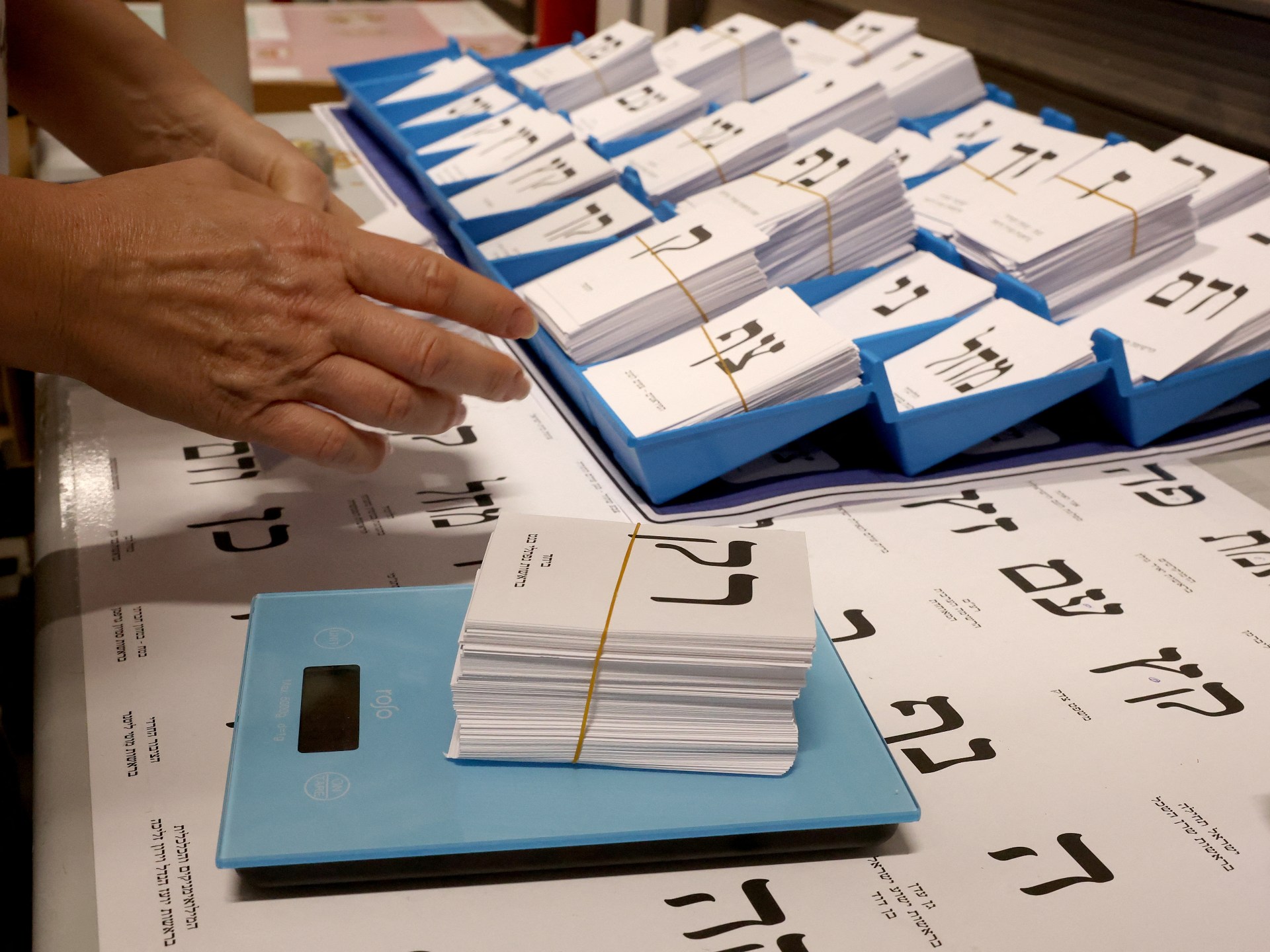
Israel will hold its sixth national election since 2019 on October 27 to elect the 26th Knesset. The vote follows a series of political deadlocks that have left the country without a stable government for years. Benjamin Netanyahu, the longest‑serving prime minister in Israeli history, is running again while on trial for corruption charges he denies. His Likud‑led far‑right coalition faces a Jewish‑led opposition bloc that includes Yesh Atid, Blue and White, United Torah Judaism, Yisrael Beiteinu, Hadash‑Taal, Ra’am and Labor. No party has ever secured an outright majority of the 120 seats; the winner must form a coalition that reaches 61 seats within 28 days, with a possible 14‑day extension.
The electorate consists of about 7.3 million Israeli citizens aged 18 and over. Polling stations open from 7 a.m. to 10 p.m.; voters still queued when the doors close may cast their ballots. Election day is a national holiday. Parties that receive at least 3.25 % of the national vote gain seats proportionally; smaller parties that fail to reach the threshold are excluded, prompting frequent pre‑election mergers.
Voting is for parties, not individual candidates. The Knesset sits for a four‑year term and there are no term limits for the prime minister.
The electorate also includes about 1.2 million Palestinian citizens of Israel and more than 750,000 settlers in the occupied West Bank and East Jerusalem, all of whom can vote. Roughly three million adult Palestinians in Gaza, the occupied West Bank and East Jerusalem have no vote in the government that controls their borders, movement and legal status. Most Palestinians in occupied East Jerusalem hold Israeli residency, allowing them to vote for the city council but not for the Knesset.
Israeli citizens abroad generally cannot vote because Israel does not offer a general absentee ballot; only diplomats and state emissaries may vote at Israeli missions on October 20.
Key issues for voters include the unresolved security failures of October 7, 2023, the debate over ultra‑Orthodox draft exemptions, Netanyahu’s judicial reform agenda, the ongoing war and security situation in Gaza, the West Bank and Lebanon, and the high cost of living amid a defence budget that has doubled since 2023.
The outgoing government, dissolved in July, had 60 seats: Likud 32, Shas 11, Religious Zionism 7, Otzma Yehudit 6 and New Hope 4. Shas left the coalition in July 2025 but remained in the coalition; New Hope will merge into Likud for this election. The opposition held 59 seats: Yesh Atid 24, Blue and White 8, United Torah Judaism 7, Yisrael Beiteinu 6, Hadash‑Taal 5, Ra’am 5 and Labor 4. Noam had one seat as an unaffiliated member.
Netanyahu’s main challenger is former army chief Gadi Eisenkot, whose new Yashar party is polling evenly with Likud. The opposition alliance includes the Together list (led by former prime ministers Naftali Bennett and Yair Lapid), Yisrael Beiteinu, and the Democrats. Far‑right ministers Itamar Ben‑Gvir and Bezalel Smotrich, ultra‑Orthodox parties, and Arab‑majority lists Ra’am and the Joint List also play significant roles.
Last month the Central Elections Committee barred Ra’am and the Joint List from the election, but the Supreme Court overturned the bans on October 2, ruling the evidence did not meet the legal threshold. Sami Abu Shehadeh, a Palestinian citizen of Israel who leads Balad in the Joint List, withdrew after the court signalled that most judges would uphold his disqualification. Arab‑led parties could hold the balance of power, but most Jewish‑led opposition leaders have ruled out joining forces with them.
This election is the first in 38 years to conclude a full Knesset term. Since 2019 Israel has held six elections, each ending in a coalition stalemate. Netanyahu’s 19‑year tenure, spread over three periods (1996‑1999, 2009‑2021, 2022‑present), makes him the country’s longest‑serving prime minister, surpassed only by David Ben‑Gurion. Regardless of the outcome, Netanyahu will remain caretaker prime minister until a new government is sworn in.
Frequently asked questions
When is Israel's next election scheduled?
October 27.
What vote percentage threshold must parties meet to enter the Knesset?
3.25% of the national vote.
Who is Netanyahu's main challenger in this election?
Former army chief Gadi Eisenkot, leader of the Yashar party.