World
Cuba’s Revolution Faces Possible End Amid U.S. Pressure
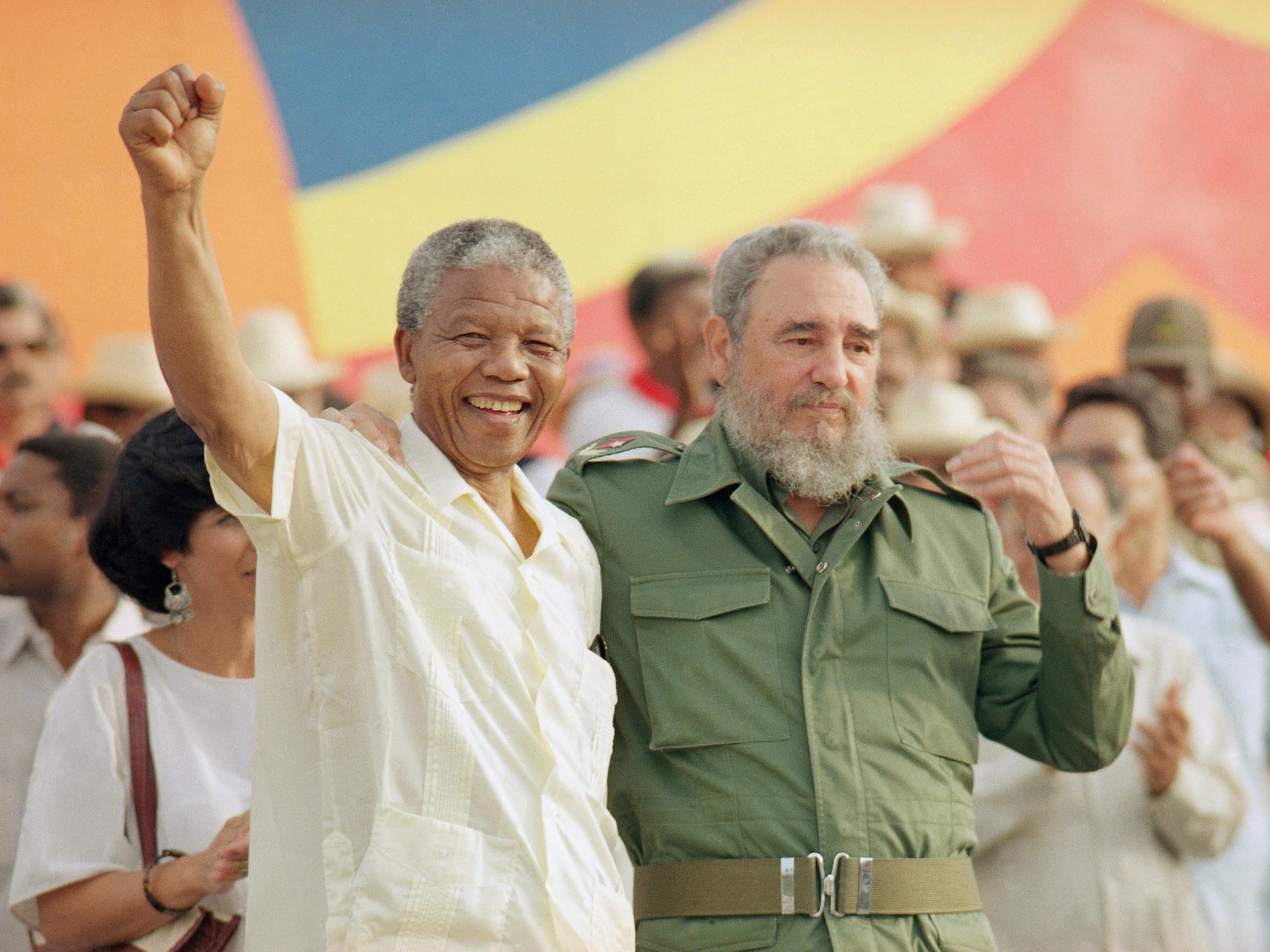
The Cuban Revolution, with its many contradictions, has had a significant impact on the world. Its potential collapse would be a major loss. Cuba is again in the United States’ crosshairs. Washington’s operation in Venezuela at the start of the year is widely seen as paving the way for a similar effort on the Caribbean island. Recent media reports have revealed U.S. military activity nearby while U.S. officials have repeatedly said they want “Cuba to be free.” When and how the U.S. may strike remains unclear, but indications suggest the Cuban Revolution may be nearing its end. That is reason enough to pause and reflect on the outsized role this nation of 10 million has played on the world stage.
When thinking of Cuba’s global presence, the figure of Eshu, the most powerful spirit in Cuban Santería, comes to mind. Derived from Yoruba beliefs, Eshu is a divine messenger, guardian of crossroads and mediator between past and future. In stories, Eshu is portrayed as a mischievous elder whose antics teach humility and morality. As a character, Eshu is a classic trickster, an archetype that challenges norms, subverts power structures and reveals hidden truths. The author compares Cuba to Eshu, a foil to U.S. hegemony. At its best, trickster Cuba forced an open debate on what kind of world we might aspire to and held the empire to account, sometimes pushing the U.S. toward its better angels. At its worst, it held up an uncomfortable mirror to U.S. power.
The first notable example was in September 1960, a year after taking Havana, when Fidel Castro visited New York to address the United Nations General Assembly. A Cold War‑obsessed U.S. government pressured several prominent hotels to refuse service to Castro and his entourage. The Cubans were not deterred. They went uptown to Harlem and found a place at the Hotel Theresa. Photographers and TV camera people flocked there, creating a media sensation. Castro used the opportunity to compare the Cuban delegation’s plight to that of Black Americans being denied service in the segregated South, striking a chord in the burgeoning civil rights movement.
In subsequent years, the revolutionary government developed its programme of Cuban Internationalism, countering U.S. soft‑power efforts in the developing world through organisations such as the Peace Corps and USAID. Cuba sent up to 400,000 doctors, engineers, agricultural technicians and other professionals to 164 countries. This material solidarity earned Cuba great affection among many Global South countries, including Venezuela, South Africa and Vietnam, where figures like Castro and Che Guevara are as recognisable as national heroes such as Simon Bolivar, Nelson Mandela and Ho Chi Minh.
Other examples of Cuba’s trickster antics include the Cuban armed forces’ successful defence against the Bay of Pigs invasion, which was carried out by Cuban exiles supported and funded by the CIA; the revolution’s support for the Palestinian liberation movement and the anti‑apartheid struggle even as the U.S. provided diplomatic cover and military aid to Israel and the apartheid regime in South Africa; and from 1975 to 1991, more than 300,000 Cuban soldiers fought alongside forces in Angola, emerging victorious in a proxy conflict with the U.S. Operation Carlota, as it was called, helped liberate Angola and neighbouring Namibia and precipitated the downfall of South African apartheid. Former South African President Nelson Mandela said Cuba’s intervention in Angola “destroyed the myth of the invincibility of the white oppressor.”
Castro himself embodied the spirit of Eshu. He reportedly survived more than 600 assassination attempts and died of natural causes at the age of 90. Cuba also defied the “third world” label by beating the U.S. in literacy rates, infant mortality and life expectancy at various points in its revolutionary history.
Despite these achievements, the Cuban Revolution’s greatest failings have been the denial of political rights and the repression of freedoms of expression and assembly. Speech is not free in Cuba. Access to information and the internet is heavily restricted, and recent popular protests have been violently suppressed. Critics point to these dynamics as evidence of Cuba’s authoritarian nature. In this regard, Cuba is not the U.S.’s opposite but rather its peer. The U.S. in 2026 faces its own challenges: corruption, erosion of democratic institutions, AI‑enabled surveillance, attacks on free speech, voting rights and the media, extrajudicial killings by masked agents, and an increasingly monarchical presidency. The infamous detention facility at Guantanamo Bay, still home to 15 detainees from the “global war on terror,” has been raised again in relation to President Donald Trump’s immigration crackdown. The Trump administration has been noted to emulate countries it rhetorically maligns, such as Cuba, Russia and Iran.
If the U.S. is poised and ready and conditions in Cuba are deteriorating rapidly, we may be witnessing the final days of the revolution. The author questions what will happen when Eshu no longer guards the crossroads and what the world will become without tricksters to confound power. If the revolution falls, there will be cheering in Miami and tears elsewhere—tears not just for the revolution but for the alternative it represented, however flawed. The author suggests that if the U.S. had listened more or differently, it might have heard the lesson that Eshu was trying to teach. The views expressed are the author’s own and do not necessarily reflect Al Jazeera’s editorial stance.