World
Ukraine and Europe Must Navigate Trump‑Russia Tensions
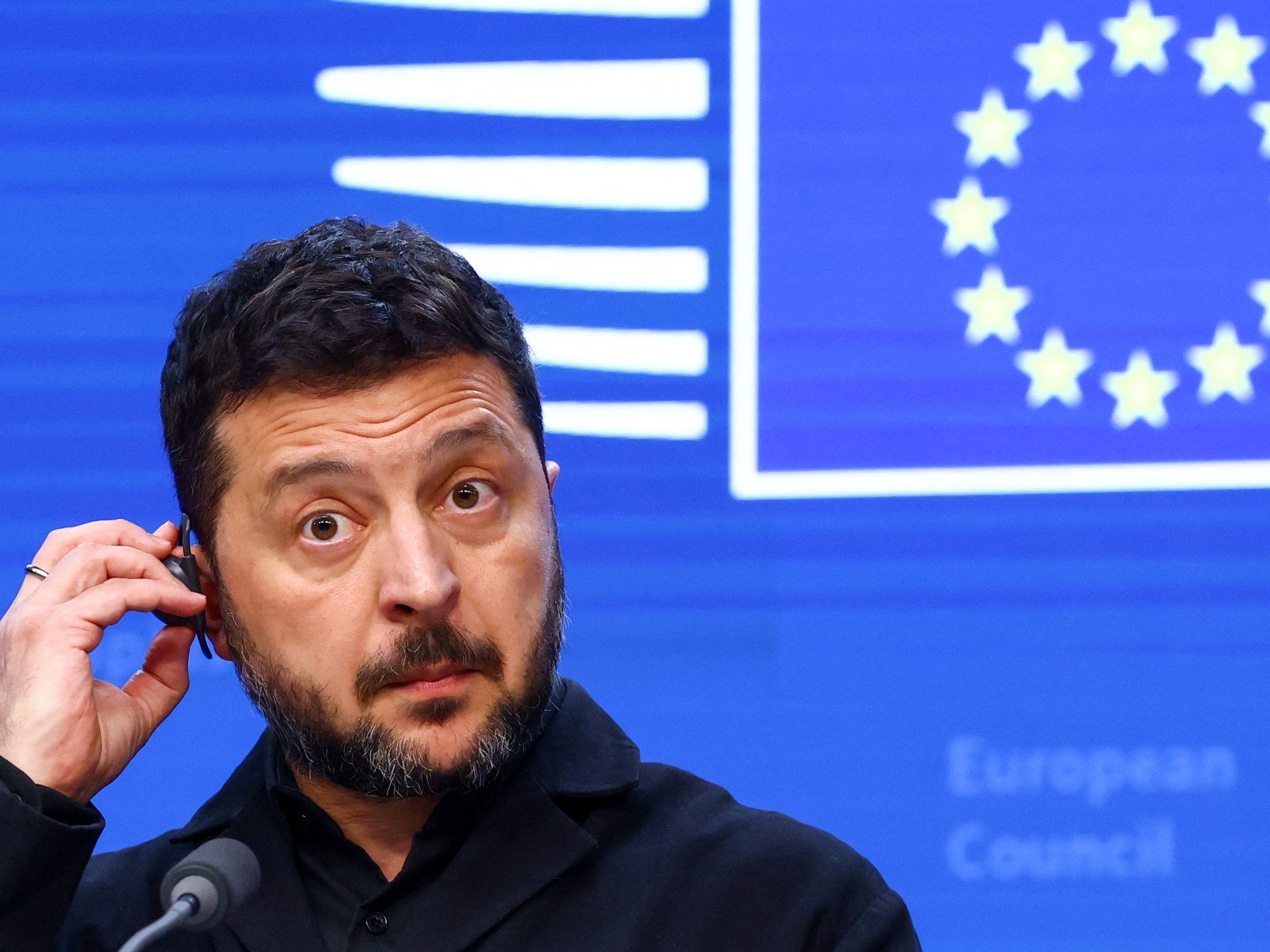
Ukrainian President Volodymyr Zelenskyy said on Wednesday that it is painful when President Donald Trump chooses one side, not theirs. The U.S. president’s diesel deal with Russian President Vladimir Putin has become a new source of friction between Washington, Kyiv and European allies. The reported disruption of Starlink/Starshield services on 13‑14 October, which hurt Ukraine’s military, was later restored, but claims that the restrictions were imposed at the White House’s behest to pressure Kyiv remain unconfirmed. Zelenskyy accused Washington of continuing to throttle Starlink and of promising the Russians new concessions.
Trump has previously tilted toward Moscow, notably at his August 2025 summit with Putin in Anchorage, Alaska, before returning to conditional support for Ukraine amid Russian intransigence and diplomatic efforts by Kyiv and European leaders. Europe pays for U.S. weapons delivered to Ukraine, and the U.S. continues to share intelligence with Kyiv, although some critical information may have been withheld. The White House has also withdrawn proposals to recognise Crimea as de‑jure Russian or to require Kyiv to withdraw from the entirety of its Donbas region.
Ukraine and Europe have continued to follow Trump’s diplomatic overtures to Moscow, led by his envoys Steve Witkoff and Jared Kushner. The diesel deal may unravel, given bipartisan opposition in Congress, including from Republican senators. Washington’s latest shift toward Moscow may therefore prove less significant than it currently appears.
Beyond Trump’s unpredictability, Ukraine and its European backers face other concerns. Putin’s resolve to ramp up the war is evident as Ukrainian cities and critical infrastructure suffer daily attacks from ballistic missiles and upgraded jet‑propelled drones, while air defences struggle. The country is bracing for another tough winter. A propaganda war is unfolding in parallel, fueled by the diesel deal. Unlike Ukraine, Russia never embraced Trump’s proposal for a partial ceasefire on strikes against energy facilities. Moscow now portrays Kyiv as the spoiler after Ukrainian attacks resumed, including an attack on a refinery in Ryazan on Thursday, which Trump slammed as a “disgrace”.
Fighting has spilled over onto NATO’s eastern flank, with ships transporting Ukrainian grain through the Black Sea attacked in Romanian waters. Russia is expanding its hybrid attacks in Europe to disrupt supplies of weapons and ammunition to Ukraine and to sway public opinion in key countries such as Germany by sowing fear. In some corners of the European Union, there is a push to re‑engage with Moscow. Slovak Prime Minister Robert Fico confirmed that the Slovak‑Russian intergovernmental economic commission would resume work. His Bulgarian counterpart, Rumen Radev, praised Trump’s diesel diplomacy, even as Russian drones carried out strikes near Bulgaria’s Black Sea coast.
Paying for Ukraine is another headache for Europeans. The 90‑billion‑euro ($101 bn) loan the EU authorised in April might be exhausted well before the end of 2027. Some estimates suggest Kyiv would require an additional 70 billion euros ($79 bn) for defence and civilian purposes in 2027. That threatens to open a can of worms for EU member states, which are already negotiating the bloc’s 2028‑2034 budget. With some calling for deep cuts in spending, the controversial question of whether aid for Ukraine should come from Russian financial assets frozen in Europe is coming back with a vengeance. Trump is meanwhile calling for some of the money to be released.
The squabble comes before several major elections, notably the French presidential election in April and May, as well as polls in Spain, Italy and Poland. Given the fragility in Europe, it is remarkable that diplomatic and financial support for Ukraine has remained rather steady. “This is no time to withdraw the support to Ukraine. This is no time to relieve Russia’s sanctions,” European Council President Antonio Costa said on Friday while appearing alongside Zelenskyy and European Commission President Ursula von der Leyen in Brussels. “If we fall, 20 million Ukrainians will come to Europe,” Zelenskyy reminded everyone, “Stay strong, defend our country.”
In the run‑up to the summit, the EU opened two clusters in accession talks with Ukraine and imposed a new round of sanctions on Russia. Zelenskyy came to Brussels after talks with British Prime Minister Andy Burnham and King Charles III in London on Wednesday. But there is a limit to how much more the EU and the United Kingdom can do beyond what they are already delivering. They have already replaced the U.S. as the principal international champions of Ukraine and de‑facto guarantors of its survival as a state. Becoming a member of the EU – or, at the very least, a closely integrated partner like Norway – is the best‑case scenario for Kyiv in the long run. At the same time, Europe lacks the political heft and the military capabilities to substitute for the U.S. in the short term. That is abundantly clear on the battlefield. Although top European intelligence agencies can probably supply Ukrainians with some data, there is no EU alternative to Starlink. Europe cannot deliver enough air‑defence systems and interceptors to fend off Russian attacks without U.S. support. Faced with U.S. unreliability, Europe is investing in these capabilities in pursuit of strategic autonomy, but even in the best‑case scenario, these efforts will take a decade to bear fruit.
Most crucially, Europeans have little leverage they can use to bring Putin to the negotiating table. Sure, there might be positive incentives in the form of sanctions relief and the restoration of oil and gas flows. But any Russian response is likely to require pressure of some kind. The U.S. has thus far failed to twist Putin’s arm – and under Trump has moved from sticks to carrots, dangling all kinds of “deals” mixing diplomacy and business. Part of the failure is due to the fear of escalation with another nuclear power; part of it is the current U.S. administration’s opportunism. But the bottom line is that there is little reason to expect Europe can do a better job.
In light of all this, both Zelenskyy and the Europeans will probably fall back on the familiar approach: trying to keep Trump onside and smoothing over their differences as much as possible. They are probably hoping and praying that the current White House overture to Russia will fizzle out after the midterm elections. They will also tell Trump that the best way to secure his legacy is to stand firm against Moscow, a position that enjoys support among his fellow Republicans. The strategy is to wait it out: first the winter, then the Trump presidency.