Technology
Tech Giants Use Fear to Shield AI Monopolies
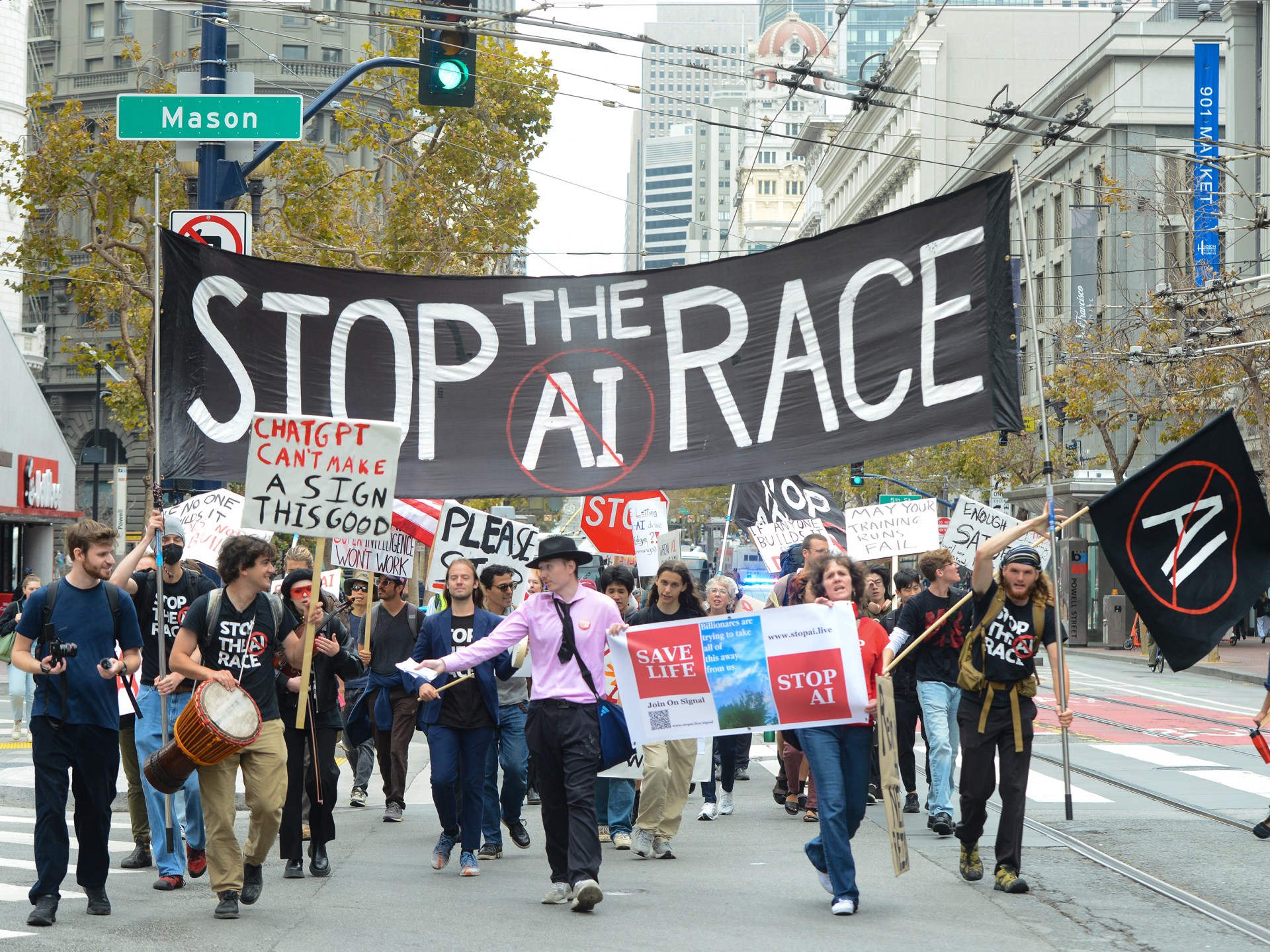
Tech companies are using fear to defend their dominance over AI, according to a recent analysis. The article notes that as AI grows, it is already creating significant societal challenges: companies are laying off workers whose jobs can be performed by AI models, data‑centre expansion is driving up energy use and carbon emissions, and malicious actors are using AI agents to spread disinformation. Algorithms also show bias, raising concerns about discrimination, and AI is being used to identify targets in warfare, increasing loss of life.
The piece argues that current AI policy discussions are dominated by apocalyptic warnings rather than the immediate problems. It cites examples of high‑profile voices such as Senator Bernie Sanders, the Vatican, and former Secretary of State Hillary Clinton, who have called open‑source AI a real threat. The author contends that this alarmist rhetoric has shifted focus away from the crises already caused by AI in labour, the environment and communications.
The article claims that the doomsday narrative is being weaponised to justify a new form of digital colonisation, concentrating power in a few AI corporations in a handful of countries. It explains that regulations framed around “safety” could target open‑source AI models, which are cheaper and modifiable, thereby protecting the monopolies of large tech firms. The author draws a parallel to historical colonial tactics that stifled local industry.
The piece highlights the Global South’s dependence on frontier AI systems developed by tech giants, noting that creating such models from scratch can cost upwards of $100 million in compute power. It cites Kenya’s recent rollout of an AI‑driven Social Health Authority system that failed because the imported model did not reflect Kenya’s informal economy, leading to overestimates of incomes and overcharging the poorest citizens.
The article argues that open‑source AI is the only viable bridge for local innovators to adapt AI to local data, and that preserving open‑source AI is essential for developing nations to build sovereign tech ecosystems. It also warns that AI monopolies lock users into a cycle of data extraction and cognitive dependency, eroding critical thinking, creativity and agency.
The author rejects calls for AI bans, noting that abandoning AI would forego its potential to accelerate drug discovery and solutions to energy and climate crises, citing tools such as AlphaFold and MOFSeq. Banning open‑source AI is also deemed a bad choice, as safety does not preclude equitable access.
The article concludes that safeguarding AI’s future requires decentralised, transparent, and globally distributed development, defending open‑source innovation as a public good, addressing the human cognitive toll, and ensuring that accountability remains human rather than anthropomorphised AI agents. The views expressed are the author’s own and do not necessarily reflect Al Jazeera’s editorial stance.