World
Russia Eyes Mediation in Pakistan‑Afghanistan Clash
By Abid Hussain
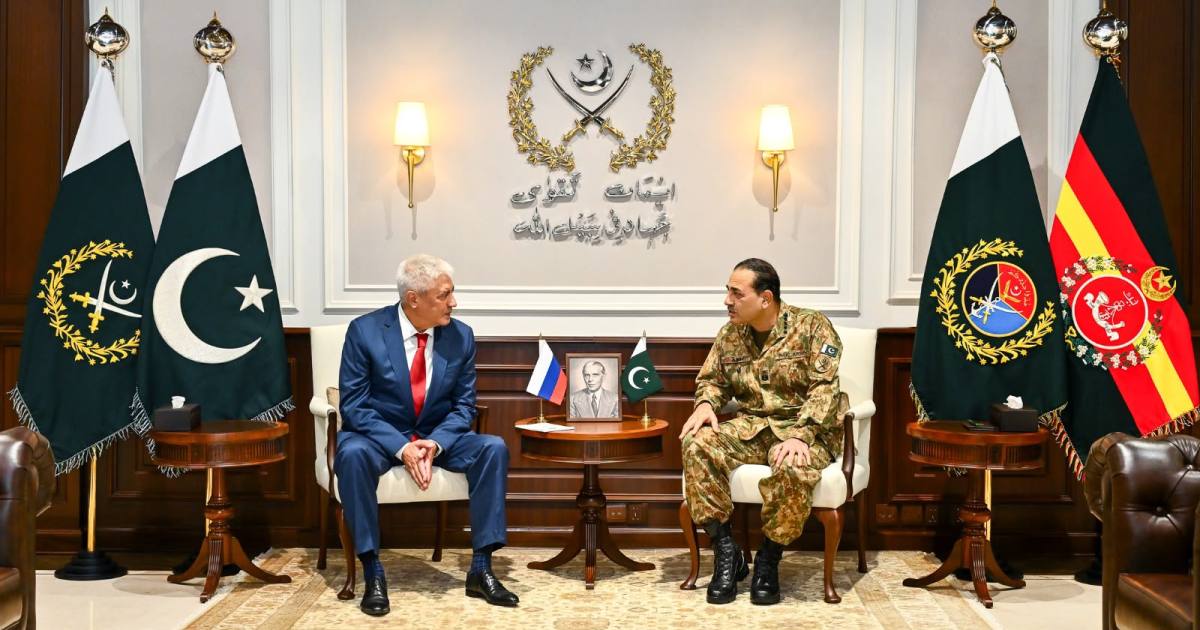
Russia’s Interior Minister Vladimir Kolokoltsev met Pakistan’s army chief Field Marshal Asim Munir in Rawalpindi on October 14, while Russia’s Foreign Intelligence Service director Sergey Naryshkin flew to Kabul to meet Taliban intelligence chief Abdul Haq Wasiq. The meetings were brief and official statements from Russia, Pakistan and Afghanistan were limited, but they signal a potential shift in the region’s diplomatic landscape.
Pakistan and Afghanistan have exchanged fire and public threats for the past year. Qatar and Turkey brokered a ceasefire in Doha last October, and China hosted talks in Urumqi in April, yet attacks inside Pakistan continued. Islamabad struck Afghan territory again in June, September and early October. Russia now appears ready to act as a mediator. Moscow’s special representative for Afghanistan, Zamir Kabulov, told TASS that Russia would play a peace‑broker role if both sides requested it.
Pakistan’s ambassador to Russia, Faisal Niaz Tirmizi, said Islamabad had approached Moscow in March. The Taliban, however, have not publicly asked for Russian mediation, raising questions about Moscow’s capacity to push the parties to talks when other mediators have struggled.
The Rawalpindi meeting was described by Pakistan’s Inter‑Services Public Relations as a discussion of “mutual interest and the regional security environment, with particular emphasis on strengthening bilateral security cooperation.” Neither Russian officials nor the Taliban disclosed the details of the intelligence chiefs’ talks.
Moscow has voiced concern about the fighting. The Russian embassy in Kabul posted on X that it was “seriously concerned about the ongoing military confrontation between Pakistan and Afghanistan, which affects civilians, including children.” The UN Assistance Mission in Afghanistan (UNAMA) reported that Pakistani strikes between September 30 and October 1 killed at least ten civilians, mostly children.
Russia’s relationship with both Pakistan and the Taliban has deepened in recent years. The country was one of the closest strategic partners of India during the Cold War and backed the Northern Alliance against the Taliban in the 1990s. In 2022, Pakistan’s prime minister Imran Khan was in Moscow when Russian forces invaded Ukraine. In 2023, Russia became the first country to officially recognise the Taliban government.
Russia’s motives include broadening its options in South Asia, countering the Afghan branch of ISIL (ISKP), and preserving regional influence. The Taliban and ISKP are sworn enemies; ISKP carried out an attack in Moscow in 2024 that killed nearly 150 people.
Previous mediators have struggled. Qatar and Turkey brokered a ceasefire in October, but talks in Istanbul collapsed the following month and skirmishes resumed. China hosted talks in Urumqi in April. In mid‑September, Turkey’s intelligence chief met Taliban officials before travelling to Islamabad. An attack in Kohat followed on September 18, with Pakistan striking Afghanistan on September 24 and October 1.
Russia’s own mediation attempt stalled at a Moscow meeting on October 5. Kabulov said the Afghan delegation objected to Afghanistan being mentioned too often in connection with “terrorism.” Pakistan’s Foreign Office spokesperson Sajjad Haider Khan said the issue was a substantive security concern, not merely wording. Kabul-based analyst Tameem Bahiss noted that Kabul has long resisted language that repeatedly associates Afghanistan with terrorism.
Pakistan’s special representative for Afghanistan, Mohammad Sadiq, said “terrorism” remained at the core of Afghanistan’s problems. Taliban Foreign Minister Amir Khan Muttaqi said the two countries’ problems could be resolved through dialogue and diplomacy, according to Afghan media.
Russia’s public warnings have focused on ISKP. Analysts say Moscow is unlikely to exert pressure on the Taliban over the Pakistani Taliban (TTP) because doing so could undermine its neutrality and partnership with the Taliban against ISKP.
Russia’s unique position comes from its recognition of the Taliban government in July 2025 and an unpublished military‑technical agreement signed in May covering repair and maintenance of Taliban equipment. The Taliban’s Defence Minister said Pakistan would soon no longer dare to launch strikes.
Pakistan chairs the Shanghai Cooperation Organisation (SCO) for 2026‑27 and will host the bloc’s summit in Islamabad next year. The Taliban were not invited to this year’s summit in Bishkek, where members called for an inclusive government in Kabul. Pakistan’s foreign office said Afghanistan would need diplomatic relations with SCO members before gaining full membership.
While Russia has greater access to the Taliban than any other major power, its actual leverage remains limited. Analysts note that senior Taliban leaders continue to visit Russia and India, signalling potential new alignments that could offset Pakistan’s military superiority.
If Moscow offers to mediate, the Taliban’s relatively close relations with Russia and its desire to preserve recognition could make it receptive to Russian involvement, though the Taliban has not explicitly requested such mediation.