Business & Finance
Oil Prices Surge Toward $100 Amid Middle East Tensions and Strait of Hormuz Concerns
By Leonie Kidd
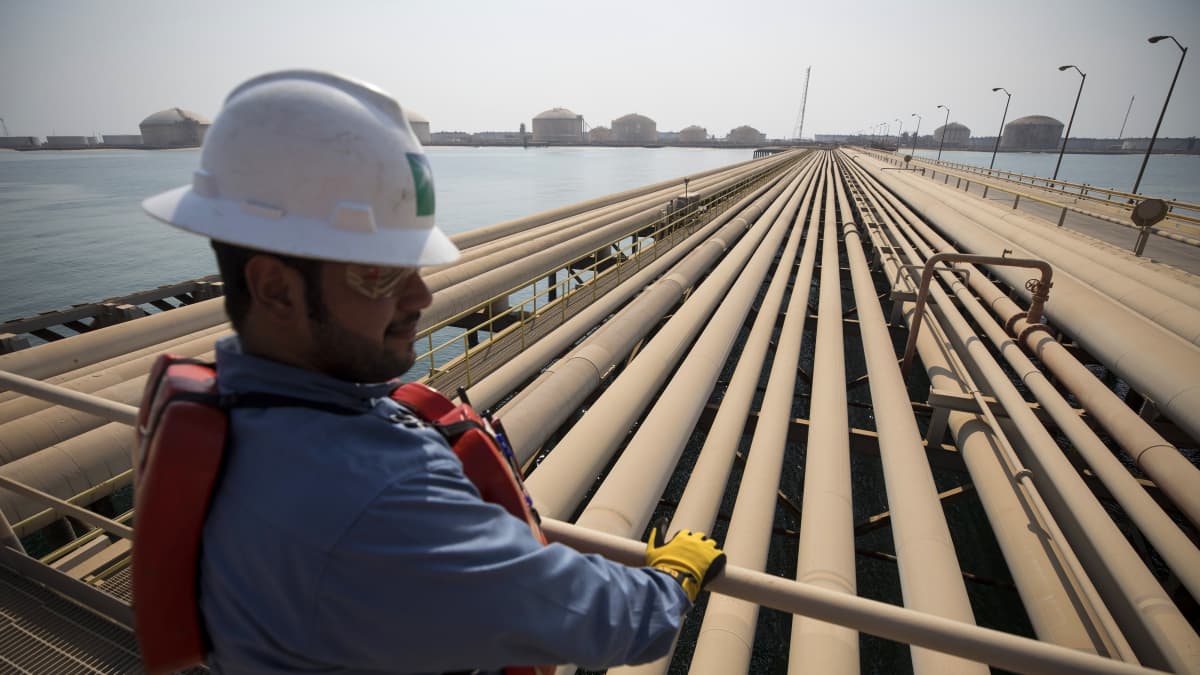
Global oil markets are on edge as tensions in the Middle East escalate, with Brent crude climbing back toward $100 a barrel. Commodity analyst Jeff Currie warned that the previous sense of market stability, which he described as an "illusion of abundance," is fading, adding that hopes for a swift return to normal conditions in the Strait of Hormuz would be overly optimistic.
As U.S. markets reopened after the Labor Day weekend, trading was expected to hinge largely on developments surrounding the Strait, a key global oil transit route.
Crude prices reached six-week highs on Tuesday, with West Texas Intermediate trading above $93 a barrel and Brent crude surpassing $97 a barrel in early trading, edging closer to the $100 threshold. According to a Financial Times report, Saudi Aramco facilities were struck again on Monday, unsettling energy markets. The attack followed a U.S. military strike on three Iranian oil tankers. These exchanges have also pushed gasoline prices higher, with U.S. prices surpassing $4 per gallon for the first time on a Labor Day.
Iran has criticized Canada for backing U.S. military action in the Strait of Hormuz. Foreign Ministry spokesperson Esmaeil Baghaei accused Canada of trying to "appease" Washington, noting that the criticism came on the same day President Donald Trump made remarks that Tehran characterized as disrespectful toward Canadian sovereignty.
Separately, new Canadian tariffs on roughly $20 billion worth of U.S. goods took effect Tuesday, intensifying trade tensions. Bombardier, the Canadian aircraft manufacturer, has become a focal point in the dispute after Trump posted on Truth Social demanding the company manufacture aircraft in the United States if it wants to continue selling there, accusing Canada of treating the U.S. market unfairly.
Despite the geopolitical turmoil, global markets have largely remained stable, though HSBC has identified potential developments that could change this trend. U.S. futures were mixed following the Labor Day break, while Japanese equities faced pressure as the yen held near its strongest level against the U.S. dollar since February.
In the technology sector, French AI company Mistral announced it raised €3 billion ($3.5 billion) in funding, achieving a valuation of €21 billion ($24 billion). Major investors included Samsung Electronics and EU-backed Scaleup Europe, as Mistral positions itself as a competitor to OpenAI and Anthropic.
Meanwhile, Italy has emerged as a hotspot for banking consolidation in Europe, with a series of takeover bids reshaping its financial sector. Notable deals involve Monte dei Paschi and Mediobanca, with connections to insurer Generali, as the country's banking sector developments are seen as significant for Europe's broader efforts to create larger banks capable of competing with U.S. financial institutions.