India
Indian Official's Aggressive Food Safety Crackdown Sparks Praise and Backlash
By Today News Hours Editorial Desk
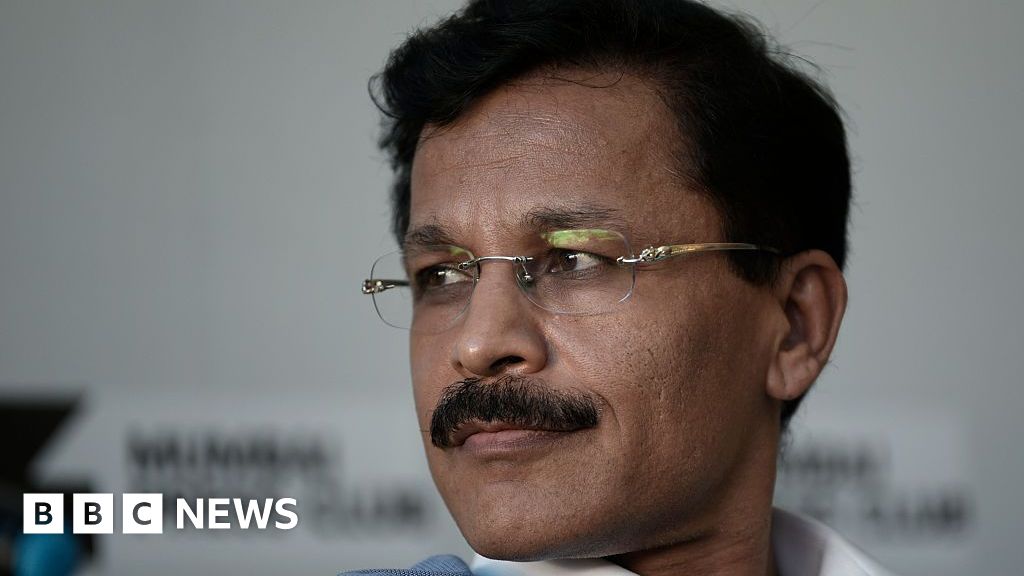
A civil servant in India has gained widespread attention for leading an intense crackdown on food safety violations across Maharashtra state, becoming an unexpected social media celebrity in the process.
Tukaram Mundhe, 51, took charge as Maharashtra's food commissioner in May and has since overseen thousands of inspections of restaurants, cafes, and other food businesses. Images and videos from these inspections have gone viral, showing unsanitary conditions including cockroach infestations, spider webs, spoiled produce, and pest-ridden food counters—some found at an exclusive members-only club in Mumbai.
Mundhe told the BBC that food safety laws must be enforced regardless of a business's size or reputation. "These actions are taken in public health interest. We will continue to take them against violations," he said.
By the end of July, Mundhe's department had conducted more than 3,100 inspections, a figure he says has since surpassed 4,000. Approximately 300 licenses have been suspended, and over 1,000 improvement notices issued. A new complaints portal received more than 16,000 submissions within its first three months.
The scale of India's food safety concerns is significant. Parliamentary data from July showed that of 223,808 food samples tested nationwide in 2025 and 2026, nearly 20% were found unsafe, substandard, or mislabeled.
Mundhe, a member of the Indian Administrative Service with over two decades of experience, has built a reputation for his uncompromising approach throughout his career. He has been transferred between posts so frequently that, according to reports, the number of transfers exceeds his years of service—though he does not confirm the exact figure. "I have stopped counting my transfers," he said.
His previous postings brought him recognition as well, including his handling of the Covid-19 pandemic while serving as Nagpur's municipal commissioner, and his work on water conservation in drought-affected areas of Maharashtra. Journalist Shafi Pathan, who authored a biography of Mundhe in Marathi, recalled that when Mundhe was transferred out of Nagpur during the pandemic, thousands gathered outside his home to see him off.
The food safety campaign has since propelled Mundhe to national fame, with his Instagram following surpassing 3.8 million. Pawan Agarwal, former head of India's food regulatory body, noted that while hygiene problems have long existed in India, Mundhe's approach has made these issues visible to the public in ways the traditional legal and regulatory process—often slow-moving—has not.
However, the aggressive tactics have drawn criticism from the food industry. Restaurant associations claim Mundhe has skipped required legal procedures, and some courts have described his actions as "high-handed." Under Indian food safety law, businesses are typically given time to correct violations before facing suspension or license cancellation, except in cases posing immediate public health risks, which must be documented.
Niranjan Laxman Shetty, legal chairman of the Indian Hotel and Restaurant Association, said that while compliance is essential, tactics such as public shaming and immediate suspensions over minor issues can cause panic rather than encourage reform.
Mundhe maintains that his actions comply with the law and that suspensions are reserved for serious violations. Still, several businesses have publicly stated they were shut down over minor infractions without prior warning.
Legal challenges have followed some of his decisions. In August, the Bombay High Court ordered Mundhe's department to pay 500,000 rupees (approximately $5,291) in compensation to a sweets shop whose license remained suspended even after a follow-up inspection found it 98% compliant. The court acknowledged the regulator's intentions as "laudable" but said it had "gone overboard." Judges also questioned whether government-run food establishments faced the same scrutiny as private businesses. Within a day, Mundhe's team inspected canteens at the High Court complex itself and identified violations there too—which he cited as evidence that enforcement applies equally to all.
"Had the food business operators or establishment complied with existing regulations, I would not be needed to take those actions," Mundhe said, adding that the goal is not to shut businesses down but to ensure food safety. "We are here to ensure food is safe, food is not substandard, it is not misbranded and it is good for consumption," he said at a recent event.
Beyond restaurant inspections, Mundhe's department has banned wrapping food in newspapers, prohibited synthetic dyes, and cracked down on non-dairy paneer substitutes. Attention has now turned to schools, where canteens, hostel kitchens, and midday meal suppliers are required to obtain proper licenses. The sale of foods high in fat, sugar, or salt has also been banned within 50 meters of school premises.
Questions remain about the long-term impact of Mundhe's initiatives once he moves to another post. Agarwal noted that while Mundhe's efforts have raised nationwide awareness of food safety among both businesses and consumers, such momentum may not be sustainable without systemic changes that outlast individual officials.
On the ground, some changes are already taking hold. Yuvraj Yadav, a sandwich vendor in a Mumbai suburb, said he used to wrap his products in old newspapers despite concerns about chemical contamination from printing ink. He recently switched to greaseproof paper after learning of the ban. "We started this a few months ago after newspapers were not allowed for packing as it's bad for health," he said.