India
India’s Defence Minister Warns Pakistan of Stronger Response to Terror Acts
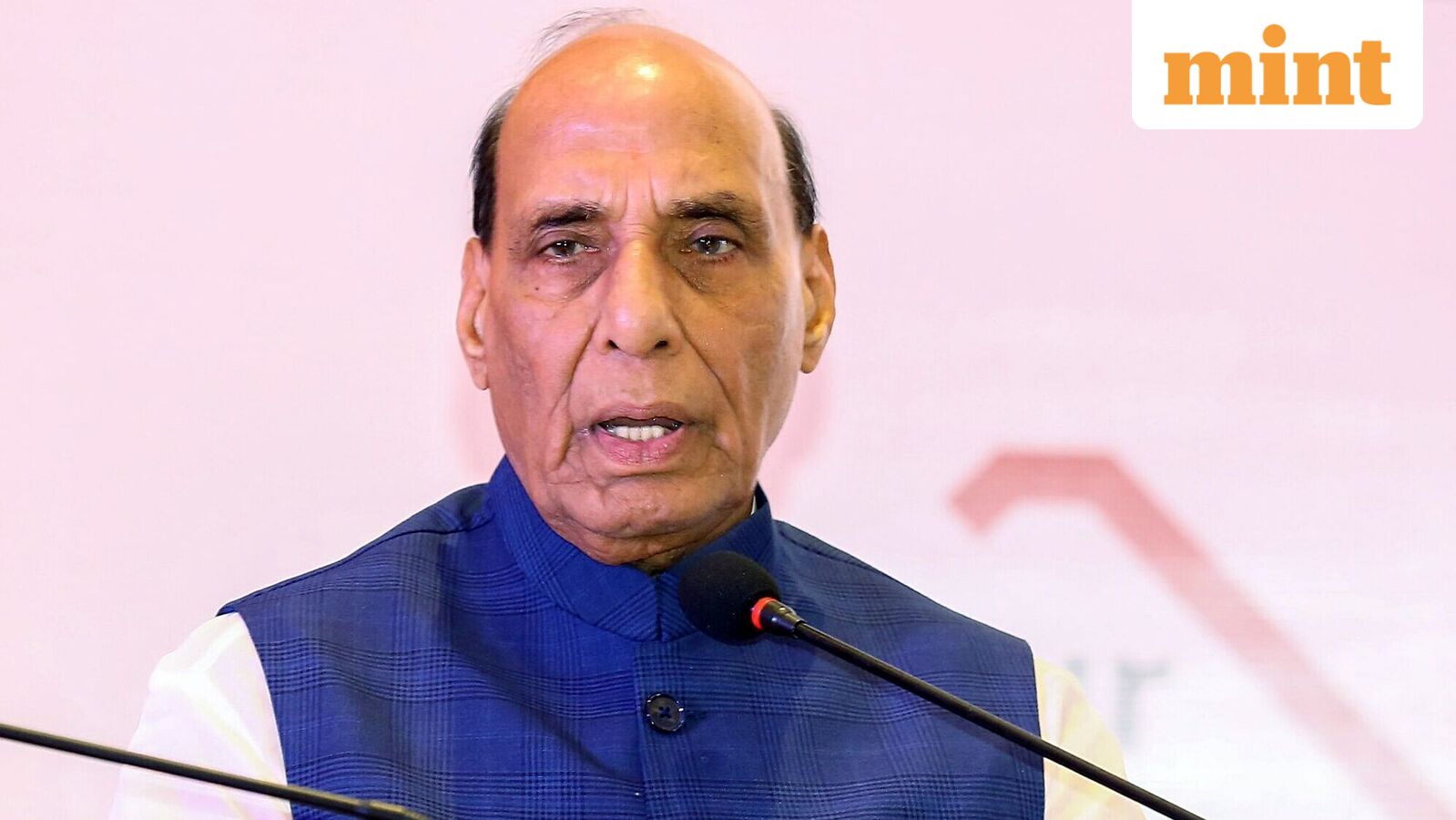
Defence Minister Rajnath Singh said on Thursday that any further terrorist acts originating from Pakistan would trigger an even stronger response from India. Speaking at the Times Network Defence Conclave in New Delhi, Singh reiterated India’s stance on cross‑border terrorism and explained that operations such as Sindoor, the Balakot airstrikes and subsequent surgical strikes were not merely military actions but a decisive shift from diplomatic condemnation to proactive action aimed at rooting out terrorism at its source.
He noted that since 2014 the ‘shelf life’ of most terrorists has fallen to less than a year, with security forces neutralising them within a year of taking up arms against India. Singh said that strength and capability are essential to maintaining peace and that India hopes for peace but remains prepared for war when necessary to protect the nation.
Singh highlighted the need for heightened vigilance in an era of hybrid, high‑tech and hyper warfare, describing the evolving security threats as a ‘5D Security Threat’—Disinformation, Destabilisation, Disruption, Deception and Destruction. He pointed out that terrorism is moving beyond organised groups to lone‑wolf attacks and white‑collar terrorism, making it harder for security agencies to identify radicalised individuals and prevent attacks.
The minister referred to a recent incident involving a co‑pilot who allegedly tried to crash a passenger aircraft and to Captain Smit Machhar, who risked his life to avert a major terror attack. He said the incident underscored the threat posed by lone‑wolf attackers and demonstrated how the courage of an individual can thwart the designs of those driven by hatred.
On defence preparedness, Singh called for a blend of hard and soft power, advocating a shift toward ‘smart power’. He urged the integration of precision‑guided weapons, loitering munitions, cost‑effective weaponry, human intelligence and artificial intelligence, and advanced systems with low‑cost, agile and adaptable technologies.
He cited the growth of India’s defence sector, noting that defence production has risen to a record over ₹1.78 lakh crore from ₹40,000 crore in 2014, and that defence exports reached an all‑time high of ₹39,000 crore from ₹686 crore in 2013‑14, with Indian defence products reaching nearly 100 countries. Singh expressed confidence that the nation will achieve defence production targets of ₹2 lakh crore this year and ₹3 lakh crore by 2029, and export defence equipment worth ₹50,000 crore by 2029.
The minister attributed this growth to reforms that simplified export procedures, including the Defence EXIM Portal, online approvals, the Open General Export License, streamlined quality certification and the ‘Green Channel’ policy. He also mentioned that the Ministry of Defence has approved procurement of goods and services worth over ₹2,400 crore from start‑ups and MSMEs and sanctioned projects exceeding ₹1,500 crore for new technology development.
As of March 2026, iDEX had engaged 676 start‑ups and innovators and facilitated the signing of 551 contracts. The defence‑startup ecosystem has grown from a few dozen in 2018 to more than 2,000, with young enterprises working across drones, artificial intelligence, quantum technology, cybersecurity, robotics and other advanced fields.
Singh noted that 159 of the 175 ammunition variants used by the Defence Forces are now indigenously produced, representing more than 90 percent self‑reliance in ammunition variants. He also mentioned India’s exports of bulletproof jackets to over 100 countries and that the country is the fourth in the world to establish a national standard for bulletproof jackets aligned with international norms.
Finally, he spoke about the implementation of the One Rank One Pension scheme and the creation of the Chief of Defence Staff post, describing them as significant measures undertaken to strengthen the defence framework.