World
Israel Election May Shape Africa‑Israel Relations Amid Gaza Conflict
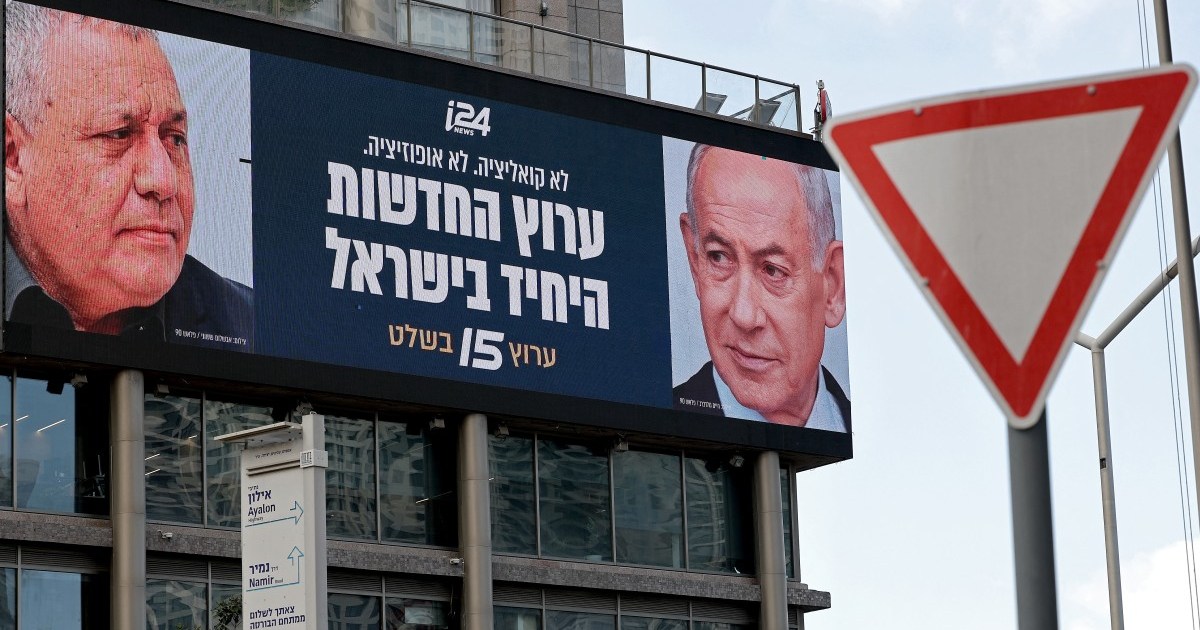
As Israelis head to the polls on October 27, African governments from Pretoria to Rabat are assessing how the outcome could affect their foreign and domestic policies. The Gaza war has highlighted stark differences across the continent, with some governments taking diplomatic measures against Israel while others maintain commercial and security ties. Polls show a close contest between Prime Minister Benjamin Netanyahu’s Likud party and a coalition of Jewish‑led opposition parties. Neither side is projected to secure the 61 seats needed for a majority in the 120‑seat Knesset, and a prolonged coalition‑building process is expected.
Israel’s relationships across Africa are shaped by competing priorities. While the Gaza war has intensified diplomatic pressure and public opposition in many countries, security needs, commercial interests and longstanding bilateral partnerships continue to influence government decisions.
South Africa has emerged as one of Israel’s most vocal critics in Africa. Its government brought a case against Israel at the International Court of Justice (ICJ), alleging violations of the 1948 Genocide Convention. Israel rejects the allegations. In November 2023, South Africa’s National Assembly adopted a motion calling on the government to close the Israeli embassy and suspend diplomatic relations. The motion did not implement those measures, but it underscored the strength of political opposition to Israel’s military campaign.
Other African governments have taken different approaches that reflect national political priorities and foreign policy calculations rather than a single continental position. Chad recalled its ambassador to Israel in November 2023, while some countries have maintained relations despite criticism of Israel’s military campaign in Gaza.
Morocco offers a contrasting example. It restored relations with Israel in 2020 under a US‑backed arrangement linked to Washington’s recognition of Moroccan sovereignty over Western Sahara. Despite public demonstrations opposing normalisation, Rabat has continued to pursue closer ties. On September 16, Israeli Foreign Minister Gideon Sa’ar and Moroccan Foreign Minister Nasser Bourita met in New York at a trilateral summit hosted by US Ambassador to the United Nations Mike Waltz. The three countries reaffirmed plans to upgrade diplomatic relations, elevate their respective missions to embassies and appoint ambassadors. They also agreed to conclude investment protection and double‑taxation agreements by the end of this year, expand flights to include Moroccan airlines and arrange reciprocal high‑level visits in the coming months.
For Idowu Johnson, associate professor of international relations at the University of Ibadan, the diversity of African states makes it difficult to predict a uniform response to Israel’s election. “Africa’s heterogeneity means individual states have handled relations with Israel separately. Since the October 7, 2023 attacks, African criticism has focused on Israel’s denial of Palestinian statehood. The October 27 election will therefore be pivotal, as a new government’s stance on the Palestinian cause will shape how far Africa cooperates on agriculture, trade, security and technology, guided by self‑determination and international law as well as bilateral interests,” Johnson said.
Israel’s relationship with the African Union (AU) also reflects these divisions. In 2021, the AU Commission chairperson accredited Israel’s representative to the organisation, prompting objections from member states. In February 2022, the AU Assembly established a committee of heads of state and government to consult on Israel’s observer status. The dispute continued into 2023, when the AU moved to suspend Israel’s accreditation pending further consideration.
Security cooperation has been a significant part of Israel’s relationships with some African governments. Israeli companies have pursued defence and security contracts involving equipment, surveillance technology and training. The Democratic Republic of the Congo offers a recent example of efforts to deepen cooperation. Congolese President Felix Tshisekedi visited Israel on August 31 and September 1, meeting Prime Minister Benjamin Netanyahu and President Isaac Herzog. Discussions covered security, defence, agriculture, infrastructure, energy and high technology. Both sides expressed a desire to strengthen their strategic partnership and expand cooperation across several sectors.
The limits of Israel’s diplomatic outreach were also evident after it recognised Somaliland as an independent state on December 26 last year, the first country to do so. Somalia and other critics rejected the move, arguing that it undermined Somalia’s territorial integrity. The decision triggered demonstrations in Somalia and Somaliland. Speaking to Al Jazeera this month, President Hassan Sheikh Mohamud said Somalia will not accept Israeli presence in the country “under any circumstances”. He added that Israel was planning to establish a naval base in Berbera and use the city’s airport, adding that its real aim was to get closer to the Gulf states and Iran. According to the Armed Conflict Location & Event Data project (ACLED), 110 demonstrations directly linked to Israel’s Somaliland recognition had been recorded by the time of its February 2026 Africa overview.
Hossamaldeen Ibrahim, an Africa analyst at the Bloomsbury Intelligence and Security Institute, argues that public opposition can constrain governments even when they see strategic value in maintaining ties. “The strongest constraint, however, may come from African publics rather than governments: the Somaliland recognition drew widespread opposition, the African Union and many governments reaffirmed Somalia’s territorial integrity, and ACLED logged 110 related demonstrations, only seven in support.” Depending on its approach, the next Israeli government could therefore either deepen strategic cooperation in Morocco, Sudan and the Red Sea, or face a legitimacy problem if it continues policies seen as tied to the Gaza war.
Trade, agritech and the contest for influence offer Israel another route to maintaining relationships in Africa. Israeli firms and officials have pursued partnerships in areas including agriculture, irrigation, water management, health and technology. Zambia illustrates Israel’s efforts to deepen bilateral engagement. Israel opened a resident embassy in Lusaka in August last year, after a 52‑year absence. Agriculture, water management, health, education and technology have been identified as potential areas for closer cooperation.
For African governments, the challenge will be to balance security and commercial interests against public opposition, commitments to Palestinian rights and positions on international law. For Israel, the upcoming election will test whether a new government can ease diplomatic tensions across Africa without fundamentally changing the policies that have fuelled them. As Okwechime told Al Jazeera, “There won’t be a radical change in sentiments regardless of the government in power.”
Frequently asked questions
When is Israel’s next election scheduled?
The election is scheduled for October 27.
Which parties are competing in the election and what majority is needed?
Prime Minister Benjamin Netanyahu’s Likud party and a coalition of Jewish‑led opposition parties are contesting, and 61 seats out of 120 are needed for a majority.
What actions has South Africa taken regarding its diplomatic relations with Israel?
South Africa brought a case against Israel at the International Court of Justice, adopted a motion to close the Israeli embassy and suspend diplomatic relations, and has been a vocal critic of Israel’s Gaza campaign.