India
PNGRB Drafts Guidelines for Up to 5% Hydrogen Blend in Household Gas Supply
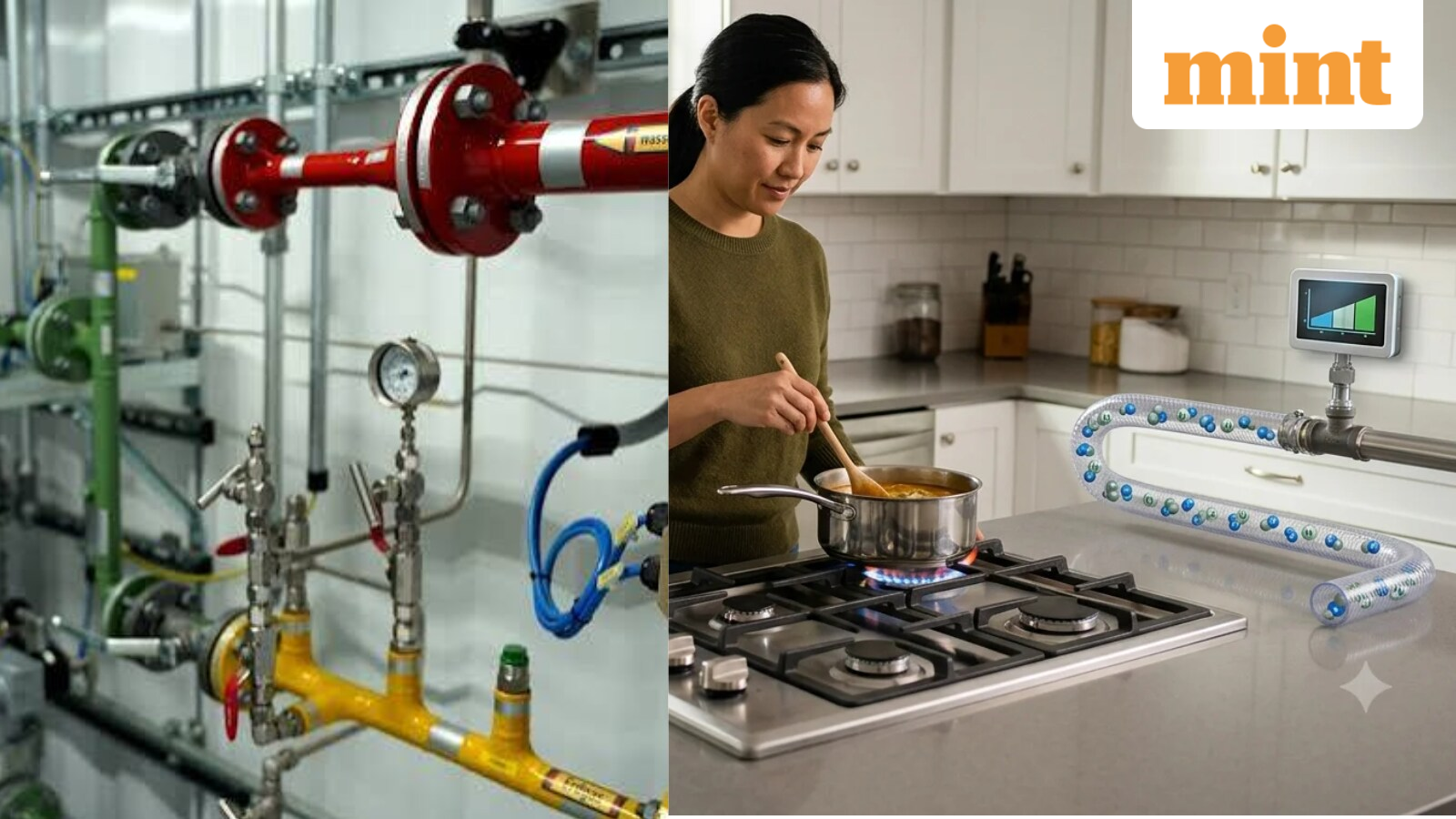
The Petroleum and Natural Gas Regulatory Board (PNGRB) has released draft guidelines that would allow up to a 5% blend of hydrogen in natural gas supplied to households through domestic piped natural gas (PNG) networks. The proposal outlines a framework for introducing hydrogen into selected portions of existing gas distribution networks, subject to technical assessments, safety requirements and regulatory approvals. The draft explicitly states that it does not by itself authorise commercial hydrogen blending and that applicability is subject to statutory enablement, PNGRB approval and all other competent‑authority permissions.
The regulator has proposed limiting the initial deployment to small, hydraulically defined areas supplied through a single injection point. The framework is restricted to domestic PNG consumers and does not cover the entire city gas distribution networks. Under the draft, hydrogen could be mixed with natural gas before being supplied to households through existing PNG networks, but not every household connected to a piped gas network will immediately receive a hydrogen blend. PNGRB has specified that the deployment must be confined to areas where the blended supply can be controlled and monitored. Injection at a District Regulating Station that cannot ensure the supply is restricted to domestic consumers has been excluded at this stage.
The draft clarifies that the 5% limit is a ceiling rather than the routine operating level. “Five per cent is the maximum commercial concentration, not the routine control target,” it states, adding that normal operating levels must be lower and determined through validated technical assessments. “No commercial supply under these guidelines shall exceed 5.0%,” the document adds.
Operators would need to assess whether existing pipelines, meters, regulators and other equipment are compatible with hydrogen blending before introducing the mixture. The assessment would also cover household appliances connected to the network. The draft notes that the experience of pilot projects in Indore and Shantigram cannot be treated as universal proof that every gas network and appliance is suitable for hydrogen blending.
Continuous monitoring of hydrogen concentration, gas flow, pressure and other relevant parameters is required. Hydrogen supply must be automatically isolated in situations such as invalid concentration measurements, hydrogen levels reaching the specified high‑high limit, loss of natural gas flow, gas detection or fire alarms, emergency shutdowns, unsafe pressure or temperature conditions, and loss of essential control systems or power.
The guidelines address the impact of hydrogen blending on consumer billing. “Consumer billing shall account for the reduction in heat content attributable to hydrogen blending so that consumers are not charged for energy not delivered,” the document states. Operators must disclose the basis of billing adjustments, and where necessary data is unavailable or inaccurate, a consumer‑favourable estimate is required.
Commercial supply would require statutory and policy enablement, specific PNGRB approval and permissions from other competent authorities. Before the first supply, operators would ordinarily have to provide consumers with at least 30 days’ notice. The notice would include the hydrogen concentration, changes in gas characteristics, appliance‑related precautions, emergency procedures, billing adjustments and complaint channels.
The guidelines prescribe a minimum six‑month trial operation, with monthly reporting and independent verification. Completion of six months alone would not automatically permit routine commercial supply; operators would need written confirmation from PNGRB.
The regulator has also clarified, “These guidelines do not by themselves create a right to blend or commercially supply hydrogen.”
Frequently asked questions
What is the maximum hydrogen blend allowed in household gas supply under the draft guidelines?
Up to a 5% blend of hydrogen in natural gas supplied to households, with 5% being the maximum commercial concentration; routine operating levels must be lower.
Who must approve commercial hydrogen blending in domestic PNG networks?
Commercial supply requires statutory and policy enablement, specific PNGRB approval, and permissions from other competent authorities.
What notice must operators give consumers before first hydrogen blend supply?
Operators must provide at least 30 days’ notice, including hydrogen concentration, changes in gas characteristics, appliance precautions, emergency procedures, billing adjustments, and complaint channels.