Politics
USCIS to Remove Deference Rule for Nonimmigrant Worker Extensions
By Ravi Hari
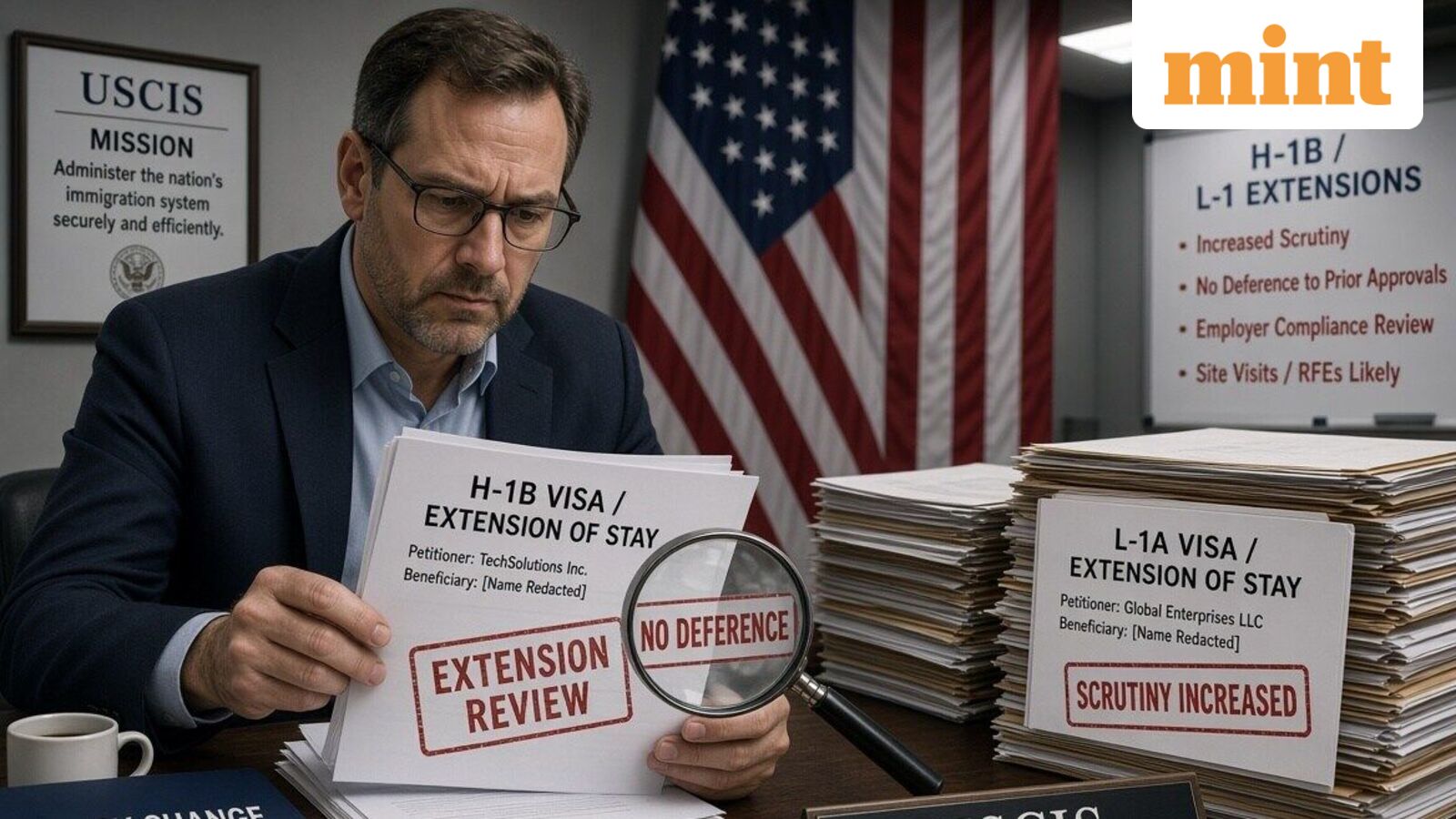
The Trump administration has proposed eliminating a rule that requires U.S. immigration officials to defer to earlier eligibility decisions when reviewing extensions of certain nonimmigrant worker petitions. The Department of Homeland Security (DHS), through U.S. Citizenship and Immigration Services (USCIS), published the proposal on October 14. It would delete Section 8 CFR 214.1(c)(5), which currently obligates officers to generally respect prior determinations when the same parties and underlying facts are involved. Under the new proposal, USCIS officers would independently assess evidence and continued eligibility for each extension, even if a prior petition involving the same employer and worker had been approved.
The agency said the change would strengthen the integrity of the immigration system, improve fraud detection, and better protect U.S. workers. It also argued that the existing deference policy could shift the burden of proof from employers and petitioners to immigration officers, creating a presumption that prior approvals were correct. DHS noted that the policy could encourage some employers to assume that previously approved petitions would receive less scrutiny during subsequent extensions.
The proposal applies to petitions filed using Form I‑129, Petition for a Nonimmigrant Worker, which covers H‑1B, L‑1 and other nonimmigrant classifications. If finalized, an earlier approval would no longer serve as the default starting point for an extension decision. Officers would be able to reassess the petitioner's evidence and the beneficiary's eligibility based on the record in each case, though they could still consider previous approvals where relevant.
DHS estimates that removing the deference provision could result in about 6,044 additional Request for Evidence (RFE) notices annually, based on an estimated increase of 2.9 percentage points in the RFE rate and an affected population of 208,429 petitions. The department estimates the additional annual cost to petitioners from responding to these RFEs at approximately $133,987, or an average of $22.17 per additional RFE. DHS also warned of unquantified costs, including longer adjudication timelines, additional legal and administrative work, and uncertainty for employers and workers.
During fiscal years 2022 to 2025, petitions that received an RFE took an average of 64 calendar days longer to process than petitions that did not receive one. The agency said the additional scrutiny could increase its own operational workload and put further pressure on processing capacity. Any resulting increase in USCIS costs could be considered in a future comprehensive fee review.
The proposal does not change the underlying eligibility criteria for H‑1B or other covered nonimmigrant classifications. Employers would still be able to seek extensions for eligible workers, but they could no longer rely on the regulatory requirement that USCIS generally defer to an earlier approval when the parties and underlying facts remain unchanged. DHS acknowledged that employers and workers may have made business, career and personal plans based on the expectation of continued approvals, but argued that a previous approval does not guarantee a subsequent extension and that applicants must demonstrate eligibility for each immigration benefit.
The proposed rule is open for public comment until November 13, 2026 and is not yet a final rule.
Frequently asked questions
What change is the Trump administration proposing for USCIS nonimmigrant worker extensions?
The administration proposes eliminating the deference rule that requires USCIS officers to defer to earlier eligibility decisions when reviewing extensions of nonimmigrant worker petitions, specifically deleting Section 8 CFR 214.1(c)(5).
What are the estimated impacts of removing the deference provision?
DHS estimates that removing the provision could add about 6,044 additional RFEs annually, costing petitioners roughly $133,987 total or $22.17 per RFE, and could lengthen processing by an average of 64 calendar days for petitions that receive an RFE.
When is the public comment period for this proposal?
The proposal is open for public comment until November 13, 2026.