World
Gaza Residents Report Daily Strikes Amid Ceasefire, Families Face Ongoing Losses
By Today News Hours Editorial Desk
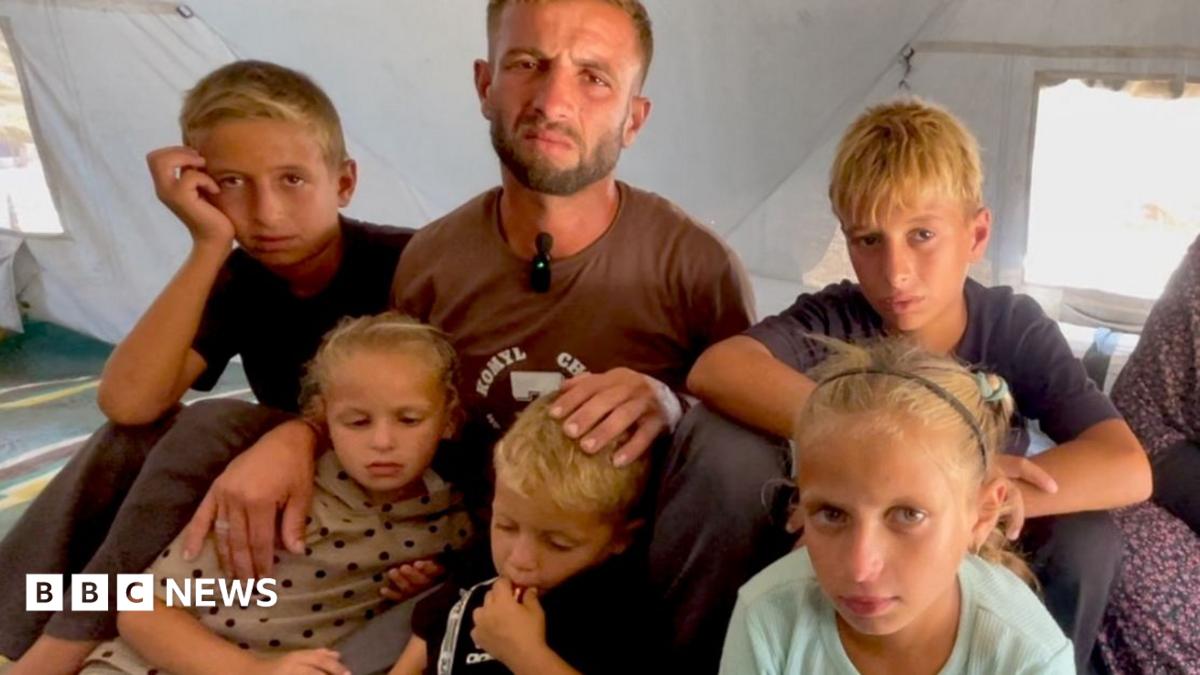
In a tent in central Gaza, 31‑year‑old Fida al‑Toutah, mother of five, was combing her daughter’s hair when gunfire erupted. Her son Ezz recalled his mother shouting for them to get down, and he only realized Fida had been hit when he saw the blood‑stained hands of his younger brother, who had been clinging to her as bullets fell. Fida died on 21 September from a gunshot wound to the head. She is one of more than 1,400 people in Gaza killed by Israeli attacks since the ceasefire began on 10 October last year, according to Gaza’s Hamas‑run health ministry, whose figures are considered reliable by the UN.
The ceasefire released thousands of Palestinians held by Israel in exchange for the 48 hostages still in Gaza and was intended to end the war that began with a Hamas‑led attack on Israel on 7 October 2023, which killed about 1,200 people and took 251 hostages. While the ceasefire halted large‑scale bombardment, Israel has continued to launch strikes in Gaza almost daily. In the past week alone, more than 30 people were killed, according to the health ministry. Israel says it is targeting Hamas operatives and accuses Hamas of violating the ceasefire.
Fida’s husband, Ahed, said, “It [the ceasefire] is all lies. Every day there’s a shooting. Every day there is killing and death lurking around.” The Israel Defense Forces (IDF) said it had no record of Fida’s killing when asked by the BBC. The total death toll from Israeli attacks since the start of the Gaza war three years ago now stands at more than 74,000, according to the health ministry.
Fida’s brother Ibrahim described the holes in their tent caused by a volley of bullets fired by Israeli forces and said the tent was “just a piece of cloth.” He added that gunfire came from the sky, from quadcopters, and was directed at unarmed civilians. Fida was the fourth of Ibrahim’s siblings to be killed since the war began. The family has moved seven times, but safety has remained elusive. Most of Gaza’s 2.1 million population has been displaced multiple times, many living in tented cities and unsafe structures.
On the same day Fida was killed, 14‑year‑old Ismail al‑Bardawil was also shot dead in the al‑Mawasi area of Rafah, southern Gaza. His family said he was shot by Israeli forces while he and his brothers were fishing in the Mediterranean Sea, about 20 m from the shore. He is one of more than 300 children killed since the ceasefire began, according to the health ministry. The IDF said it had no information about this incident either.
Both Fida and Ismail lived close to the so‑called Yellow Line that separates Israeli‑occupied areas from Hamas‑controlled areas in the west. Areas around the line are considered the most dangerous because Israeli forces frequently open fire there, but there are few options to move because of an extreme shortage of space. The strip was densely populated before the war and is now squeezed into less than 40 % of its area controlled by Hamas.
In May, Israeli Prime Minister Benjamin Netanyahu said he had directed the IDF to increase the area of Gaza under Israel’s control to 70 %. Architect Amal Alabadla, who lived in a comfortable flat before the war, now lives in a tent on the coastline. She said, “Every time the rains come, it gets flooded. I feel very scared when the wind is strong because our tent gets destroyed or damaged.” Amal is raising her two boys, Mohammed and Noah, on her own. Her husband was not in Gaza when the war broke out, and they have not been reunited in three years. Amal’s three brothers, who helped her care for the boys, were killed in separate attacks before the ceasefire.
She added, “During the winter, my son suffers from epilepsy seizures because of the cold. It’s very hard sometimes to keep him dry and warm. Before the war, I had a job, a house, an ordinary life, but then everything turned upside down. Now we have no hope, nothing. It’s only about survival day by day, to keep my kids alive, clean, healthy and fed.”
There are camps further inland in Gaza that have been built below sea level, increasing flood risk. The October 2025 peace deal was supposed to pave the way for reconstruction in Gaza, but rebuilding has not yet begun, stalled by an impasse over the second phase of the deal. Israel strictly controls what materials and machinery are allowed into Gaza, citing security reasons. Earlier this year, former U.S. President Donald Trump proposed a plan to disarm Hamas, but in August Netanyahu rejected it, stating no military pull‑out would happen until Hamas was “genuinely” disarmed. Hamas has said handing over its heavy weapons is contingent on Israel ending “all forms of aggression” and withdrawing its forces from Gaza. Trump’s Board of Peace has also proposed a recovery plan for Gaza worth $2.45 bn (£1.85 bn). One year on from the ceasefire and three years on from the start of the war, many, including Amal, remain skeptical that conditions on the ground will change. She said, “We are struggling and not being allowed to rebuild. I don’t think they are telling us the truth about allowing us to rebuild a safe future for our children.”