India
Modi Highlights India’s Economic Resilience Amid Global Uncertainty
By Harsh Kumar
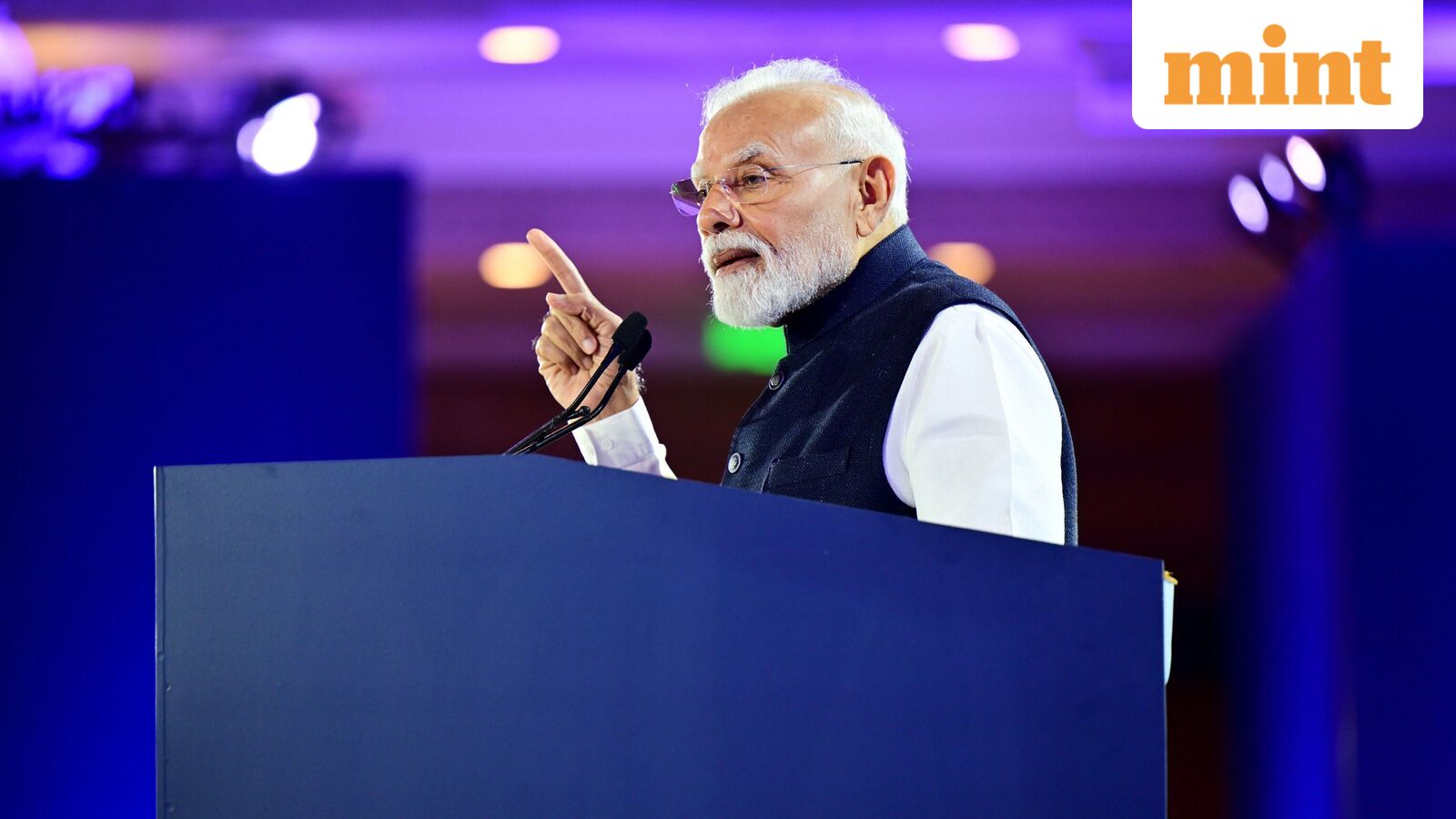
Prime Minister Narendra Modi said on Tuesday that India offers reliability and stability as the global economy faces geopolitical conflicts, supply‑chain disruptions and rising uncertainty. Speaking at the Bloomberg New Economy Forum in New Delhi, Modi noted that India’s economy grew 7.8% in the April‑June quarter, its current‑account deficit was 0.61%, and foreign‑exchange reserves exceeded $700 billion. He added that the country’s banking system was in its strongest position in decades.
Modi said India’s economic strength is underpinned by sustained reforms, including the Goods and Services Tax, new insolvency laws, consolidation of 29 labour codes into four, and decriminalisation of hundreds of minor business offences. He credited recent sovereign rating upgrades to India’s structural strength and reform momentum, stating, “For us, reforms are not a compulsion. They are a conviction.”
The prime minister warned that the interconnectedness created by decades of globalisation is increasingly turning into geopolitical chokepoints, with supply chains, energy, minerals, technology and payment systems being used as instruments of pressure. He said countries are looking for dependable partners that can maintain supply chains and honour commitments during crises.
Modi highlighted India’s approach to international economic cooperation, saying the country grows with the world rather than at anyone’s cost. He cited India’s contribution to global pharmaceutical supplies—providing one‑fifth of the world’s generic medicines—its digital identity systems, and its status as a global talent hub, with more than 2,000 Global Capability Centres serving international businesses.
On technology and innovation, Modi noted that India’s startup ecosystem has expanded from a few hundred startups in 2014 to more than 250,000 today, with nearly half originating in smaller cities and over 45% led by women. He also mentioned the role of digital public infrastructure in expanding financial inclusion, noting that the same digital payments platform is used by street vendors and large businesses.
Modi said India is sharing its digital capabilities with countries in the Global South and other partners, citing the open‑source CoWIN platform developed during the pandemic as an example of Indian innovation benefiting other nations.
Regarding the energy transition, Modi said India’s renewable‑energy capacity has increased fourfold, from 75 GW in 2014 to about 300 GW today. He noted that India achieved its commitment to reach 40% installed electricity capacity from non‑fossil‑fuel sources in November 2021, nine years ahead of its 2030 Paris Agreement target. He highlighted the PM Surya Ghar and PM‑KUSUM schemes, which have added more than 30 GW of capacity and are reducing carbon emissions by over 30 million tonnes annually.
Modi also referenced India’s international initiatives, including the International Solar Alliance, Coalition for Disaster‑Resilient Infrastructure, Global Biofuel Alliance, India‑Middle East‑Europe Economic Corridor and Mission LiFE, as platforms aimed at promoting collective benefits.
He concluded that economic, technological and political power should create opportunities for others, stating, “Power is not just the ability to move ahead; it is also the ability to empower others to move ahead.”
Frequently asked questions
What was India's GDP growth in the April-June quarter?
India’s economy grew 7.8% in the April‑June quarter.
What is India's current‑account deficit and foreign‑exchange reserves?
India’s current‑account deficit was 0.61%, and foreign‑exchange reserves exceeded $700 billion.
How many Global Capability Centres does India host?
India hosts more than 2,000 Global Capability Centres serving international businesses.