India
Jantar Mantar in Delhi: A 18th‑Century Observatory Built by Sawai Jai Singh II
By Valay Singh
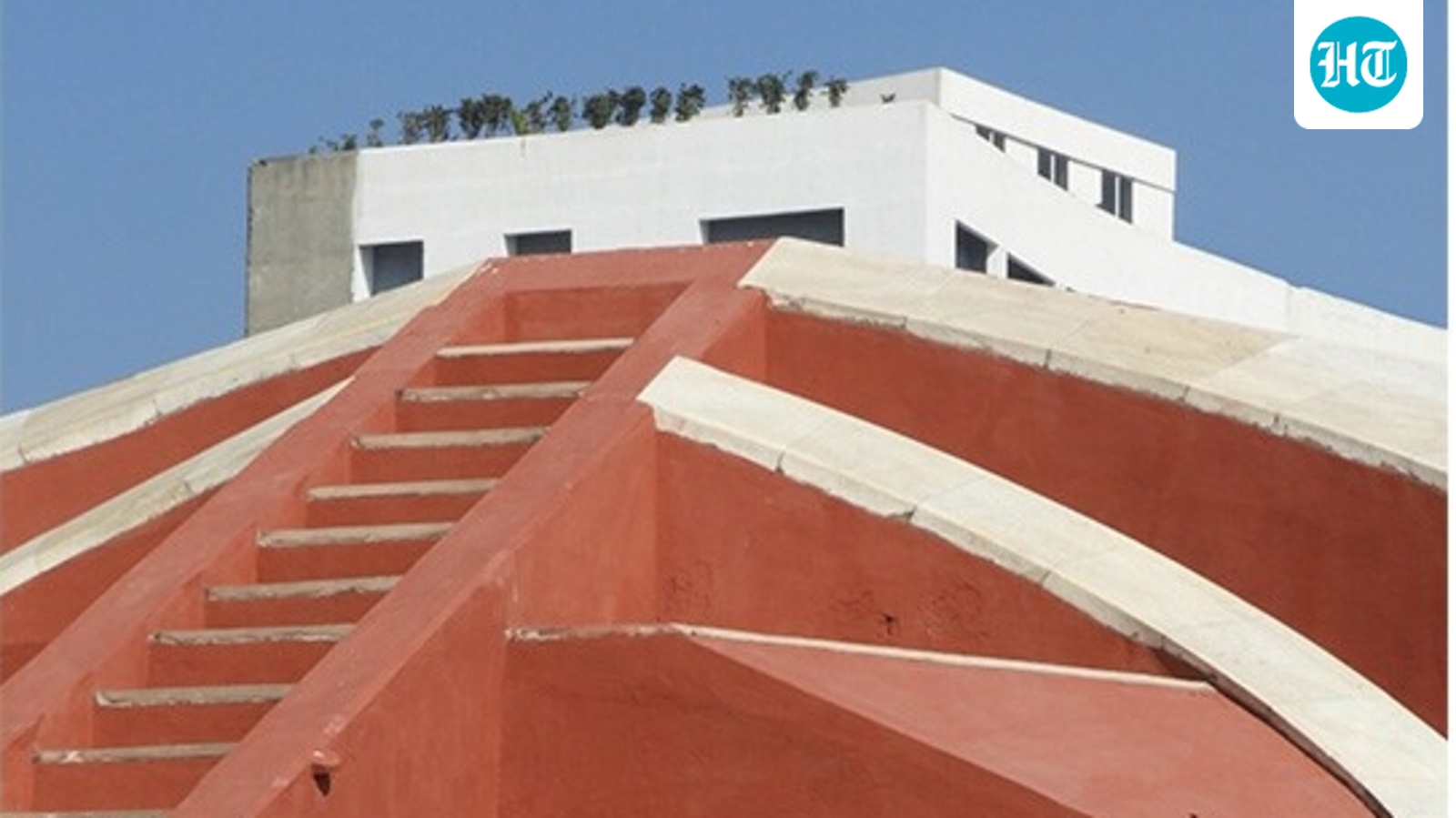
The Jantar Mantar observatory in Delhi was built by Sawai Jai Singh II, the king of Amer and a key ally of the Mughal Empire, on the orders of Emperor Muhammad Shah (1702‑1748 CE). It was the first of the observatories Jai Singh constructed. The site was used for observations that formed the basis of his new astronomical tables, the Zij‑i Muhammad Shahi, named after the emperor.
Historians disagree on the exact date of construction. Pandit Gokal Chand dates it to 1710, while Sayyid Ahmad Khan places it in 1724, the seventh year of Muhammad Shah’s reign, corresponding to the Islamic year 1137 AH (1724‑25 CE). J.R. Kaye, citing Jai Singh’s own writings, argues that the observatory was built after Muhammad Shah ascended the throne, ruling out the earlier date. Jai Singh noted that the tables took seven years to complete. In 1719, the same year the emperor took the throne, Jai Singh was appointed the emperor’s lieutenant in Agra. Jagannath, Jai Singh’s chief astronomer, recorded observations in Delhi in 1729. These clues suggest the observatory was founded around 1724.
The design of the observatory reflects Jai Singh’s pursuit of greater accuracy. He first built brass instruments such as the astrolabe, following methods described in Islamic astronomical texts. Unsatisfied, he designed his own stone and lime instruments, including the Jai Prakash, the Ram Yantra, and the Samrat Yantra. The Samrat Yantra is a large sundial that provides relatively precise time measurements. The Jai Prakash is an elaborate sundial, and the Ram Yantra measures celestial alignment. The observatory also included a mural quadrant and several metal instruments. The Misra Yantra, a mixed instrument, may have been added later by Jai Singh’s son, Madho Singh.
Travellers in the 18th and early 19th centuries frequently mentioned the Delhi observatory. In 1734, Father Claude Boudier and another priest passed through Delhi and used the observatory to take latitude and longitude readings, though they left no description of the instruments. In 1795, Franklin described the observatory as built in the third year of Muhammad Shah’s reign by Raja Jai Singh, assisted by astronomers from Persia, India, and Europe. He noted that Jai Singh died before the project was finished and that the site had been plundered and almost destroyed by the Jats during the 1764‑65 siege of Delhi.
In 1799, W. Hunter published a detailed account, noting a wall west of the Misra Yantra aligned with the meridian and a double quadrant on that wall. Hunter did not mention the Agra Yantra, suggesting it was added later. He described the Samrat Yantra as stone with a gnomon and scale arcs made of white marble, of which only a few pieces remained by his time.
Major William Thorn visited Delhi in 1803 and repeated Hunter’s description without adding new information. Later artists Thomas and William Daniell produced illustrations of the main structures, showing little change over the following century apart from minor details.