Law & Justice
Norway Seizes Russian State Ship in Svalbard Over Ukraine Arbitration Claim
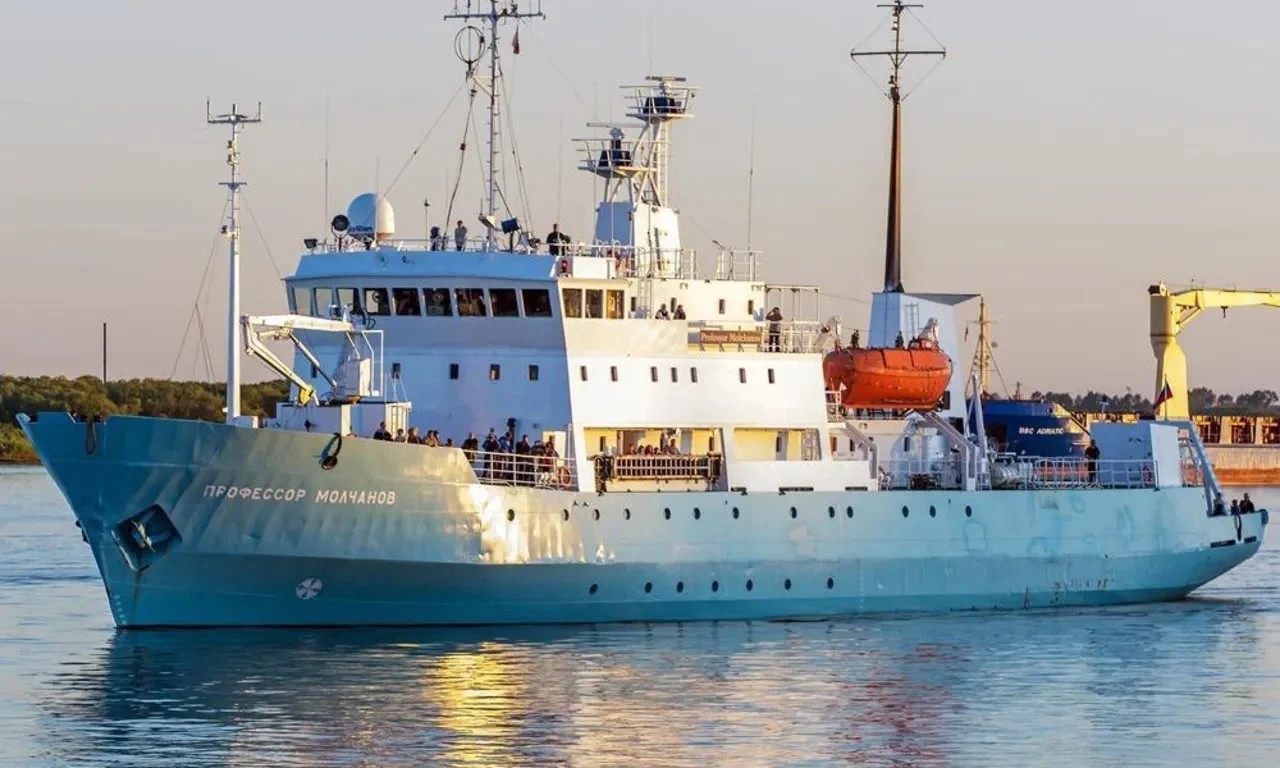
On 2 September, Norwegian authorities arrested the Russian state‑owned vessel Professor Molchanov at the port of Barentsburg in Svalbard. The seizure followed an order from the Nord‑Troms and Senja District Court at the request of Ukraine’s state energy company, Naftogaz. Naftogaz seeks to enforce a USD 4.22 billion arbitration award against Russia for energy assets expropriated after the 2014 annexation of Crimea. Russia has refused to pay the award, which has already been recognised as enforceable in Norway.
In maritime law, the detention of a ship by a court is called an arrest. A court’s authority to recognise a claim against a foreign state does not automatically allow it to seize the state’s property. The United Nations Convention on Jurisdictional Immunities of States and Their Property, which Norway ratified in 2006, sets out that a state and its property enjoy immunity from the jurisdiction of another state’s courts. However, Article 19 of the convention allows enforcement measures such as arrest or seizure of state property that is used for commercial purposes, provided the property is within the territory of the state whose court is considering the case and has a connection with the entity against which the proceedings were brought.
Naftogaz argues that the Professor Molchanov is used for commercial expedition cruises, including voyages to Svalbard. If the vessel were used solely for non‑commercial government purposes, it could benefit from immunity and Norwegian courts might not be able to seize it. State ownership alone does not determine the outcome; the nature of the asset’s use is decisive.
Svalbard is part of the Kingdom of Norway but has a special status under the 1920 Svalbard Treaty. The treaty grants nationals and companies from its signatory states, including Russia, equal rights in certain areas such as access, fishing, mining and commercial activity, while Norway retains full and absolute sovereignty over the archipelago. Russian citizens and companies operating in Svalbard must comply with Norwegian law, and Norwegian courts retain jurisdiction there.
The arrest was carried out while the ship was in port at Barentsburg, not merely passing through Norway’s exclusive economic zone or exercising innocent passage in the territorial sea. Under Article 28 of the United Nations Convention on the Law of the Sea, a coastal state may arrest a foreign ship lying in its territorial sea or passing through after leaving its internal waters, in accordance with its domestic law.
The Baltic Sea states, whose waters are entirely covered by territorial seas and exclusive economic zones, do not have a general right to arrest a Russian vessel merely for passing through those zones. Enforcement would be possible only if the vessel entered a Baltic port, internal waters, or, under certain circumstances, the territorial sea, and if the award had been recognised under domestic law, the state’s procedural rules permitted enforcement, and the vessel was not protected by state immunity.
Thus, the Norwegian case does not grant European coastal states a blanket licence to seize Russian ships. It illustrates the narrow circumstances under which an arrest may be lawful: an enforceable award, state property used for commercial purposes, the vessel within the enforcing state’s jurisdiction, and a domestic court willing to authorise the measure.
Frequently asked questions
Why was the Russian vessel Professor Molchanov seized in Svalbard?
The seizure followed an order from the Nord‑Troms and Senja District Court at the request of Ukraine’s state energy company, Naftogaz.
Under what conditions can a Norwegian court arrest a foreign state-owned vessel?
A Norwegian court can arrest a foreign state-owned vessel if it is used for commercial purposes, is within Norwegian jurisdiction (e.g., in a Norwegian port), and the award is enforceable in Norway.
Does the seizure of the Professor Molchanov give other European coastal states the right to arrest Russian ships?
No, the Norwegian case does not grant European coastal states a blanket licence to seize Russian ships; it only illustrates narrow circumstances under which an arrest may be lawful.