Politics
Israel’s Election Deepens Right‑Wing Militarism After Gaza Conflict
By Urooba Jamal
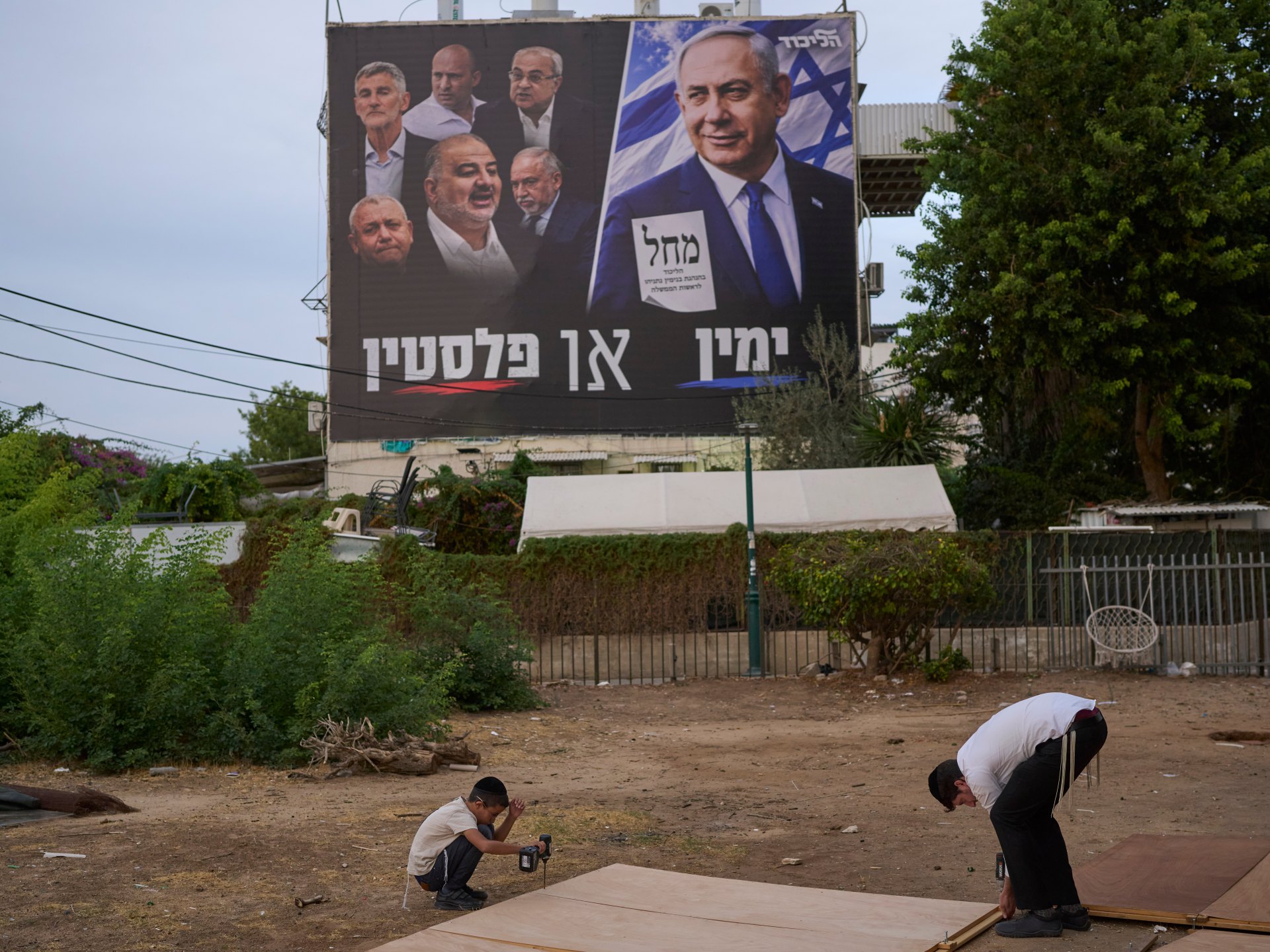
Israel’s upcoming election appears to reinforce the hard‑line stance that surged following the October 7, 2023 attacks, rather than to signal a demand for change. In the final month before the October 27 vote, Prime Minister Benjamin Netanyahu warned on September 29 that Israel’s enemies were plotting an attack before the election. He cited ongoing Israeli operations in the Gaza Strip, claiming that more than 100 “terrorists” had been killed in recent weeks. Analysts say Netanyahu’s linkage of the Gaza war, the election, and national security is deliberate, underscoring his claim that he alone can protect Israelis from threats across the country’s borders.
Netanyahu’s campaign has highlighted his security credentials, even as opponents point to his perceived failures during the October 7 attacks and the delayed release of hostages. A recent incident involving a Flydubai flight carrying Israeli passengers, in which a co‑pilot attacked the pilot with an axe, was seized upon by Netanyahu to reinforce his image as the country’s protector.
Polls indicate a tough contest in Israel’s first general election since the 2023 attacks, which killed 1,139 Israelis and triggered a war in Gaza that has killed more than 74,000 Palestinians. The conflict has become inseparable from domestic politics, accelerating a shift to the right and bringing fringe positions on Palestinians into mainstream discourse.
Far‑right figures such as Finance Minister Bezalel Smotrich, who has been sanctioned by several Western countries, and National Security Minister Itamar Ben‑Gvir, a convicted inciter of racism, have amplified calls for aggressive action. Smotrich told Ynet that the army should “go to war” in the occupied West Bank and “do there what we did in Gaza.” Moshe Feiglin, an ally of Smotrich, told the Jerusalem Post that the enemy is Gaza, not Hamas, and called for annexation of the territory after the election.
Palestinian political analyst Ahmed Najar argues that these statements are not isolated but part of an electoral message portraying Palestinians as a demographic and security problem to be expelled or destroyed. He warns that the election could become a contest over who can promise to erase Palestinian life most aggressively.
Security analyst Ahron Bregman notes that the younger generation has moved rightward, a trend that began after the 1973 Yom Kippur War but intensified after October 7. The far right has gained political power through Netanyahu’s coalition since 2022, the most right‑wing government in Israeli history. Bregman criticizes Netanyahu for legitimizing figures like Ben‑Gvir and Smotrich by bringing them into the coalition.
Several parties, including those currently in power and challengers, advocate the expulsion of Palestinians from Gaza. Director Omar Baddar of Palthink for Strategic Studies observes a consensus to continue attacks on Gaza, with leaders using threats to gain votes and a society that is increasingly radicalized.
Palestinian analyst Ehab Jabareen notes that being “right‑wing” in Israel today means taking a harder line on Palestinian claims, security, and territorial control. He points out that many Jewish Israeli politicians now assume a high tolerance for prolonged military control and insist on Jewish sovereignty as the starting point.
The electoral process itself reflects disparities: Palestinian citizen Sami Abu Shehadeh withdrew from the race after remarks about the Gaza war, while far‑right leaders faced no repercussions for violent rhetoric.
Netanyahu’s security credentials remain strong among voters. Recent polls show that Israelis still view him as the primary defender of national security, despite concerns about his handling of the October 7 attacks and the controversial judicial overhaul. A June survey by Mitvim found that the public supports the government’s military solutions and rejects resolving the Palestinian issue or ending the occupation.
Israel’s Ministry of Defence reports that nearly 30,000 soldiers and security personnel have experienced psychological trauma since the war. The rehabilitation department’s budget has risen 88 percent over three years to 10 billion shekels ($3.3 million), largely to treat mental health conditions and post‑traumatic stress disorder.
The country’s expansionist rhetoric has intensified, with officials openly advocating for a “Greater Israel” based on a biblical verse. Israel has continued to occupy Palestinian and Syrian land, expanding into Lebanon and Syria, often ignoring international law.
Najar describes the dehumanisation of Palestinians during the campaign, portraying Gaza as a blueprint for future aggression. In southern Lebanon, residents expect little change even if Netanyahu loses the election.
Gadi Eisenkot, head of the Yashar party and former army chief of staff, is Netanyahu’s main challenger. He supports the Dahiyeh Doctrine, which calls for massive force against enemies, including civilian infrastructure, and has been applied in recent wars. Eisenkot criticises Netanyahu for yielding to U.S. pressure to halt operations in Beirut and insists on the ability to attack Hezbollah anywhere in Lebanon.
Analysts say a two‑state solution is unlikely to appear in the campaign. The Oslo Accords, which began in 1993, set out a negotiating process for a Palestinian state alongside Israel. Since then, the number of Israeli settlers in the West Bank has grown from about 260,000 to more than 700,000, making a contiguous Palestinian state increasingly difficult.
Bergman argues that the two‑state solution is currently irrelevant and unlikely to become viable for another decade or more. Zonszein notes that the rejection of Palestinian statehood has become more acceptable, with several parties advocating such views while no Zionist party prioritises a Palestinian political process.
Overall, Israel’s election appears to entrench the jingoism that surged after October 7, with a growing emphasis on military force and expanding borders to prevent another attack. Zonszein concludes that the election reflects a shift toward more aggressive security policies driven by fear of future threats.