Law & Justice
Supreme Court Petition Seeks Release of CJP Leaders Detained After Delhi Protest
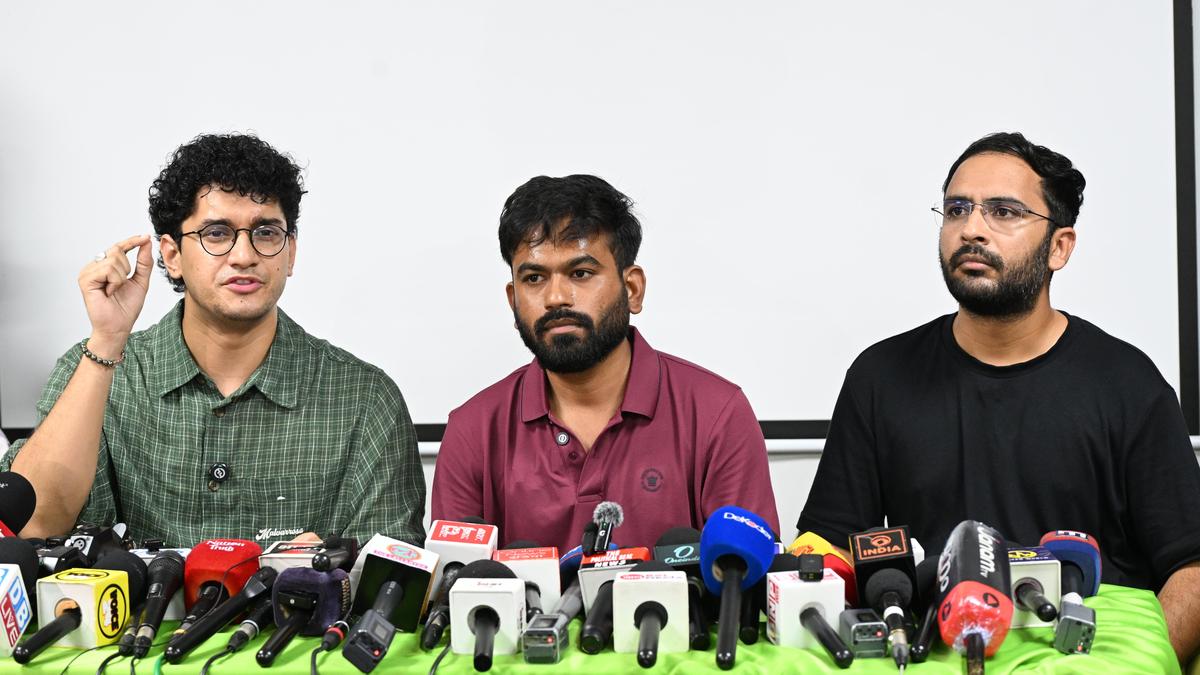
A habeas corpus petition has been filed before the Supreme Court requesting the production and release of Cockroach Janta Party founder Abhijeet Dipke, co‑convener Saurav Das, spokesperson Ashutosh Ranka, and other persons allegedly detained in connection with a protest in Delhi on Saturday, October 10, 2026. The petition was instituted under Article 32 of the Constitution by Gaurav Bharti, CJP coverage coordinator, through advocates Rajesh G. Inamdar and Shashwat Anand on behalf of the CJP leaders and other identified and unidentified persons allegedly detained or restrained in connection with the protest.
The plea invokes the Supreme Court’s habeas corpus jurisdiction to secure judicial scrutiny of the reported detentions and the immediate release of persons whose custody is found to be unauthorised by law. In a communication to the apex court registry, Mr. Inamdar stated that the petition was filed on the evening of October 10 after the persons reportedly detained had not been released. The petitioner sought a hearing on Sunday, October 11, 2026, before a Special Bench convening at 10.30 a.m. He noted that the petitioners had initially expected the detainees to be released by the evening, but were forced to approach the Supreme Court when that did not happen.
Reports indicate that Mr. Dipke, Mr. Das, and Mr. Ranka were intercepted and taken into custody at Indira Gandhi International Airport shortly after their flight landed in Delhi, before they could reach the proposed protest venue at Jantar Mantar. The petition also seeks directions requiring authorities to disclose the identities of all persons detained, the circumstances and legal basis of each detention, the authorities responsible, the grounds communicated to the persons concerned, and their present whereabouts. It requests the production of relevant arrest records, police station diaries, and movement registers.
A central contention in the plea is that the refusal of permission for a demonstration cannot, by itself, justify the indiscriminate detention of organisers, advocates, supporters, or prospective participants. The petition further seeks the preservation of relevant CCTV footage from the airport, police stations, lock‑ups and other locations, along with police control‑room logs and movement records, to establish the circumstances in which the individuals were allegedly intercepted, detained or moved.
The Union government, the Government of the National Capital Territory of Delhi, senior Delhi Police authorities, and the states of Haryana, Maharashtra, and Uttar Pradesh have been named as respondents in the petition.
Frequently asked questions
When was the protest that led to the detention of CJP leaders?
The protest took place on Saturday, October 10, 2026.
Who filed the habeas corpus petition in the Supreme Court?
The petition was filed under Article 32 by Gaurav Bharti, the CJP coverage coordinator, through advocates Rajesh G. Inamdar and Shashwat Anand.
What are the respondents named in the petition?
The respondents include the Union government, the Government of the National Capital Territory of Delhi, senior Delhi Police authorities, and the states of Haryana, Maharashtra, and Uttar Pradesh.