Law & Justice
Nobel Peace Prize Awarded to South African Jurist Navi Pillay
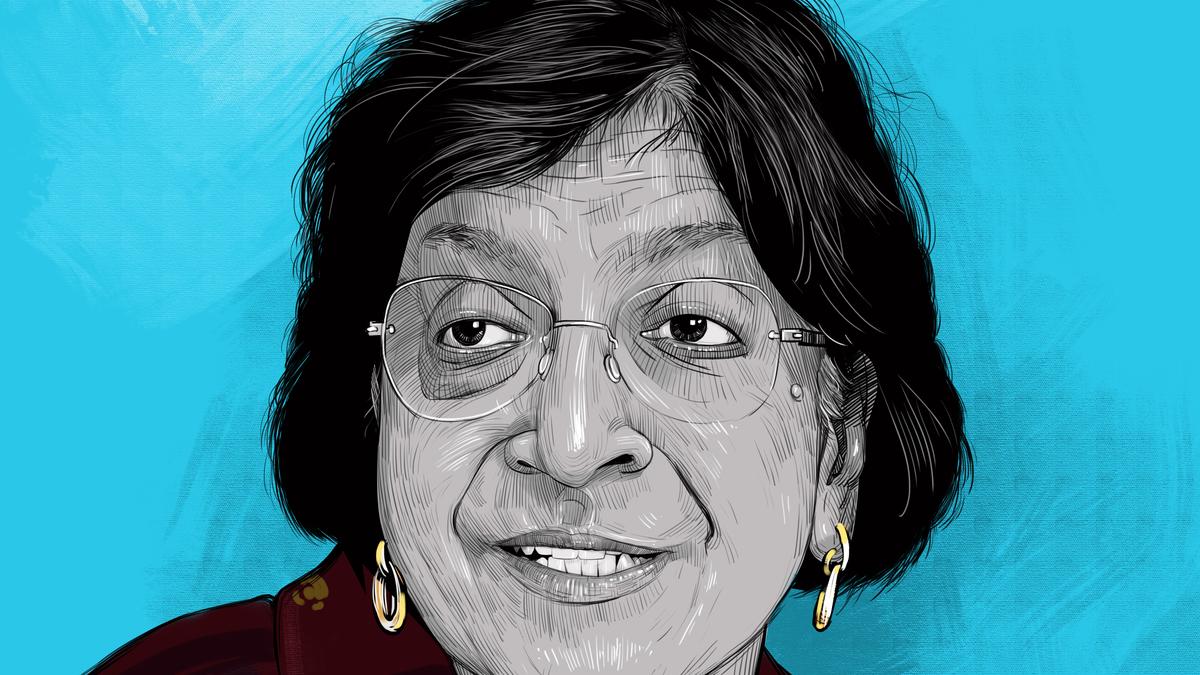
The Norwegian Nobel Committee announced that Navanethem ‘Navi’ Pillay will receive the 2026 Nobel Peace Prize. Pillay, born in 1941 in a poor neighbourhood of Durban to a Tamil family, has had a distinguished career in law and human rights. Her grandparents were indentured labourers brought from India to Natal in the 1890s. After studying law at the University of Natal, she became the first woman to open a law practice in the province in 1967. She defended opponents of apartheid and secured legal representation for inmates on Robben Island, including Nelson Mandela, in 1973. Pillay earned a doctorate in law from Harvard and campaigned for an equality clause in South Africa’s post‑apartheid Constitution.
In 1995, President Mandela nominated her to the International Criminal Tribunal for Rwanda, where she served eight years, including four as president. The tribunal issued landmark rulings: the Akayesu case recognised rape and sexual violence as genocide, and the Media case held that hate propaganda could constitute incitement to genocide. Pillay later served as a judge of the International Criminal Court (2003‑08), UN High Commissioner for Human Rights (2008‑14), and chair of the UN Commission of Inquiry on the Occupied Palestinian Territory (2021‑25). She also sits as an ad‑hoc judge for The Gambia in the International Court of Justice’s genocide case against Myanmar.
The Committee’s statement praised Pillay’s work, noting that “peace requires justice” and that international law is an absolute necessity. It warned of a shift toward power politics that undermines legal frameworks and highlighted that cases under international law can yield different outcomes depending on the parties involved. The Committee’s remarks came amid recent U.S. sanctions on ICC officials and U.S. military actions in Venezuela, Iran, and the Middle East.
Pillay’s recent role as chair of the UN commission of inquiry concluded that Israel had committed genocide against Palestinians in Gaza, citing acts that met four of the five elements of the 1948 Genocide Convention. She stated in the New York Times that she would not use the term genocide lightly and that the acts described were “calculated to bring about the destruction of a people.” She also acknowledged Hamas atrocities on October 7 but emphasized that no crime justifies genocide.
The award has drawn criticism from former U.S. President Donald Trump, who claimed he deserved the prize, and from Israel, which called the award a “grotesque weaponisation” of the Nobel Prize. The Committee’s chair clarified that the Nobel Committee is not a court but noted that honouring Pillay sends a message about the importance of law in international relations.
The Committee’s decision reflects its view that lasting peace must be built on legal principles rather than the will of the strong. It also underscores the role of jurists and human‑rights investigators in naming illegal acts and raising global awareness, even when their findings are not binding.
Published – October 11, 2026 01:00 am IST