World
Hamas’s Role in Gaza’s Future Seen as Symptom of Long‑Standing Conflict
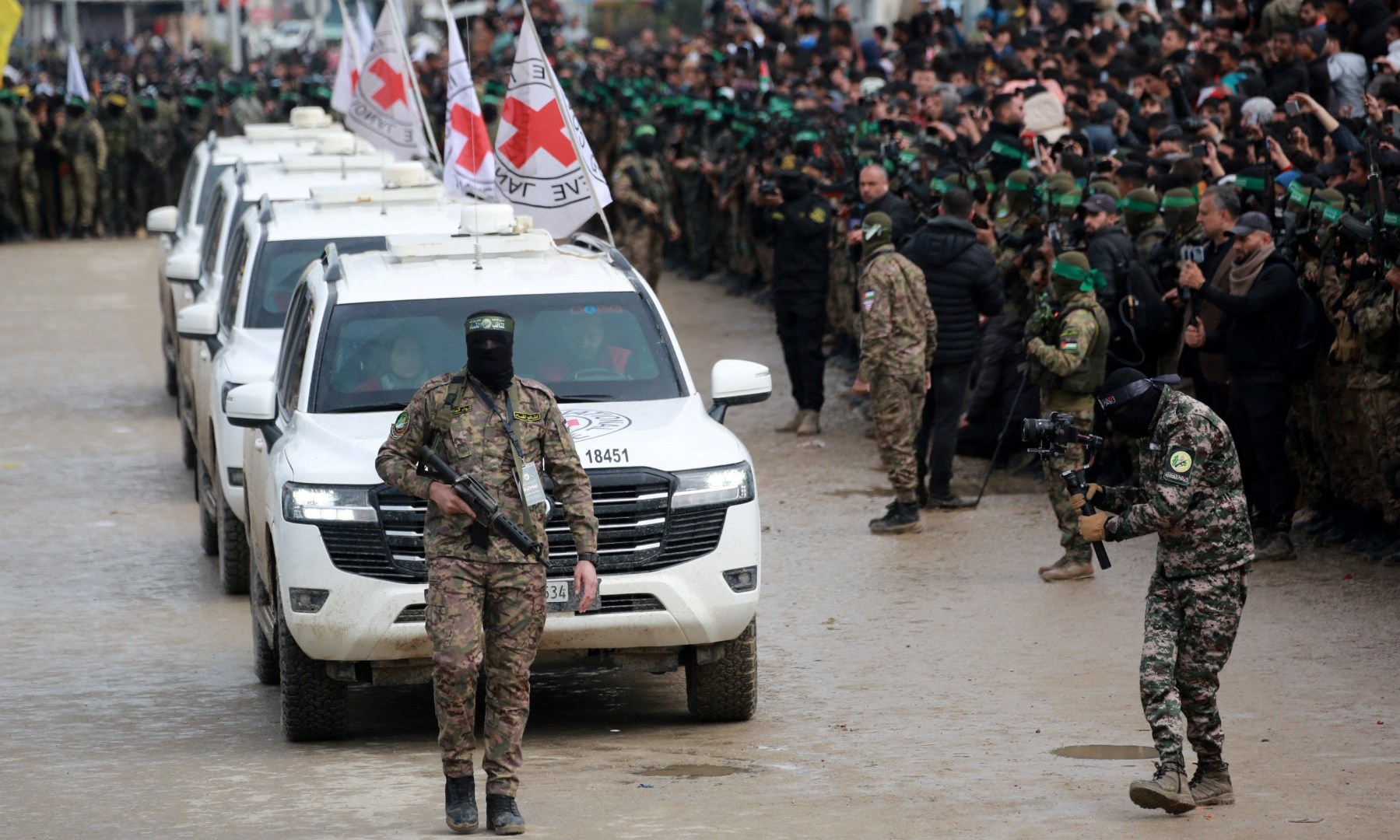
The fate of Hamas is unlikely to determine Gaza’s future. As the war enters its fourth year, calls for the group to relinquish control of the Strip are growing. Some argue that dismantling Hamas’s political and military wings is essential for any viable recovery, but the article stresses that the conflict’s roots predate the group.
Hamas did not exist in 1948, when hundreds of Palestinian villages were depopulated during the Nakba to make way for Israeli towns such as Sderot and Or HaNer. The group also did not exist in 1967, when Israel occupied Gaza and the West Bank and annexed East Jerusalem, actions that set the stage for the settlement project. Over the following decades, occupation policies and a rise in religious influence—mosques tripled from 200 to 600 between 1967 and 1987—created conditions that led to faith‑based nationalist factions. The First Intifada in 1987 was a turning point that directly triggered Hamas’s creation.
Founders of Hamas include Ibrahim al‑Yazouri, born in Bait Daras near present‑day Ashdod; Abdulaziz al‑Rantisi, born in Yibna near Jaffa; and Ahmed Yassin, born in al‑Jura near Ashkelon. All were displaced to Khan Younis after their villages were destroyed by Israeli forces.
The article notes that Hamas’s actions cannot be separated from this historical context and the role of the State of Israel. Unlike groups such as ISIL, Palestinian factions are deeply rooted in local society and national identity. Hamas’s decision to launch the October 7, 2023 assault on Israel is described as a disastrous choice, yet the group remains a symptom of a century of suffering and a struggle for self‑determination.
The author criticises the Western framing of Palestinian self‑determination as a reward for Hamas, calling it a systemic prejudice. The right to self‑determination was enshrined in international law and supported by a majority of nations before Hamas’s attack. Equating Hamas’s actions with the will of the Palestinian people is also deemed incorrect.
Statistics from an Arab Barometer survey in late September and early October 2023 show that only 29 % of Gaza respondents trusted the Hamas‑led government, 31 % blamed Hamas for poverty, 54 % supported a two‑state solution, 73 % favoured a peaceful resolution, and only 20 % favoured military action. Nearly 50 % of Gaza’s population is under 18, and more than half of current residents had not been born when Hamas won the 2006 elections.
The article cites incidents such as the Israeli army’s actions at al‑Nasr Hospital in November 2023 and the January 2024 shooting of Hind Rajab, noting that Hamas was not present in those events. It argues that Hamas’s presence does not justify the Strip’s destruction or the crimes committed against civilians.
The piece also discusses Israeli political strategy, noting that Prime Minister Benjamin Netanyahu has used Hamas to argue that no moderate Palestinian partners exist. This aligns with the 2017 Subjugation Plan, which advocated disregarding Palestinian aspirations. The article contrasts this with Israeli General Moshe Dayan’s view that peacemaking requires negotiating with enemies.
It highlights a diplomatic imbalance: Palestinian factions face strict prerequisites for legitimacy—recognising Israel, renouncing violence, and adhering to past accords—while Israel faces no reciprocal demands. The article points out that Israel’s own political history includes leaders who emerged from paramilitary groups that targeted civilians.
Israel’s insistence on the complete disarmament of Hamas as a precondition for a permanent truce is described as a political threshold that forecloses negotiated settlement, allowing Israel to maintain strategic, territorial, and political advantages.
Ultimately, the article concludes that eliminating Hamas will not eliminate the Palestinian demand for freedom, nor will it satisfy Israel’s and Palestine’s legitimate right to security. The conflict did not begin with a militant faction and will not end until all parties recognise that oppression breeds its own chains, echoing a warning from Peruvian jurist Dionisio Inca Yupanqui.
These views are the author’s own and do not necessarily reflect Al Jazeera’s editorial stance.
Frequently asked questions
When was Hamas founded?
Hamas was founded after the First Intifada in 1987.
Who were the founders of Hamas and where were they born?
Founders include Ibrahim al‑Yazouri (born in Bait Daras near Ashdod), Abdulaziz al‑Rantisi (born in Yibna near Jaffa), and Ahmed Yassin (born in al‑Jura near Ashkelon).
What did the Arab Barometer survey reveal about Gaza residents’ views on Hamas?
The survey showed 29% trusted the Hamas‑led government, 31% blamed Hamas for poverty, 54% supported a two‑state solution, 73% favoured a peaceful resolution, and 20% favoured military action.