World
Communities in Indonesian Borneo Battle Fires and Toxic Haze as Drought Persists
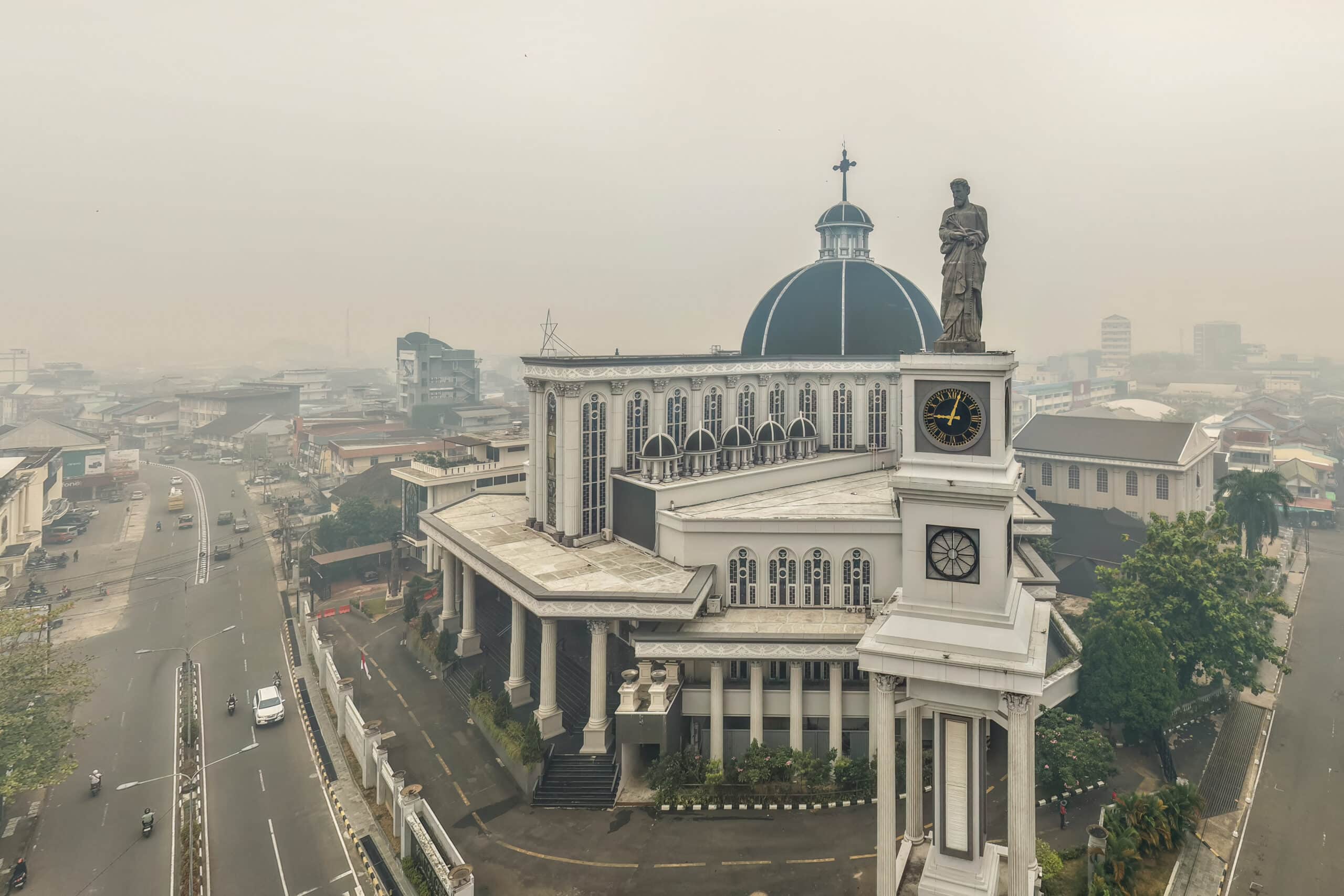
PONTIANAK, Indonesia — Wildfires spreading across the Indonesian portion of Borneo island continue to blanket communities, including areas as far as Malaysia, with hazardous haze, straining local resources and testing residents' endurance. The crisis, partly attributed to one of the most severe El Nino-driven droughts in decades, is threatening access to clean water, breathable air, and even education for millions of people.
Three community leaders in West Kalimantan province, one of the hardest-hit regions, described the situation they are facing.
Syarifah Hatifah, 57, vice principal of a junior high school in the provincial capital Pontianak, said she worries some of her nearly 600 students may fall behind academically. The school is in its third week of a second closure this fire season — the longest such closure in her 30-year teaching career.
According to the provincial education ministry, hundreds of schools across West Kalimantan have been shut indefinitely due to air pollution, forcing roughly 200,000 students to study from home. Syarifah explained that keeping children home is meant to protect their health by preventing exposure to smoke and dust on their way to school.
However, she noted that not all students have reliable internet access or computers, making online learning difficult for some. Power outages and uncharged phones have also disrupted lessons, particularly for students in remote areas with weak connectivity.
Despite the empty classrooms, teachers continue to report to school daily, conducting online lessons without air purifiers and without masks, so students can hear them clearly. Syarifah said the school plans to offer free extra classes once in-person learning resumes. She expressed hope that the haze would clear soon, noting that rain typically disperses it. West Kalimantan's rainy season usually begins around October or November.
Iwansyah, head of the health agency in Kubu Raya regency, is responsible for the health of about 700,000 people across 123 villages, served by only one general hospital and 21 clinics. He said his staff are focused on preventing illnesses caused by daily exposure to unhealthy air.
In September alone, more than 1,400 people in the regency were treated or hospitalized for acute respiratory infections, down from 6,396 cases in August, according to Iwansyah. His agency distributes about 1,000 masks daily to residents, though supplies are dwindling. He said the agency has requested more masks from the provincial government and is urging people to purchase their own.
The agency is also tracking diarrhea cases linked to reduced access to clean water caused by the drought, with 225 cases recorded so far this month. With Indonesia's meteorological agency, BMKG, warning of little relief in the coming weeks, Iwansyah said his team is intensifying preparations, including stockpiling medicine and equipment and increasing water and air quality monitoring. He expressed hope for rain before November.
Yonas, deputy head of the Lintang Batang hamlet near Pontianak, said his community's top priority is firefighting equipment. Residents pooled money to purchase a water pump, hoses, and other tools, but supplies remain insufficient. He described battling a peatland fire that had burned for four days, producing thick, acrid smoke.
Volunteer firefighters have resorted to using buckets and other makeshift tools due to a shortage of proper equipment, food, and protective gear such as masks. Yonas said the smoke poses serious health risks, particularly for children, pregnant women, the elderly, and people with asthma.
Scientific measurements show that the haze contains levels of toxic fine particulate matter far exceeding the World Health Organization's recommended safety limits. "It's very hazardous to the health of us who live in this village," Yonas said.