World
Gaza’s Health System Continues to Collapse a Year After Ceasefire
By Sally Saleh
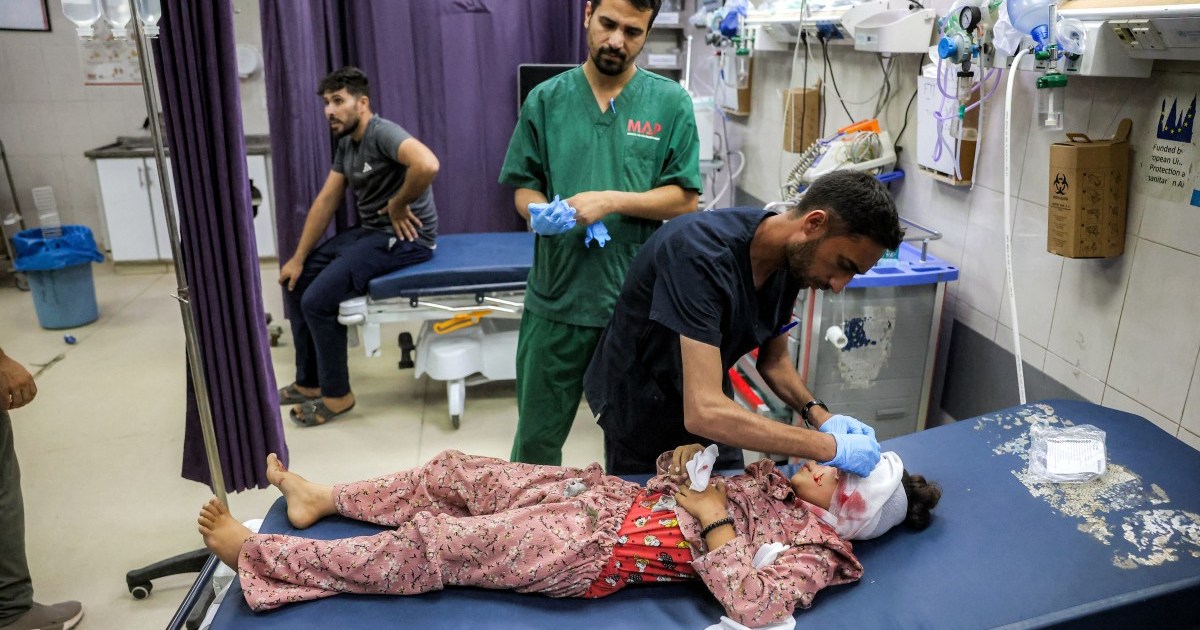
A year after the ceasefire announced on October 10, Gaza’s healthcare system remains in crisis. Ongoing attacks, restrictions on medical aid, and stalled evacuations are still killing Palestinians. The ceasefire had been expected to allow regular delivery of medicines and equipment, restoration of hospitals and clinics, and the ability for patients to leave Gaza for treatment. Those expectations have not been met.
Since the ceasefire, more than 1,470 people have been killed. Medical supplies and equipment continue to be restricted, and medical evacuations are delayed. Patients arrive at clinics with traumatic injuries from continued bombardment. Services supported by Medical Aid for Palestinians (MAP) have been suspended in parts of Gaza as the security situation worsens. A 65‑year‑old patient was killed by an Israeli military quadcopter while seeking treatment at a MAP‑supported health centre in Jabalia.
Patients with long‑term needs face shortages. Those who have lost limbs require rehabilitation, prosthetics and further surgery, but supplies are heavily restricted. Children who survived acute malnutrition now suffer from anaemia and stunting. People with diabetes and high blood pressure struggle to obtain medicines. Cancer patients cannot receive radiotherapy, and those with kidney failure cannot rely on regular dialysis.
A MAP colleague’s aunt, Iktimal, illustrates the delays. In February she sensed something wrong and had a biopsy, but the lab lacked supplies to test the sample promptly. She learned she had cervical cancer more than a month later, a disease usually curable when detected early. She underwent surgery in April, but her recovery was slow and painful, leading to kidney complications that required specialist treatment unavailable in Gaza. Her family applied for medical evacuation; the process was slow and bureaucratic. When Israeli authorities finally approved it, her condition was critical. She travelled to Egypt for care but died two weeks later. According to the World Health Organization, more than 15,000 people in Gaza are still waiting for medical evacuation, and many could die if delays continue.
Another tragedy occurred a month ago when a newborn with a serious heart condition died at Assahaba Medical Complex, a hospital MAP supports. The baby required emergency surgery not available in Gaza. Doctors knew what was needed but had no means to provide it.
Basic medical supplies are also running short. Hospitals lack IV fluids, anaesthetics, surgical supplies and oxygen. Staff in many hospitals must carry cylinders to a central station for refilling. Over 500 patients rely on oxygen, some around the clock, including those with cancer, pulmonary fibrosis, heart conditions, and babies and children in intensive care. In August, the Palestinian Ministry of Health warned that 22 of Gaza’s 34 oxygen stations had stopped working, and only four of 30 machines used to fill oxygen cylinders were still operational. Israeli authorities continue to block spare parts needed to repair them, classifying them as “dual‑use” items. For similar reasons, Gaza has no working MRI machine, and only one or two CT scanners serve about two million people. Doctors sometimes must make decisions without scans, tests or medicines they would normally rely on.
The ceasefire was promised to give people in Gaza time to heal and rebuild, but restrictions remain in place. Every delay costs lives and worsens conditions. Thousands of people in Gaza are running out of time.
The views expressed in this article are the author’s own and do not necessarily reflect Al Jazeera’s editorial stance.
Frequently asked questions
How many people have been killed in Gaza since the ceasefire?
More than 1,470 people have been killed.
How many patients in Gaza are still waiting for medical evacuation?
According to the World Health Organization, more than 15,000 people are still waiting for medical evacuation.
What is the status of oxygen stations in Gaza?
In August, the Palestinian Ministry of Health warned that 22 of Gaza’s 34 oxygen stations had stopped working, and only four of 30 machines used to fill oxygen cylinders were still operational.