World
French Students Protest Over School Conditions Amid Rising Tensions
By Today News Hours Editorial Desk
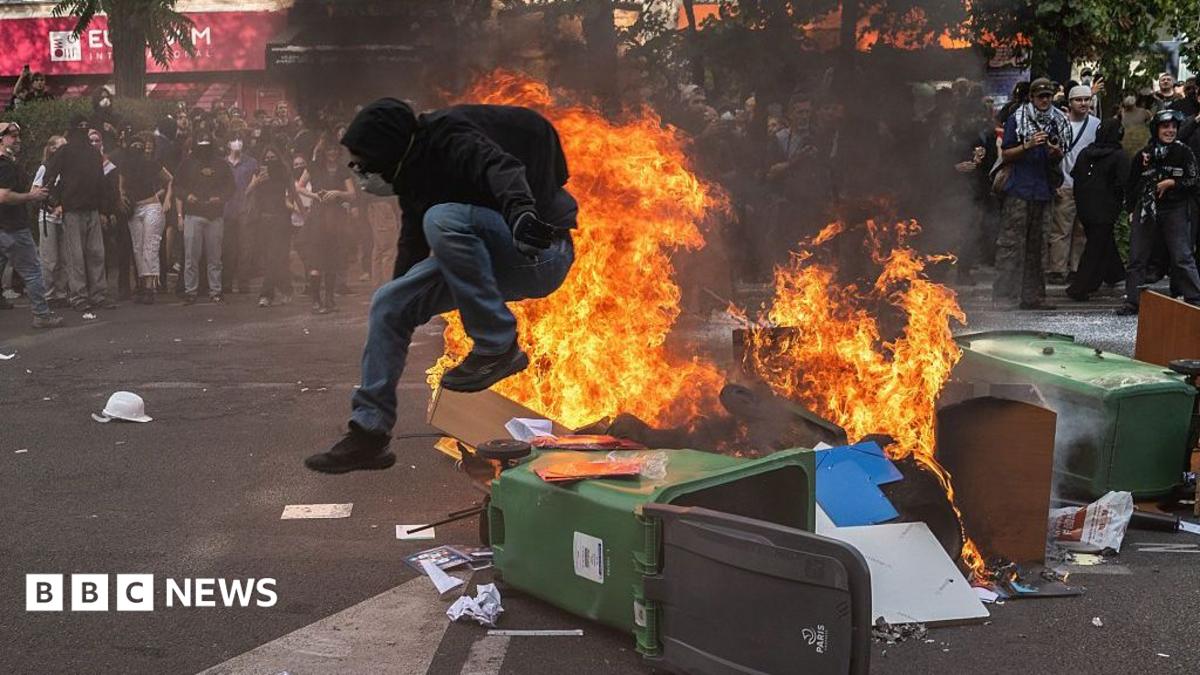
In Lille, students have taken to the streets, chanting "everyone hates the police" as they protest the state of France’s secondary schools. A 16‑year‑old explained that his school lacks basic facilities, with only a few chairs available and a 50‑minute lunch break that must serve 2,000 students. The protests, which began at Lycée Antoine‑de‑Saint‑Exupéry in Créteil, have spread across the country, driven by complaints of overcrowded classes, chronic staff shortages, dilapidated buildings, and harsh school hours. Students and teachers alike have joined the demonstrations. Marine Monins, a secondary‑school teacher in Lille, showed a laminated timetable that highlighted long school days punctuated by gaps caused by poor planning and staff shortages. She noted that classes often contain 35 pupils, compared with fewer than 23 in England.
The French government has responded by pledging 3,000 additional supply teachers and promising a plan to address the crisis by the end of October. Prime Minister Sébastien Lecornu said ministers would revisit school resources within next year’s budget. However, students and teachers have largely dismissed these promises as insufficient.
The unrest has led to widespread arrests and injuries. According to the interior ministry, almost 7,000 people have been detained, more than 85 % of whom are minors. Over 700 police officers have been injured in the past three weeks. Rights groups and unions accuse the police of using batons, tear gas, and non‑lethal flash‑ball guns against minors. At least 200 pupils and dozens of teachers have been injured, and a 15‑year‑old boy in Lens lost a hand after a confrontation with police. Police have since been banned from using stun grenades at school protests.
The protests have become a focal point in France’s polarized politics, with both the hard right and hard left seeking to capitalize on the unrest ahead of the upcoming presidential election. Marine Le Pen, the National Rally candidate, has condemned vandalism and suggested that parents of vandalised students should pay for repairs. She has also called for cuts in public spending. Opponents accuse her of exploiting the protests, while she maintains that her party best represents French youth.
The education crisis reflects broader concerns about the erosion of the political middle ground in France. An Ipsos survey for Aix‑Marseille University found that more than three‑quarters of under‑30s in France are worried about the state of the country. The protests, which have involved hundreds of thousands of students nationwide, continue to demand better facilities, more teachers, and a more responsive education system. The government faces the challenge of addressing these demands while navigating a strained national budget and a divided political landscape.
Frequently asked questions
What are the main grievances driving the student protests in France?
Students protest overcrowded classes, chronic staff shortages, dilapidated buildings, harsh school hours, and lack of basic facilities such as enough chairs and adequate lunch breaks.
How many people have been detained during the protests, and what proportion are minors?
Almost 7,000 people have been detained, with more than 85 % of them being minors.
What measures has the French government pledged to address the education crisis?
The government pledged 3,000 additional supply teachers, a plan to address the crisis by the end of October, and that ministers will revisit school resources within next year’s budget.