Business & Finance
RBI Governor Says Rupee Undervalued, Promises Market Support
By TNN
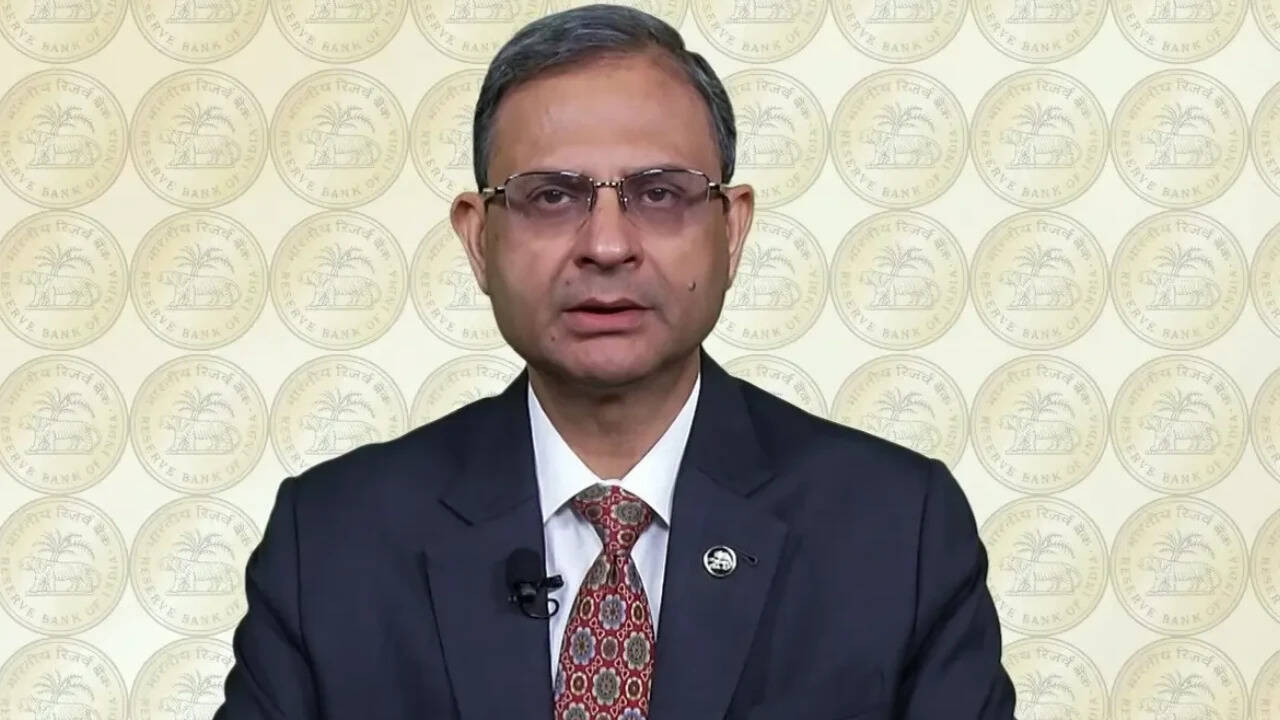
Reserve Bank of India Governor Sanjay Malhotra said the rupee was undervalued and that the central bank would intervene to keep the currency market orderly. The rupee closed at 96.78 on Wednesday, down 36 paise from its previous close, after falling to a five‑month low of 96.85 during the day.
"By a number of estimates, including the real effective exchange rate, the rupee is not overvalued. It may be undervalued," Malhotra said at a press conference after the MPC meeting, responding to a question about market irrationality. "Markets can be quite irrational in the short run. It’s only in the long run that they are able to find the right value," he added.
The governor said the RBI would support the rupee’s orderly movement and help it find its "correct value," while ensuring there was no excessive volatility.
Malhotra also noted that a correction in the valuation of global AI stocks could redirect foreign capital to emerging markets such as India. He said a correction in AI stocks would not have a major negative impact on India and "if at all, there may be" a positive impact.
He said US tariffs and the absence of a trade deal would be a negative but could be offset by a trade deal with other countries.
Despite a robust services trade surplus and strong net remittance receipts, the current account deficit widened in July because of a higher merchandise trade deficit. The merchandise trade deficit rose to $58.7 billion in July and August from $55.1 billion in the same period a year earlier, mainly because of higher imports of electronic goods and crude oil.
On external financing, Malhotra said net FDI had shown sustained improvement, with inflows rising to $13.8 billion in the first four months of the year from $9.6 billion in the corresponding period a year earlier. The increase was driven by higher gross inflows and a slowdown in the growth of outward FDI. "Robust gross FDI reflects the strong interest of global investors in India," he said. FPI recorded net outflows of $10.3 billion during the period up to Oct 5. However, capital‑flow measures announced in the June policy had supported inflows, he said. The balance of payments is consequently expected to record a healthy surplus this year.
Malhotra also clarified that the new trade rules are aimed at improving ease of business and do not impose a reporting burden on individuals who get paid from overseas for software or other services. Nor does it apply to individuals paying for software or some subscriptions. Small exporters can use a self‑declaration for bills up to Rs 10 lakh; and banks, not exporters or importers, handle reporting on the RBI’s system. The aim is to simplify trade procedures while improving RBI’s data on services exports, he said.
After a two‑session gain, the Sensex slid on Wednesday after the RBI hiked interest rates for the first time in over three‑and‑a‑half years. The Sensex closed 429 points down at 72,639 points, while on the NSE the Nifty closed 173 points down at 22,603 points. On the BSE, the PSU banks and housing finance indices each closed nearly 1% up, while the bank‑ex and financial services indices barely changed.
Frequently asked questions
Why does the RBI say the rupee is undervalued?
RBI Governor Sanjay Malhotra said that estimates, including the real effective exchange rate, show the rupee is not overvalued and may be undervalued.
What actions will the RBI take to support the rupee?
The RBI will intervene to keep the currency market orderly and help the rupee find its correct value while ensuring no excessive volatility.
How did foreign direct investment (FDI) inflows change in the first four months of the year?
FDI inflows rose to $13.8 billion in the first four months of the year from $9.6 billion in the corresponding period a year earlier.