World
Israel’s Economy Booms Amid War, Yet Rising Prices and Debt Raise Voter Concerns
By John Power
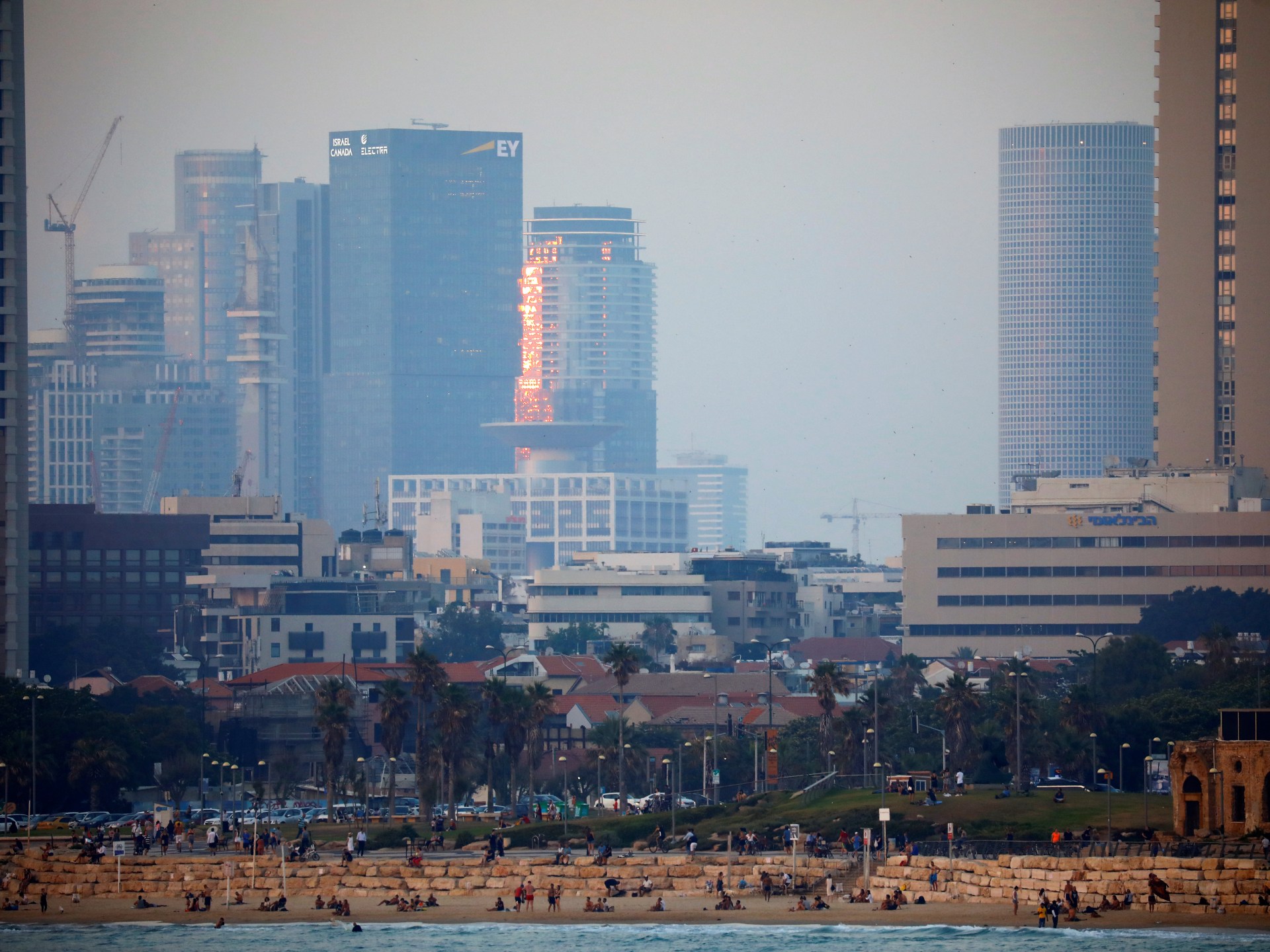
Israel’s economy has surged in the wake of the multi‑front war that began in October 2023, with gross domestic product growing 2.9 % in 2025 and 3.2 % in the first half of 2026, according to government figures. The Bank of Israel projects 4 % growth for 2026 and 5.5 % for 2027, outpacing major economies such as the United States, United Kingdom, France, Canada and Japan. The shekel has strengthened against the U.S. dollar, reaching a three‑decade high in May, and the TA‑125 stock index has risen more than 110 %. Unemployment sits at 2.8 % and inflation is modest at 1.5 %.
The country’s resilience is largely driven by a booming technology sector that has attracted record foreign investment. Direct foreign investment reached $26.2 bn last year, a 78 % increase from 2024, led by U.S. firms Alphabet and Palo Alto Networks, which acquired Israeli cybersecurity companies Wiz and CyberArk. In the first quarter of 2026, foreign capital inflows hit a quarterly record of $14.1 bn. Israel’s tech industry benefits from close ties to the defense sector, which has increased orders for startups supplying radar, communications and anti‑drone technology.
Economist Keren Uziyel of the Economist Intelligence Unit said the export‑driven growth reflects strong global demand for Israeli cybersecurity and artificial intelligence products, which fuels high levels of foreign direct investment, venture capital, and capital market activity, boosting government revenue.
However, the war has imposed a heavy cost on the public purse. In March, the Bank of Israel estimated war costs at approximately 350 billion shekels ($114.6 bn), excluding recent Iran‑related expenses. The defense budget is slated to rise to 183 billion shekels ($60 bn), about 9 % of GDP, a two and a half‑fold increase from pre‑war levels. Netanyahu’s coalition has pushed for the higher budget, while opposition leader Yair Lapid has also supported an expanded defense budget but disagrees on funding.
Opinion polling shows that the economy and cost of living are key concerns for voters. A recent Israel Democracy Institute poll found that 38 % of Jewish Israelis and 46 % of Palestinian citizens of Israel listed the economy or cost of living as the most or second‑most important election issue. Israel’s high cost of living, driven by limited trade with neighbors and regulatory hurdles, has long been a source of public discontent. Food prices rose 8 % between early 2024 and mid‑2026, according to Lobby 99.
Vice‑president Ayal Kimhi of the Shoresh Institution for Socioeconomic Research told Al Jazeera that voters are more worried about personal cost of living than macroeconomic conditions, though security remains the dominant public discourse. He noted that many parties do not present distinct economic agendas.
While headline figures are impressive, economists caution that growth has been partly buoyed by Israel’s high population growth, averaging nearly 2 % over the past decade. The Bank of Israel estimates an accumulated output loss of 8.6 % of annual GDP through the end of 2025. Professor Joseph Zeira of Hebrew University said that living standards have not improved significantly, citing higher prices, lower real wages and deteriorating public services, with only a modest decline in housing prices.
Public debt remains a concern. Israel’s debt‑to‑GDP ratio is about 68, lower than that of peers such as the U.S., U.K., France and Italy, but the gap between revenue and spending has widened sharply over the past three years. The Bank of Israel called for orderly budgetary processes and credible measures to reduce public debt. Long‑term challenges include increasing labor participation among ultra‑Orthodox Jewish men and Arab women, both of whom have lower employment rates.
Professor Omer Moav of the University of Warwick and Reichman University warned that deficits and national debt have expanded significantly, making current spending trajectories unsustainable without fiscal consolidation. He said the next government faces a huge challenge.
Economists say Israel’s future growth will depend largely on the regional security situation. Uziyel expects growth to reach around 4 % in 2026 and exceed that in 2027, but significant downside risks remain if conflicts in Gaza, Iran or Lebanon resume. Kimhi added that ending the war and reducing military spending could improve prospects.
Regardless of the election outcome, Israel’s economic prospects will hinge on whether conflict in the region escalates or subsides.
Frequently asked questions
What is Israel's projected GDP growth for 2026 and 2027?
The Bank of Israel projects 4% growth for 2026 and 5.5% for 2027.
How much foreign direct investment did Israel receive in 2025, and which U.S. firms led the investment?
Direct foreign investment reached $26.2bn in 2025, led by U.S. firms Alphabet and Palo Alto Networks.
What is Israel's debt-to-GDP ratio, and how does it compare to other major economies?
Israel’s debt-to-GDP ratio is about 68%, lower than the U.S., U.K., France, and Italy.