World
India’s Jaishankar Criticizes UN as ‘Irrelevant’ and Calls for Security Council Reform
By Bhanu Pratap
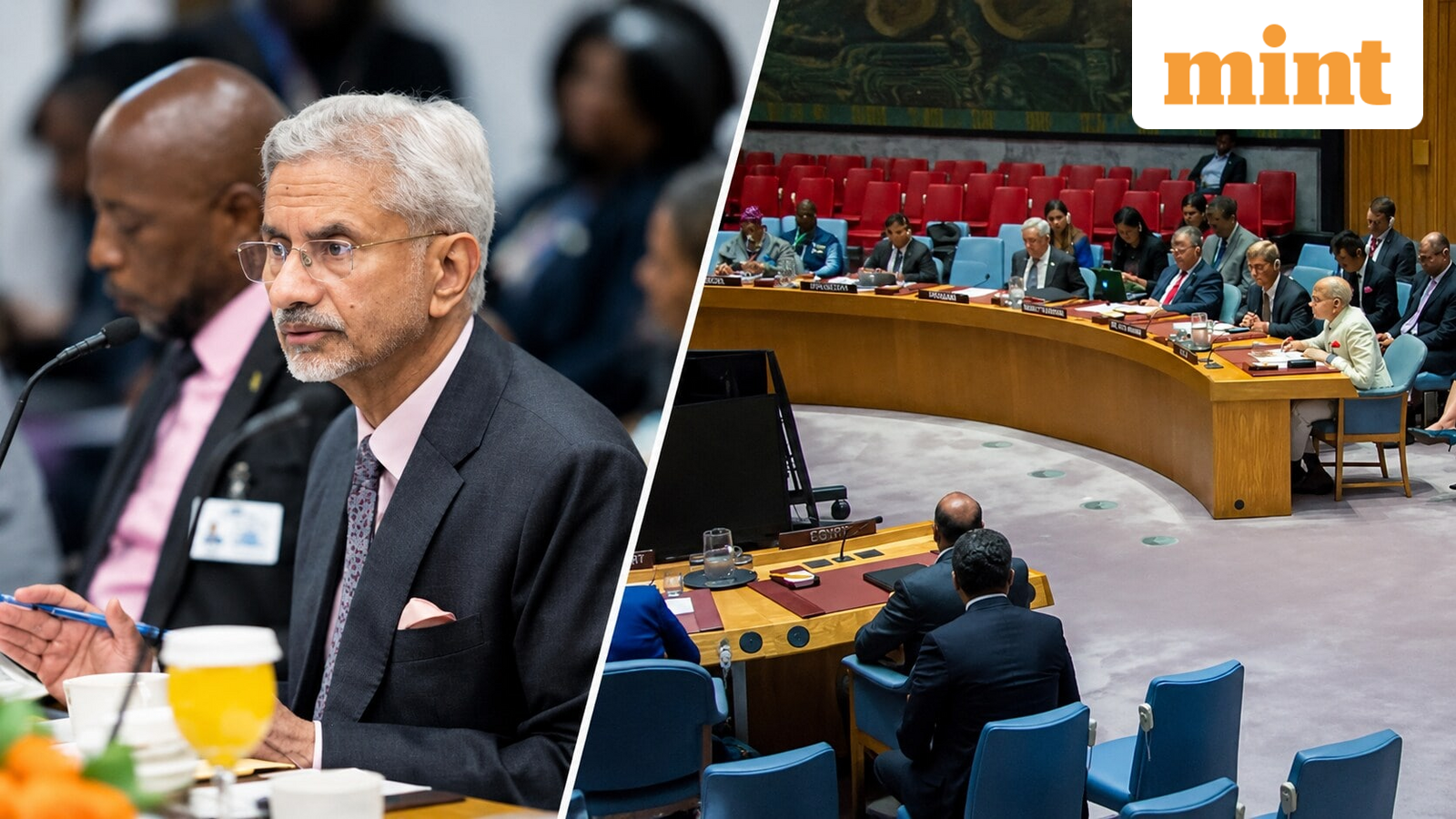
External Affairs Minister S Jaishankar said the United Nations has become largely irrelevant in decision‑making on major global crises because the Security Council is gridlocked. Speaking at the 5th Kautilya Economic Conclave in New Delhi on Monday, Jaishankar pointed to conflicts in the Gulf, Ukraine and Africa, as well as the Covid‑19 pandemic, to illustrate the UN’s inability to respond effectively. He said the problem is linked to the Security Council’s structure, which no longer reflects the wider international community. The Council has 15 members – five permanent members with veto powers (the United States, Russia, China, France and the United Kingdom) and 10 elected members – and the permanent members can block substantive resolutions. Jaishankar argued that the institution has failed to keep pace with the dramatic expansion of the UN’s membership, which grew from 51 to almost four times that number. He said that keeping the old board of management would not work.
For India, the issue is not only about securing a permanent seat but about making the Council more representative of 21st‑century geopolitical realities. When the UN was founded in 1945, much of Asia and Africa was still under colonial rule. Today, developing countries make up a large share of UN membership, yet their representation in the Council’s permanent structure remains limited. India has therefore pushed for an expansion of both permanent and non‑permanent membership and for greater representation for Africa.
In an earlier interview with LiveMint, former diplomat Suresh Goel explained that India’s case for permanent membership goes beyond its national interests. “The question is not why it is important for India to have a permanent seat on the UN Security Council, but why the world needs India as a permanent member,” Goel said. He added that India’s claim is based on its role as a voice of the Global South.
New Delhi has been working with the G4 grouping – India, Brazil, Germany and Japan – and the L.69 Group, a cross‑regional coalition of developing countries, to build support for UNSC reform. Jaishankar also criticised countries that invoke Africa’s interests while opposing reforms to the UN. He said that some players are resistant to reform and use the name of Africa to justify their stance. African countries have already articulated their position on reform through intergovernmental negotiations.
Jaishankar’s remarks come as the campaign for Security Council reform gains fresh momentum during the ongoing UN General Assembly session. The G4 recently renewed its call for reform, describing the current structure of the eight‑decade‑old Security Council as “anachronistic” and arguing that reform is “more necessary than ever” amid growing global challenges. The group also reiterated its support for greater representation of African countries on the Security Council. Separately, the four members of the Visegrad Group – Hungary, Poland, Slovakia and the Czech Republic – have voiced collective support for UNSC reform.
Frequently asked questions
Why does India’s External Affairs Minister S. Jaishankar say the UN is irrelevant?
He says the UN is largely irrelevant because the Security Council is gridlocked and cannot respond effectively to major global crises.
What reforms does Jaishankar propose for the UN Security Council?
He calls for expanding both permanent and non‑permanent membership and increasing representation for Africa to reflect 21st‑century geopolitics.
Which groups is India working with to support UNSC reform?
India is working with the G4 grouping (India, Brazil, Germany, Japan) and the L.69 Group, a coalition of developing countries.