India
Indian Railways Deploys Freight Locomotives on Passenger Trains Amid Locomotive Shortage
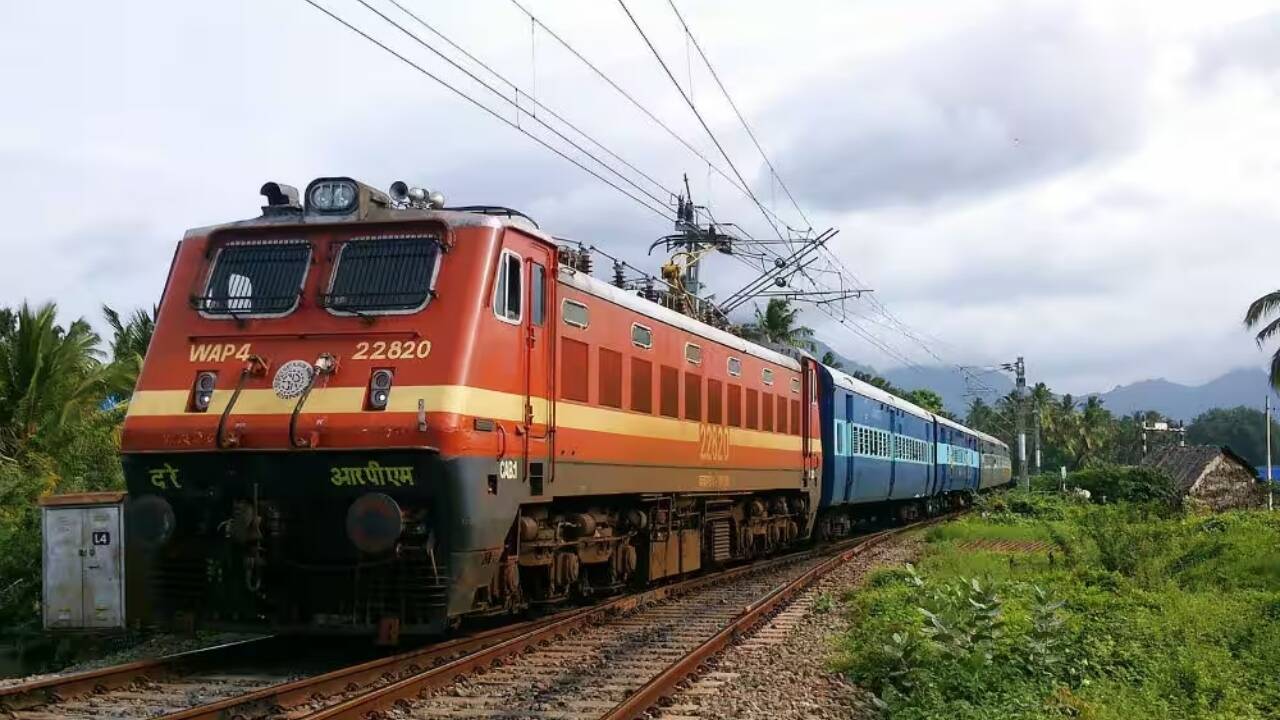
Indian Railways is running short of locomotives for passenger services, leading the national transporter to use freight engines on passenger trains. The shortage has caused delays of several hours, according to railway records. The Railway Ministry said it is accelerating locomotive production, approving 492 passenger locomotives for 2026-27 and 187 for 2027-28, bringing the total to 679 over the two years. The 2026-27 programme includes 326 WAP-7 locomotives and 166 WAP-7 locos, and the ministry is also adopting modern trainsets and improving utilisation of existing assets.
Railway zones report an average of 80 to 100 incidents each month where passenger trains are hauled by freight locomotives. A recent example is Train No. 11044, the Ballia-Dadar Central Express, which was delayed 5 hours 28 minutes on September 3, 2026, because a suitable passenger locomotive was unavailable. The train was scheduled to run with a WAP-4 passenger locomotive capable of over 130 km/h, but North Eastern Railway assigned a freight locomotive certified for up to 100 km/h. The delay was recorded as a detention of 328 minutes.
In September 2026, records showed at least two passenger trains operating with WAG-9 freight locomotives, which have a maximum speed of 100 km/h. Train No. 14102, the Kanpur Central‑Prayagraj Sangam InterCity Express, was scheduled to run with a WAP-1 passenger locomotive that can reach 130 km/h, but was substituted with a WAG-9 freight engine, causing a delay of at least 30 minutes. Train No. 17601, running between Kacheguda and Shri Ganganagar, was also assigned a WAG-9 freight locomotive instead of its scheduled WAP-7 passenger engine, affecting its punctuality.
Indian Railways has about 17,900 locomotives in its fleet as of September 2026, including roughly 13,700 electric engines and 4,200 diesel engines. Of the electric locomotives, about 3,400 are passenger engines of the WAP series, while the rest are primarily freight engines of the WAG series. Of the diesel locomotives, 284 are used for passenger services.
A senior zonal railway official said that locomotive production has increased significantly in the last 12 years, but the earlier neglect of manufacturing before 2014, which caused shortages of locomotives, wagons and coaches, will be compensated over time.