World
Yemen’s Economy Collapses as War‑Driven Inflation Hits Daily Life
By Samir Hassan and Abdullah Qatran
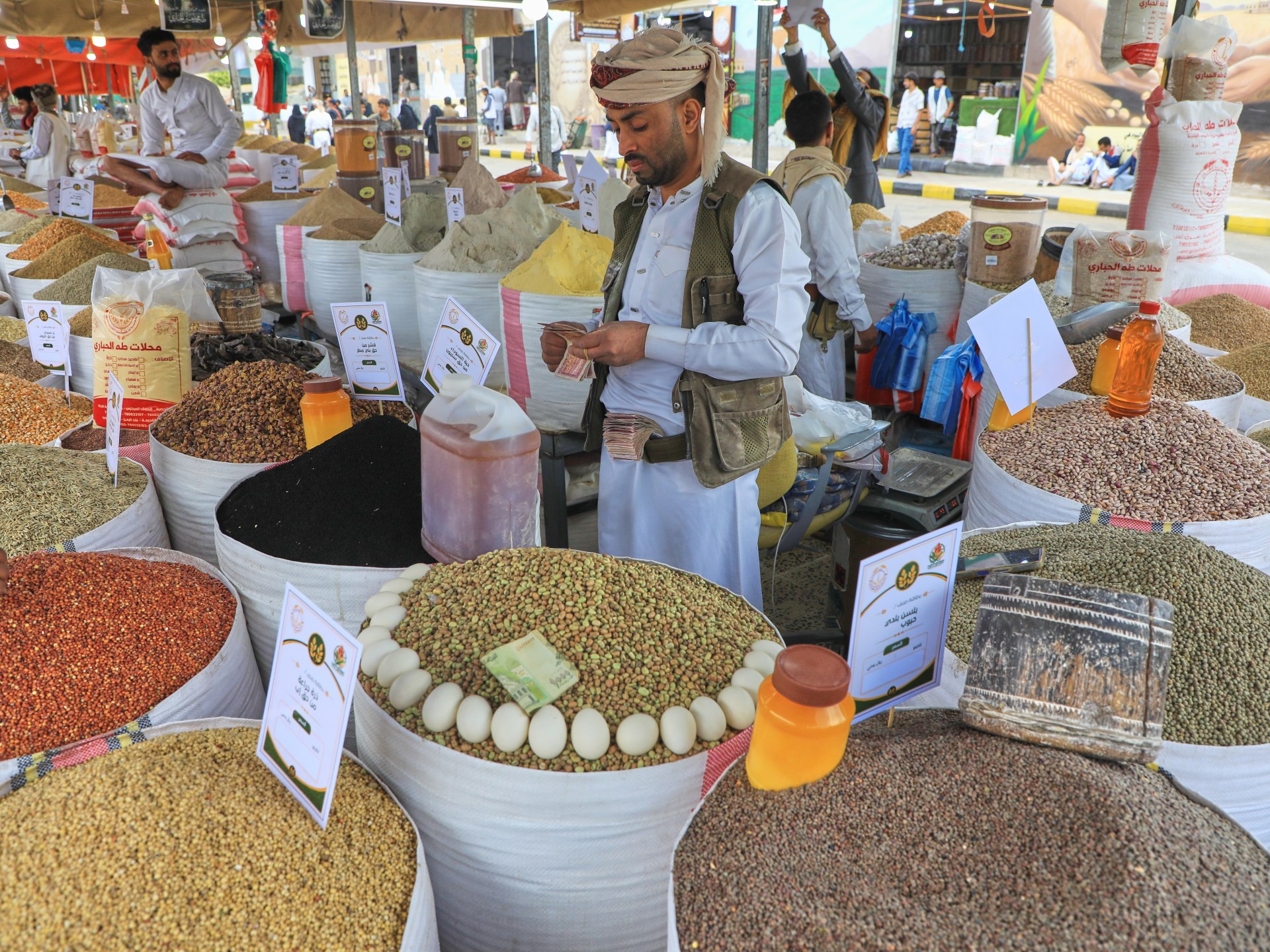
As fighting between the Yemeni government and the Houthis intensifies, millions of Yemenis face a worsening economic crisis marked by unpaid salaries and rising prices. The conflict has fragmented the country’s banking system, making it difficult to transfer money across regions. In Aden, the government’s interim capital, shoppers find that food costs exceed their wages. Government employee Bushra Abdullah Abdulwarith earns 78,000 riyals ($50) a month at the black‑market rate, while average household food costs in government‑held areas are about 130,366 riyals ($83). She says rising prices force families to cut non‑essential purchases and reduce meat consumption, and some buy food in smaller quantities or on credit.
Retailers in Aden report that customers now rarely buy non‑essential items and choose smaller packages of staples such as rice. Ayman al‑Maqtari, who works at a shopping centre in Mansoura, notes that many families live day‑by‑day or week‑by‑week and increasingly rely on credit.
The government approved a 20 % cost‑of‑living allowance for public‑sector workers in May, but the increase is based on base salary, leaving many workers with little relief. Bushra describes the allowance as a temporary painkiller that does not reflect the real pressure on living standards.
In Marib, a government‑controlled city east of Sanaa that hosts hundreds of thousands of displaced people, the population surge has strained housing, employment and public services. Government employees there, such as Salah al‑Zuhaifi and Abu Mohammed Nasser al‑Asbahi, report that inflation erodes their salaries, leaving little for rent and other expenses. Many families rely on loans and credit from local shops. Pharmacist Khaled Mohsen says rising medicine prices cause patients to skip parts of prescribed treatments, while chronic‑illness sufferers reduce doses to stretch supplies.
In Houthi‑controlled Sanaa and other northwest areas, the economic crisis is similar. Public‑sector workers have gone years without regular salaries, and private‑sector workers face declining activity, multiple fees and limited employment. The Yemeni riyal’s exchange rate in Houthi‑controlled Sanaa is more stable than in government‑controlled areas, but strict monetary controls and a divided banking system create cash shortages and higher transfer costs. Many households depend on domestic and international remittances, which are now harder to move.
The World Bank estimates that real GDP per capita in Yemen has fallen about 58 % since 2015, while the World Food Programme reports that 74 % of households in accessible government‑controlled areas cannot meet basic food needs. The war‑driven fragmentation of Yemen’s monetary institutions, disruption of oil exports and declining international assistance have all contributed to the economic decline.
Across the country, families are forced to make difficult choices about what they can afford and what they must give up, as the conflict continues to erode livelihoods and purchasing power.
Frequently asked questions
What is the impact of war on Yemen's banking system?
The conflict has fragmented the country’s banking system, making it difficult to transfer money across regions.
How has the cost‑of‑living allowance affected public‑sector workers?
The government approved a 20 % cost‑of‑living allowance based on base salary, but many workers receive little relief, describing it as a temporary painkiller.
What percentage of households in government‑controlled areas cannot meet basic food needs?
The World Food Programme reports that 74 % of households in accessible government‑controlled areas cannot meet basic food needs.