World
France’s Student Protests Reach 266,000, Echoing 1968 Unrest
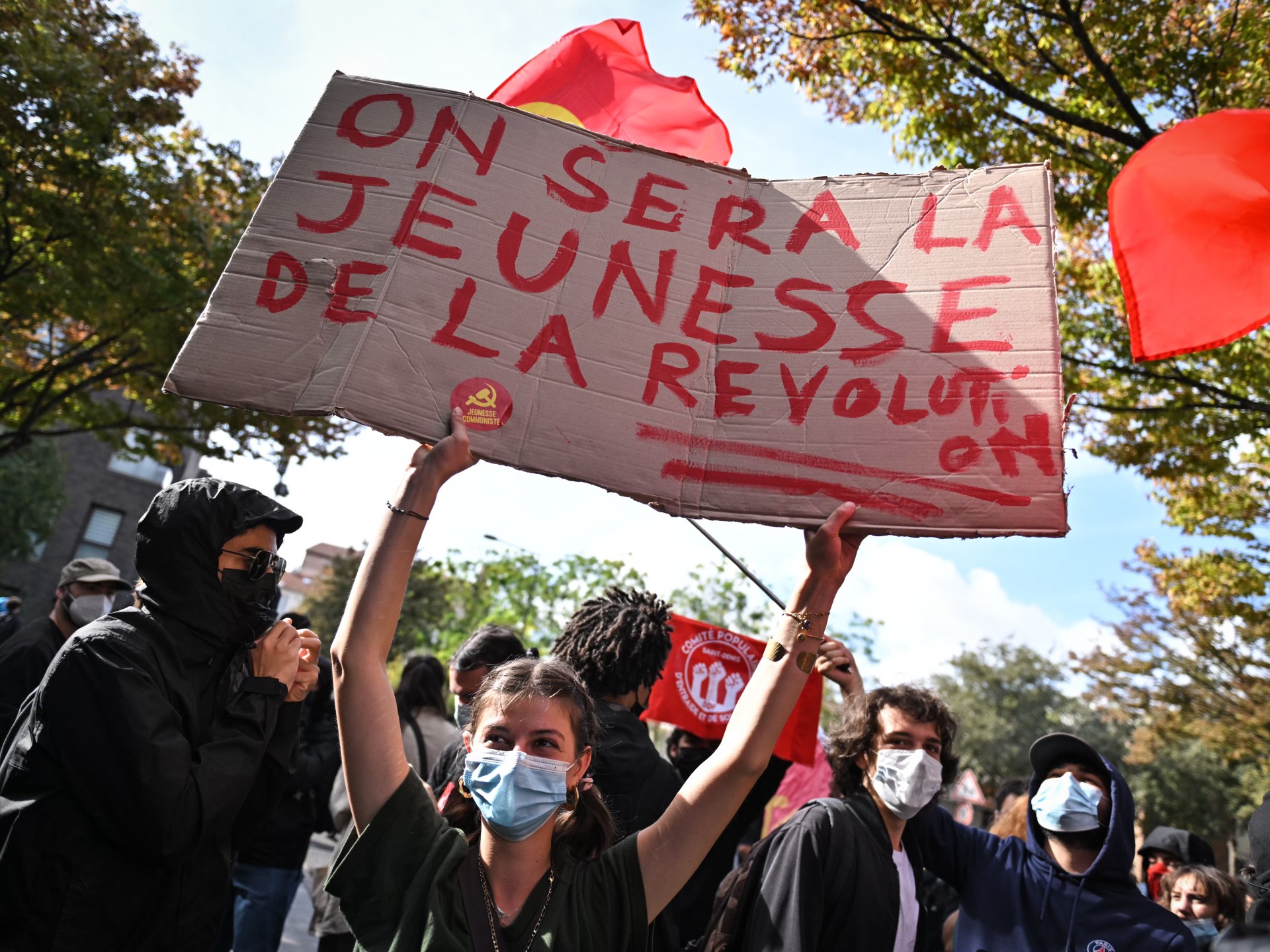
France’s student protests have escalated to an unprecedented scale, with government sources reporting 266,000 participants across the country, according to Alice Cohen‑Morzadec, international spokesperson for France’s Student Union. She said the movement could be the largest since May 1968.
The protests began on September 21 at a poorly equipped Paris suburban high school and have since spread to universities, teachers and parents. The core demands focus on education funding, teacher shortages, overcrowded classes and inadequate school facilities. Historians and student organisers argue that deeper issues—economic hardship, political extremism, the threat of warfare in Europe, AI’s impact on careers, high youth unemployment and the climate crisis—underlie the unrest.
Andrew Smith, a modern France historian at Queen Mary University of London, told Al Jazeera that students feel ignored by the government, which has historically struggled to engage with social partners. Robi Morder, a social‑movement researcher, noted that past socialist governments had experience negotiating with youth movements, a skill he says the current administration lacks.
Student organisers, including Chloe Grunenwald, vice president of the Federation of the General Association of Students (FAGE), accuse the government of dismissing their demands. Grunenwald said, “We have been making these demands for years. We need more money for education, more teachers, better facilities.”
Allegations of police brutality have surfaced, with Cohen‑Morzadec stating that the real violence comes from the government side. Prime Minister Sebastien Lecornu said “students must be heard,” and Interior Minister Laurent Nunez ordered police to suspend the use of stun grenades against high‑school protesters.
The protests are part of a broader national campaign that includes strikes scheduled for October 17 and November 20, aimed at addressing rising energy and food prices, proposed budget cuts and public‑sector salary freezes. The left‑wing France Unbowed (LFI) party, led by Jean‑Luc Mélenchon, and the CGT labour union support the strikes. Critics accuse LFI and Mélenchon of inciting violence, a claim they deny.
Student unions have issued a list of ten demands that would cost the government about 1 billion euros ($1.1 bn). The demands include increased investment in schools and universities, more staff and space in higher education, stronger financial and housing support, affordable university meals, an end to higher fees for international students, and an end to all forms of repression linked to the high school and student movement.
Frequently asked questions
How many participants are in the protests?
The protests have 266,000 participants across France.
What are the core demands of the student movement?
The core demands focus on education funding, teacher shortages, overcrowded classes, and inadequate school facilities.
When are the scheduled strikes?
Strikes are scheduled for October 17 and November 20.