Politics
West Bengal Tribunal Judges Raise Concerns Over EC Portal’s Functionality
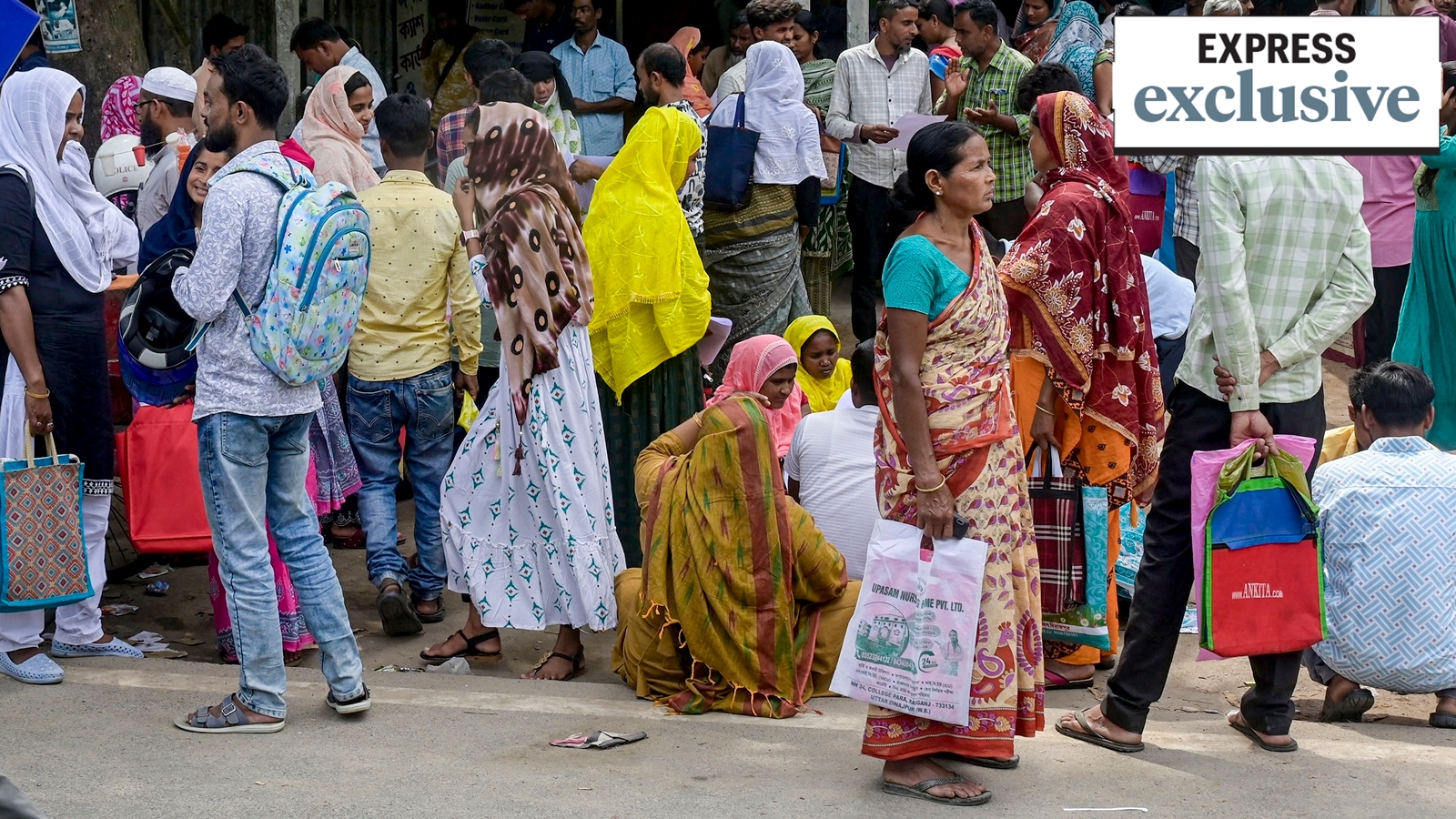
Official records show that over a dozen Tribunal judges complained that the Election Commission of India’s (EC) portal does not allow them to serve notices to parties, slowing the disposal of appeals. The portal also does not permit Tribunals to upload additional documents from voters who file appeals, to hold virtual hearings, or to restore a deleted voter. It does not even allow appellants to download Tribunal orders, the judges said. These concerns were recorded in the minutes of a meeting held on August 11, involving 19 Tribunal judges, and were conveyed to the Election Commission of India and the Chief Justice of the High Court of Calcutta, The Indian Express has learned.
An investigation by The Indian Express last month had revealed that two Election Commissioners had logged 14 objections in 10 months to a series of decisions related to voter eligibility. One key concern was that ECINET, the EC’s principal digital system for citizens and officials, restricted access for officers responsible for finalising the electoral rolls. The EC announced it would set up a committee with an “independent expert” to review ECINET and “double‑check” its compliance with the law. The hurdles highlighted by the Tribunal judges, the report said, were effectively preventing due process for deleted voters.
On October 1, The Indian Express sent emails to the Election Commission of India and the Registrar General of the High Court of Calcutta seeking a response to the judges’ concerns and whether they had been addressed. No response was received.
The August 11 minutes documented several specific challenges:
* “Can’t serve notices”: There is no mechanism to serve notice to parties directly or through a proper channel, despite requests and a format approved in May 2026 that has not been implemented. * “Can’t store documents”: When the Tribunal finds uploaded documents are not in the required enumeration form or needs additional documents, there is no mechanism to secure them. Tribunals resort to e‑emails to the DM/DEO, but responses are poor. * “Can’t hold virtual hearings”: There is no mechanism to hold virtual hearings. Once an appeal is disposed of, a deleted voter cannot be restored on the portal if needed. * “Can’t give an order copy to appellant”: There is no procedure for parties to obtain a certified or downloadable copy of the Tribunal order from the portal. * “Can’t digitise physical records”: The judges flagged uncertainty over physically filed appeals with the District Magistrate/District Election Officers, noting that without digitisation, citizens may be denied justice.
The Supreme Court, in its order on April 1, had asked the tribunals to communicate reasons and to revisit records before deciding on appeals. On April 6, the Court acknowledged the issue of digitising physical appeals, stating that the EC had notified that appeals could be filed online or physically, with the latter to be digitised and uploaded to the ECINET platform.
An earlier alert on May 22 from a tribunal judge to the Calcutta High Court Chief Justice highlighted the lack of a notice‑sending mechanism and the absence of accurate data on the number of appeals disposed of, which the judge said was being misrepresented by the EC.
These concerns cast doubt on the Supreme Court‑ordered appellate process designed to give 27 lakh deleted voters a chance to appeal their exclusion from the rolls. The Tribunals, a unique feature of the West Bengal SIR process, were established after the Supreme Court, on February 20, ordered the appointment of judicial officers to decide on electors’ eligibility. The EC had identified 60.06 lakh electors with “logical discrepancies” and “unmapped” documents. Judges from Bengal, Odisha and Jharkhand reviewed these cases, ultimately deleting 27.16 lakh electors weeks before the April Assembly elections.
The Supreme Court, on March 10, ordered the establishment of appellate Tribunals of retired High Court judges, which the EC notified on March 20 by creating 19 single‑member Tribunals. Two judges have since resigned and been replaced.
The two‑phase elections in West Bengal last April resulted in a landslide win for the BJP. The incumbent Trinamool Congress attributed its defeat to voter deletions, though this claim is more political than empirical. Deletions exceeded the victory margin in 49 of the 293 seats that went to polls, with 26 won by the BJP and 21 by the TMC.
The EC had not released appellate process data until a submission in the Supreme Court on September 18, when it reported 38.31 lakh appeals filed, of which only 1.26 lakh had been disposed of by September 10. Of these, 22.21 lakh were filed by voters who had been deleted and 16.10 lakh were filed against inclusions.
Prior to the elections, problems with another portal used by judicial officers to adjudicate 60 lakh names were raised during Supreme Court hearings. The Court noted this in its March 10 order, urging the EC to provide full logistic support to the High Court and judicial officers to fulfill their responsibilities.
Frequently asked questions
How many Tribunal judges attended the August 11 meeting?
Nineteen Tribunal judges attended the meeting on August 11.
What main concerns did the Tribunal judges raise about the EC portal?
The judges complained that the portal cannot serve notices, cannot store documents, cannot hold virtual hearings, cannot provide order copies to appellants, and cannot digitise physical records.
How many appeals were filed and disposed of by September 10?
By September 10, 38.31 lakh appeals had been filed and 1.26 lakh had been disposed of.