Agriculture
Leh Launches First Large-Scale Saffron Plantation
By Anjali Marar
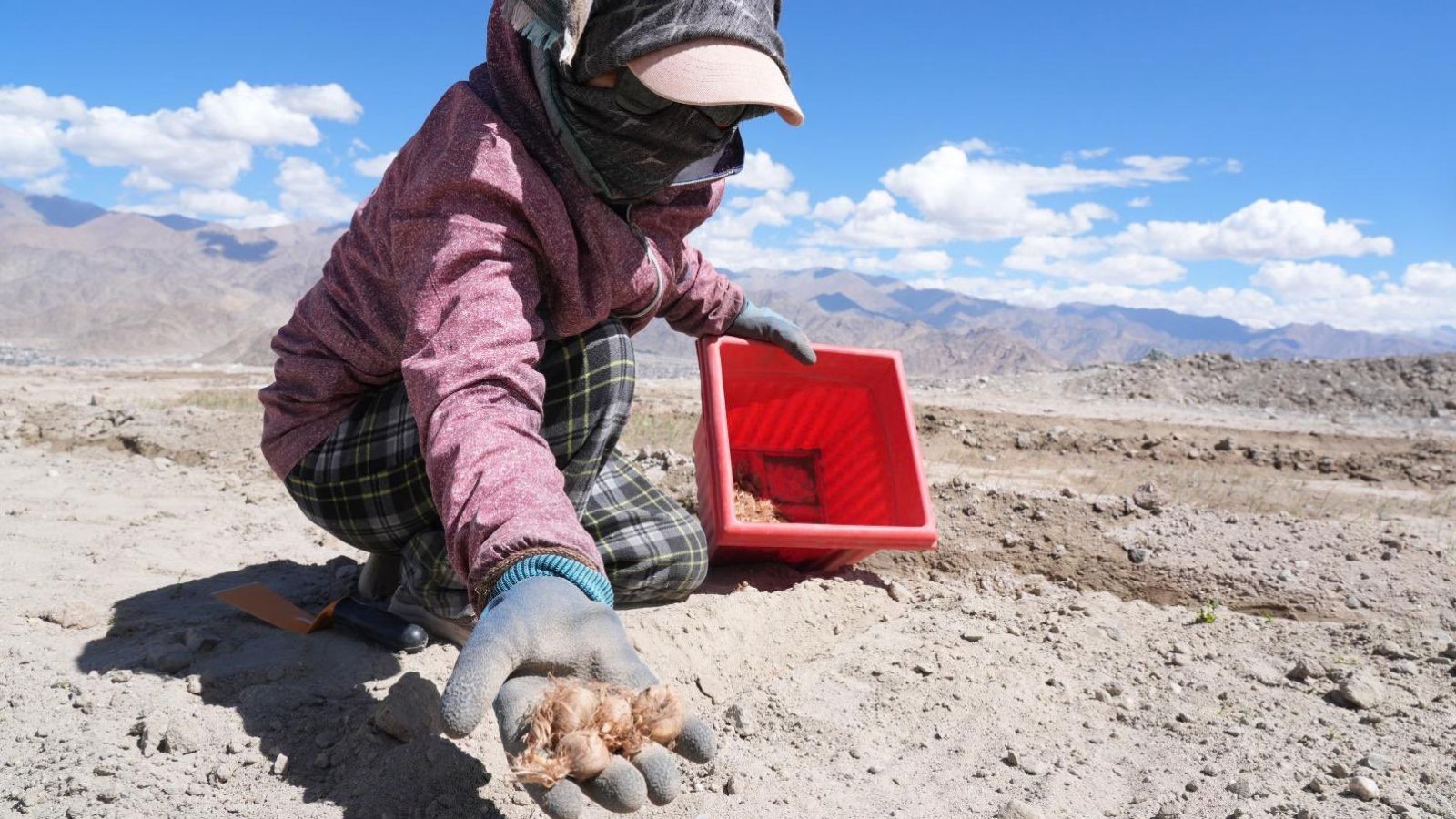
India’s saffron cultivation is expanding beyond Kashmir, with a mass plantation drive beginning in Leh district of the Union Territory of Ladakh. Governor Vinai Kumar Saxena announced the planting of 90,000 saffron corms, weighing 800 kg, across 4,000 m² in Leh. The project is part of Project Him Sarovar, a government initiative to reclaim lost agrarian land in Ladakh. Saxena said the pioneering effort could strengthen the local economy by creating lucrative and sustainable livelihood opportunities for farmers, youth and self‑help groups.
Saffron, the dried stigma of the Crocus sativus flower, is used in cooking, cosmetics and medicine. The plant thrives in high‑altitude agro‑climatic conditions with minimum temperatures of 8 °C to 10 °C and light to moderate snowfall. Only corms weighing more than 10 g produce flowers, and the number of flowers depends on corm size, directly affecting yield. In Pampore, Kashmir, an acre can yield up to 2 kg of saffron.
The Leh plantation follows a successful experimental attempt two years ago by researchers at the CSIR‑Indian Institute of Integrative Medicine (IIIM), Jammu, who grew saffron in open fields. In 2024, IIIM signed an MoU with the Ladakh Autonomous Hill Development Council to set up demonstration farms for medicinal, aromatic and flowering plants. The institute is developing protocols for cultivation, processing and post‑harvest management that can be extended to farmers.
C K John, a former scientist at Pune’s National Chemical Laboratory, told The Indian Express that the Ladakh experiment is a welcome step. "If it is successful, this will help the farmers of the region and also contribute to increasing the country’s saffron production," he said. John has led teams that grew saffron under greenhouse conditions in Pune and has worked with farmers across Jammu and Kashmir, Himachal Pradesh, Maharashtra and Sikkim to expand saffron cultivation in India.