Politics
Quebec’s Parti Québécois Projected to Form Minority Government
By Today News Hours Editorial Desk
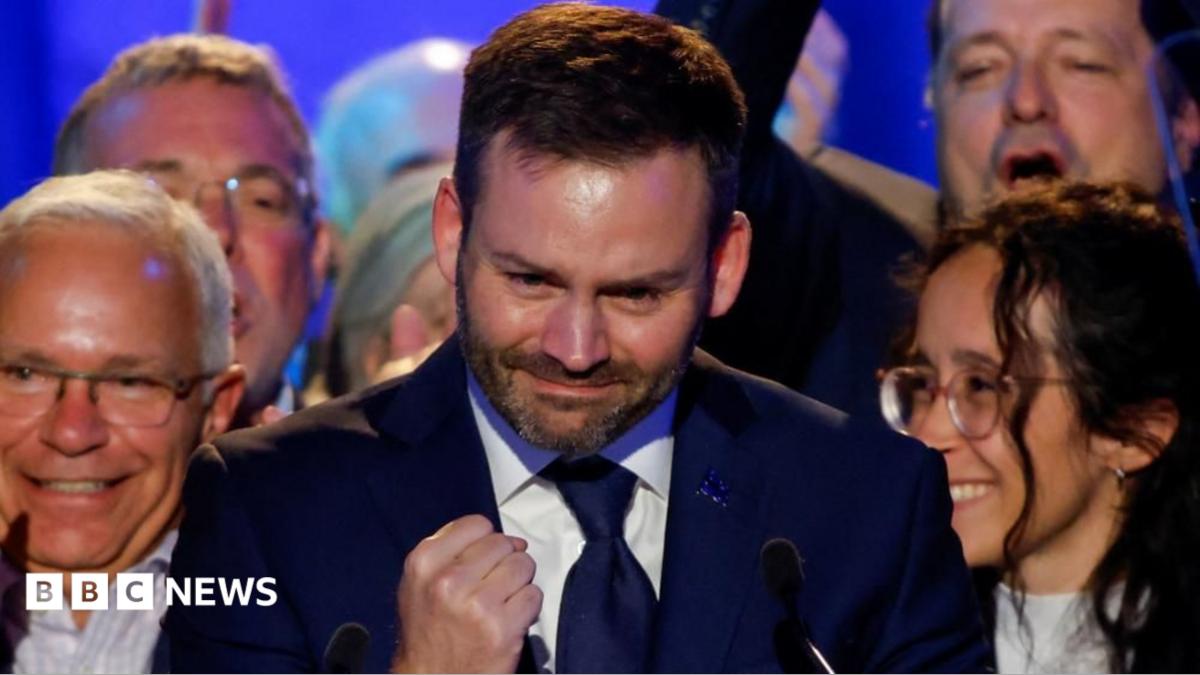
The Parti Québécois (PQ) is projected to win enough seats in Quebec’s provincial election to form a minority government, though it will need support from other parties to pursue its agenda, including a referendum on independence. This marks the first time the PQ has been in power since 2014, with Paul St‑Pierre Plamondon set to become the province’s new premier. In his victory speech, Plamondon reiterated his plans for independence but pledged to be “the premier of everyone in Quebec.” The result could test Prime Minister Mark Carney, who has emphasized unity and may face confrontations with Quebec over issues such as immigration and the monarchy.
The PQ has pledged to hold a referendum on separating from Canada. Quebec has held two previous referendums on independence, in 1980 and 1995, both of which were defeated. Polls indicate that only 30 % of Quebecers support independence at this time. Plamondon has said the referendum would take place after former U.S. President Donald Trump leaves office, arguing that this would create conditions for an informed and calm debate. The U.S. and Canada are currently in a trade war due to Trump’s tariff program.
In his victory speech, Plamondon said, “Our national destiny will be achieved one day.” It is unclear how he would secure the necessary support for a referendum, as rival parties that he would need to rely on oppose independence.
Carney congratulated Plamondon and said he looked forward to working with the new provincial leader, adding that “building a stronger Quebec is at the heart of our mission to build a stronger Canada.” Carney may face dual unity challenges, depending on the outcome of a potential referendum in Alberta.
Plamondon has also signaled a willingness to confront Ottawa on matters he views as provincial. He has pledged to fight any federal increases in immigration and to abolish the monarchy in Quebec, redirecting funds spent on royal institutions to social services. He has suggested defunding Quebec’s lieutenant‑governor’s office, which represents King Charles III in the province, and has said he would spend that money on homelessness. Plamondon was among Quebec lawmakers who refused to pledge allegiance to the King in 2022, leading to a provincial law that now makes the oath of allegiance optional. His plan to withdraw financial support for the lieutenant‑governor’s office would likely face legal challenges, as the monarchy plays a central role in Canada’s constitution.
The election result reflects public fatigue with the former governing party, the Coalition Avenir Québec (CAQ). The CAQ, which had focused on protecting Quebec’s identity and language, lost significant support, and its long‑time leader François Legault was unable to maintain voter backing. Efforts to revive the party by replacing Legault with outgoing Premier Christine Fréchette failed; Fréchette conceded her own re‑election race in Trois‑Rivières before 22:00 local time and said she would work with Plamondon on the transition.
The Quebec Liberal Party secured the second‑most seats, while the Quebec Conservative Party gained seats. Prime Minister Carney, who leads the federal Liberal party, remains popular in Quebec, though his support has recently dipped following new U.S. tariffs imposed in August. Quebec is among the hardest hit by the tariffs, with experts at Oxford Economics projecting a C$2 billion impact on the province. Carney congratulated Plamondon on his victory and vowed to work together to support Quebec businesses and workers affected by tariffs, create jobs, end homelessness, and build more homes across the province.