World
Yemeni Children Face Sniper Threats on Daily School Commute
By Today News Hours Editorial Desk
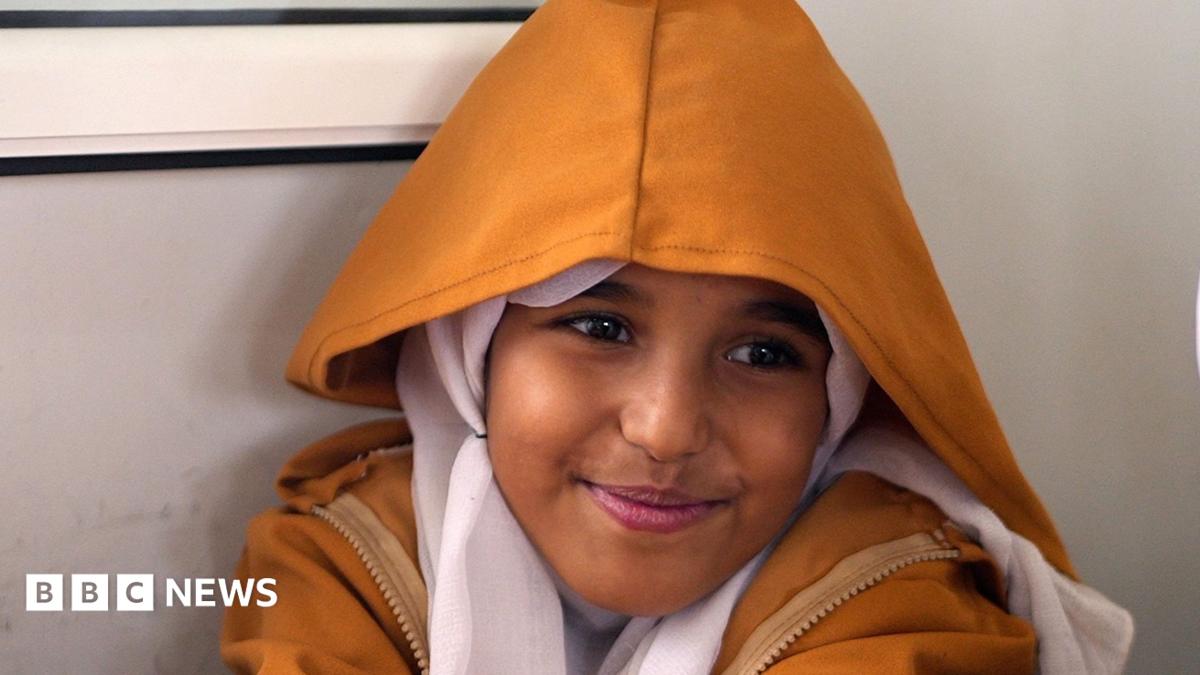
Every morning at 6 a.m., 10‑year‑old Rafeef and her younger brother prepare for school in Taiz, Yemen, wearing cream and brown uniforms. Rafeef looks forward to lessons in maths, Arabic, Islamic studies and an upcoming English course, but her journey to school is fraught with danger. The school sits on a mountain overlooking a valley that is a contested front line between government forces backed by Saudi Arabia and Iran‑backed Houthis. Government troops occupy one side of the school, while Houthi snipers are on the other. Rafeef’s home is further down the mountain, so each trip requires her to walk uphill with her back toward the snipers.
UNICEF reports that about 3.2 million Yemeni children were out of school before the war escalated last month. Since the conflict began in 2014, thousands of children have been killed, maimed, or recruited by armed groups. Despite these risks, Rafeef says she will not stop attending school because she loves her friends and sees it as her only chance to be with them.
Rafeef’s family moved to Taiz from Hudaydah nine years ago after Houthis seized the coastal city. Two years ago, a mortar attack outside their new home shattered a door and sent shrapnel through the house, breaking Rafeef’s arm and leaving a scar. In recent days, the conflict has intensified. On Sunday, Houthis cut off a vital supply route linking Taiz to Aden, effectively encircling the city. Control of that route has shifted back and forth, and residents fear a Houthi takeover.
Government forces have made gains elsewhere, retaking strategic points on the Bab al‑Mandab Strait and launching an offensive to regain Sanaa. Taiz remains a major battleground. After ousting the government from Sanaa in 2015, the Houthis attempted to seize Taiz but were largely driven out by local militias. A recent offensive has seen extensive use of drones and other weapons.
At Rafeef’s school, teacher Abdel Raqeeb al‑Obaidi, 45, shows students the rooftop, where he says Houthi military camps, barracks and sniper positions can be seen. A Yemeni security adviser warns that the school is visible from those positions and could be targeted. Abdel Raqeeb acknowledges that the school has been fired on before and that the situation can explode at any moment.
In the evening, a call from Al‑Rawdah Hospital reached reporters. Two children were badly injured by a mortar strike. Ahmed, a three‑year‑old boy, was killed when shrapnel pierced his heart after a mortar hit a mechanic’s shop. His tiny beige sandals, splattered with blood, were found outside the intensive care unit. His father, who was helping at the shop, was unharmed.
Another victim, 11‑year‑old Amjad, was also at the shop and suffered shrapnel injuries to his lung and abdomen. He was admitted to intensive care at 8 p.m. and remained critical. His mother arrived the next morning after an eight‑hour journey from her village, staying beside his bed and praying. Doctors later performed surgery, but Amjad remained in critical condition.
Nurse Ikram Shamsan, who attended Ahmed’s case, expressed deep sorrow and called for peace and safety for children.
The situation in Taiz illustrates the daily peril that Yemeni children face as they try to pursue education amid ongoing conflict.