Education
France Spends 5.1% of GDP on Education, Below Sweden but Above EU Average
By Hanna Duggal
France’s public spending on education is 5.1 percent of its gross domestic product (GDP), according to Eurostat. This figure excludes private spending such as school fees. The French Ministry of National Education reports that total domestic expenditure on education reached 199.2 billion euros in 2025, which is 6.7 percent of GDP and 2.4 billion euros more than in 2024. The ministry’s breakdown shows secondary education accounted for 73.7 billion euros (37 percent), primary education 60 billion euros (30 percent), higher education 45.6 billion euros (23 percent) and adult and continuing education 19.7 billion euros (10 percent).
In comparison, Sweden spends the highest share of its GDP on education at 7.3 percent in 2024, followed by Iceland (7 percent) and Belgium, Estonia and Finland (6.3 percent each). The lowest spenders are Ireland (2.7 percent), Greece (3.9 percent), Romania and Italy (4 percent each), and the United Kingdom and Spain (4.1 percent each). France, at 5.1 percent, ranks joint 13th with the Netherlands and Slovakia and is above the EU average of 4.8 percent.
Despite above‑average spending, France faces teacher shortages. In the 2024‑2025 school year, 9 percent of primary and secondary teachers across the OECD were not fully qualified. In France, 11 percent of secondary teachers lack full qualifications, compared with less than 3 percent in primary schools. Lower secondary classes average 26 pupils, higher than the OECD average of 23. Students have also reported large classes, unfilled teacher posts, dilapidated buildings, shortages of furniture, rodent infestations, and lack of air conditioning during heatwaves. Only 4 percent of French teachers feel their profession is valued in society, the lowest share among OECD countries.
Historical data from UNESCO show France’s education spending fell from 5.5 percent of GDP in 2017 to 5.3 percent in 2022, remaining the ninth‑highest among 29 European countries with data. A brief rise to 5.7 percent in 2020 reflected the pandemic’s impact on the economy rather than increased spending.
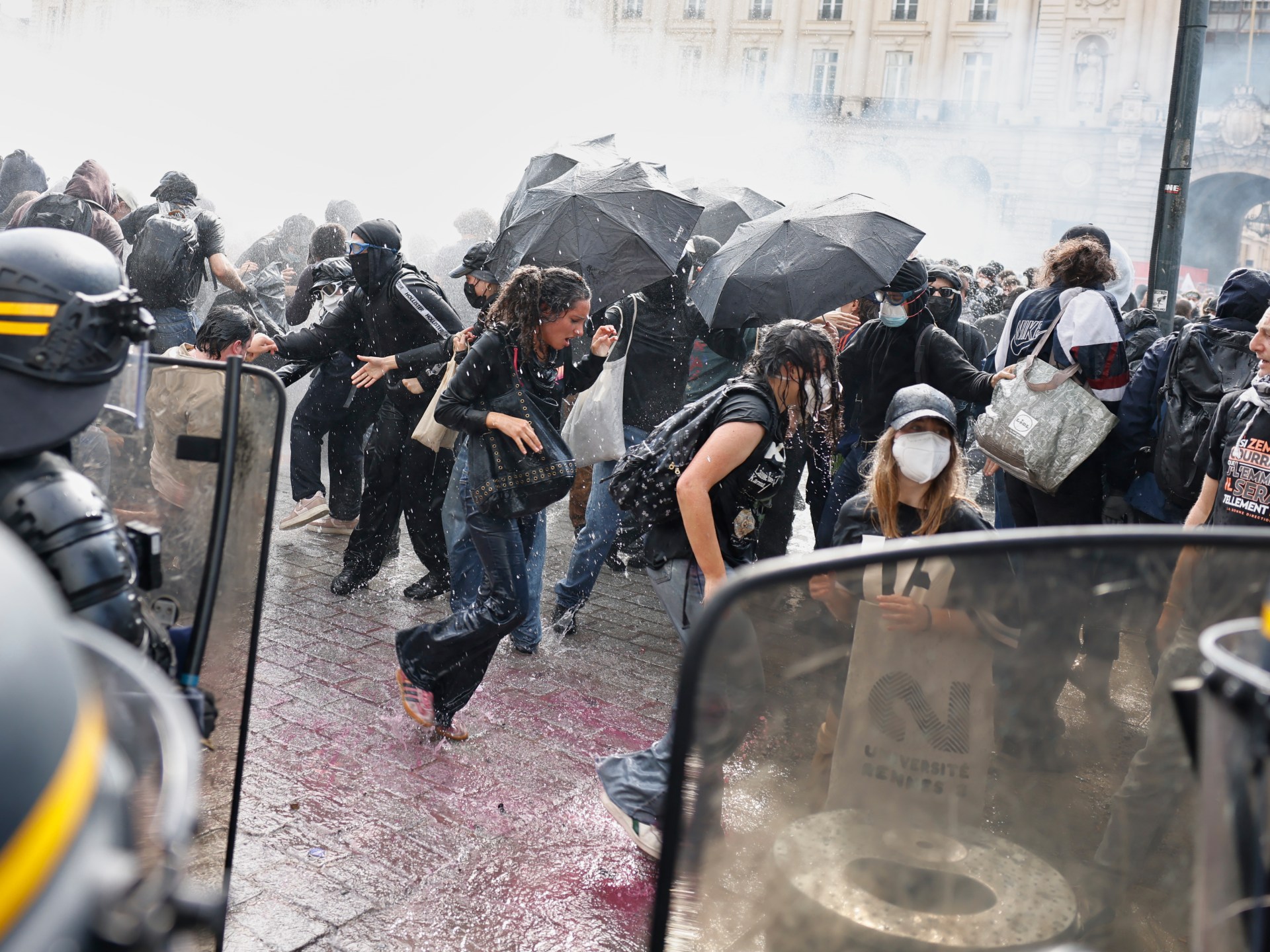
The protests coincide with nationwide public‑sector strikes over the government’s proposed 2027 budget, which seeks 54 billion euros in savings. Unions oppose a freeze on state employees’ salaries, expected to save about 2 billion euros. Across Europe, most governments spend more on education than on defence, but healthcare takes the largest share of national income. France spent 11.9 percent of its GDP on healthcare in 2022, one of the highest shares in Europe.