Law & Justice
Chennai ITAT Grants Full Leave‑Encashment Exemption to Retired Bank Employee
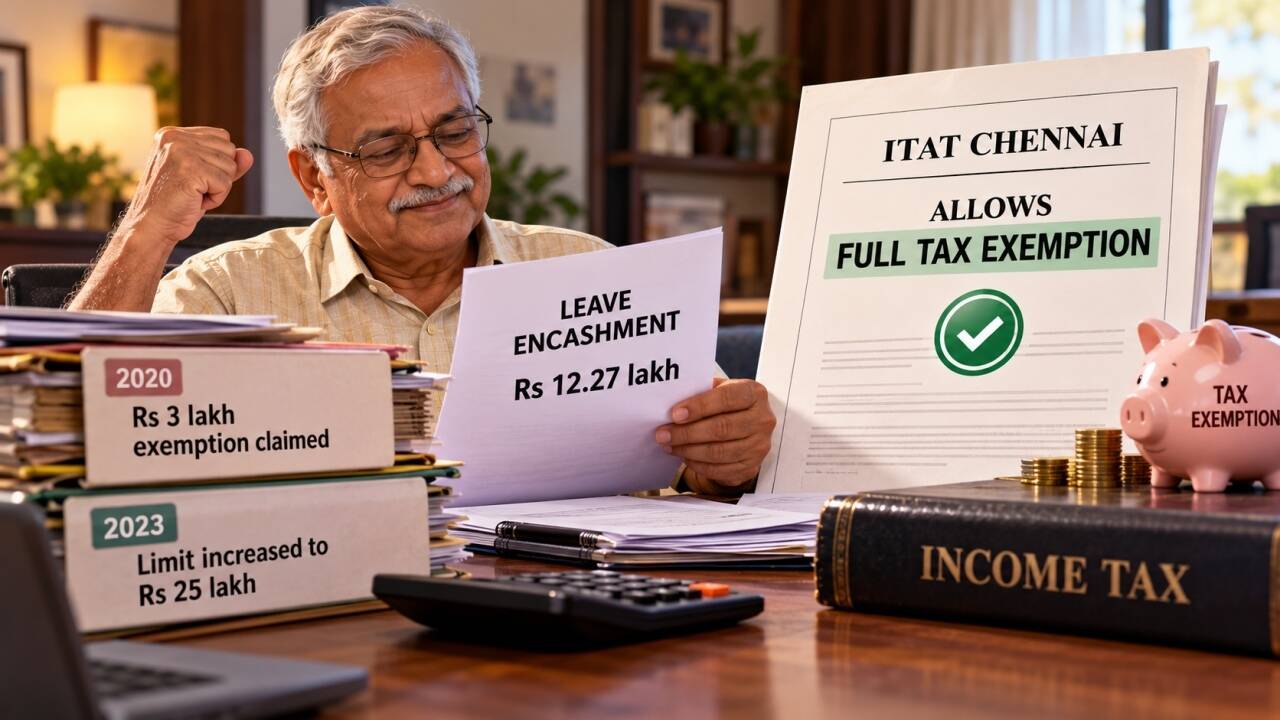
A retired bank employee who received leave encashment in 2019‑20 and claimed a Rs 3 lakh exemption in his 2020‑21 return is now allowed to use the higher exemption limit of Rs 25 lakh introduced in 2023. The taxpayer retired during FY 2019‑20 and received Rs 12,27,232 as leave encashment. When filing his income‑tax return for AY 2020‑21 on 10 September 2020, he claimed Rs 3 lakh exempt under Section 10(10AA)(ii) of the Income Tax Act, bringing his total income to Rs 24,36,260. At that time the exemption ceiling for non‑government employees was Rs 3 lakh. On 24 May 2023, the Central Board of Direct Taxes issued Notification No. 31/2023, raising the ceiling to Rs 25 lakh from 1 April 2023. The notification’s explanatory memorandum stated that no person would be adversely affected by giving it retrospective effect. The taxpayer sought to apply the higher ceiling to his earlier claim. His return had already been processed by the Centralised Processing Centre, Bengaluru, under Section 143(1) on 13 December 2020, which allowed the Rs 3 lakh exemption and taxed the balance. He appealed to the Commissioner of Income Tax (Appeals) on 7 January 2026; the CIT(A) rejected his claim on 25 February 2026, holding that the 2020‑21 assessment year was governed by the earlier Rs 3 lakh ceiling. He then approached the Chennai ITAT. The tribunal considered whether the enhanced limit could benefit an employee who retired before 1 April 2023. It concluded that the notification did not create a new exemption but merely increased the existing ceiling, and that the amendment was beneficial and curative. The explanatory memorandum’s statement that no person would be adversely affected by retrospective application, combined with the remedial nature of the change, led the ITAT to interpret the amendment liberally and apply it retrospectively where it did not affect any vested right. The tribunal also cited earlier ITAT decisions that had allowed the higher ceiling for earlier retirement years. Consequently, the Chennai ITAT held that the taxpayer was entitled to the Rs 25 lakh limit. Because his leave encashment of Rs 12,27,232 was below the enhanced ceiling, the entire amount was eligible for exemption. The tribunal set aside the CPC’s restriction and the CIT(A)’s order, directing the Assessing Officer to allow the exemption. The ruling is significant for non‑government employees who retired before 1 April 2023 and whose leave‑encashment exemption was previously limited to Rs 3 lakh, although judicial divergence remains on the retrospective application of the enhanced limit.