World
Yemen’s Government Seeks Tribal Support as Offensive Against Houthis Intensifies
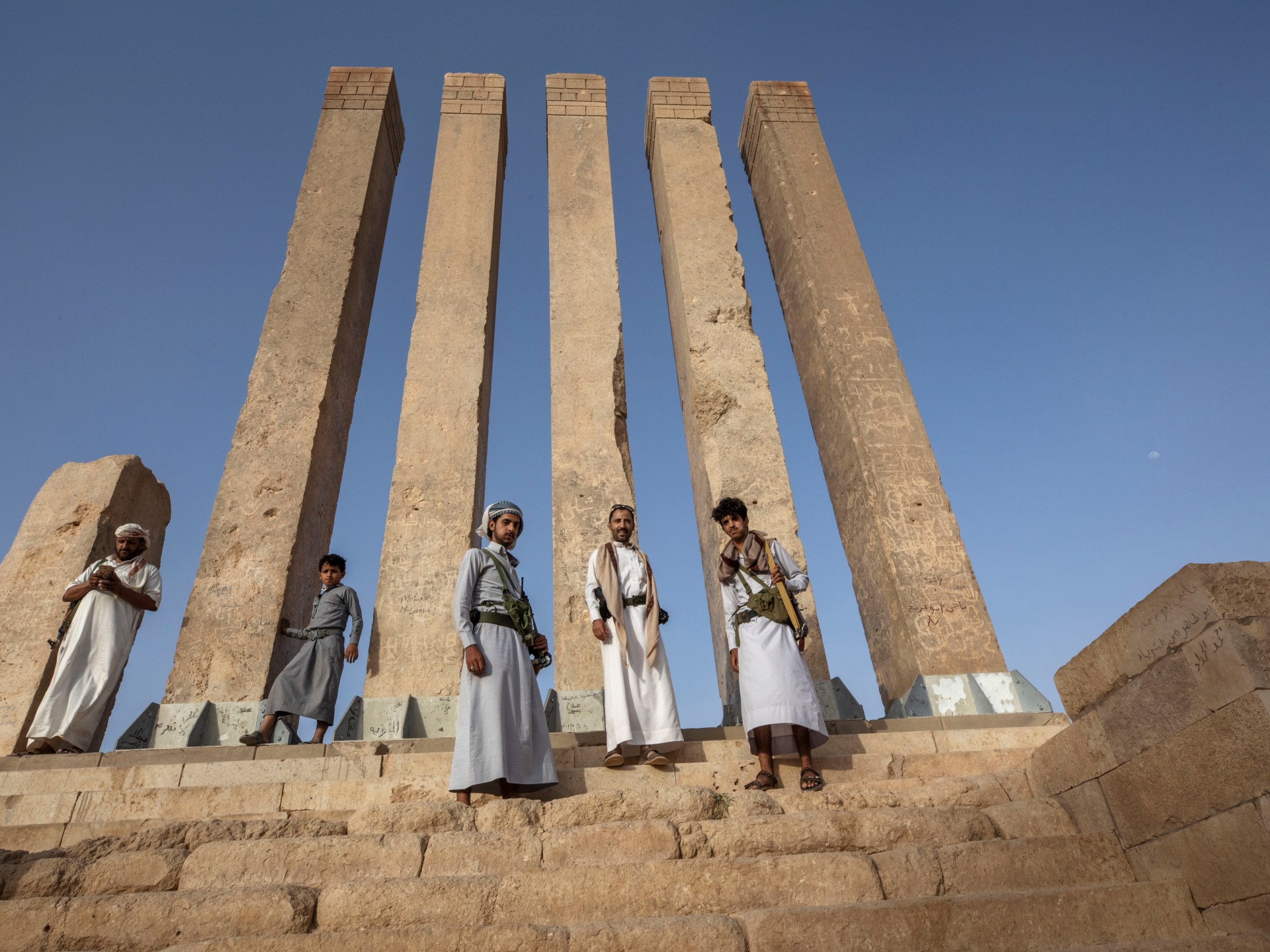
The Yemeni government’s new military push against the Houthis is testing not only the balance of forces but also whether tribes in Houthi‑controlled areas will side with the internationally recognised government. For years many tribes hostile or wary of the Iran‑backed Houthis have refrained from open confrontation, deterred by the group’s military strength and past failed uprisings. Now those tribes are watching the government’s newly activated frontlines—primarily on the Red Sea coast, Marib and al‑Jawf—to see if the limited gains made since the launch of the Dawn of Yemen operation can become sustained victories.
The offensive follows major Houthi gains in September, when the group, also known as Ansar Allah, swept across the Red Sea coast, capturing vital trade corridors, including the port city of Mocha and territory around the Bab al‑Mandeb Strait, a key global shipping route. Airstrikes over the past few days have inflicted losses on Houthi forces and pushed towards strongholds where the group has been entrenched since the war began in 2014, including Sanaa, Saada and Amran.
With the government declaring an all‑out war on the Houthis and pledging to recapture Sanaa, tribal distrust of the government may lessen, prompting tribes to shift positions at the right time, experts say. The role of the tribes could be critical to the government’s ability to advance deeper into Houthi‑controlled territories.
On Monday, Marib governorate— the government’s stronghold in the north—saw a large tribal rally attended by tribal sheikhs and local anti‑Houthi fighters from tribes such as the Jadan from Marib, Nihm from Sanaa and other allied tribes. The rally announced a general mobilisation to support the armed forces in the battle to “restore the state and topple the Houthi coup”. Adel Dashela, a researcher at the Sana’a Center for Strategic Studies, said that if tribal support translates into actual mobilisation and sustained participation, tribes will help government troops advance toward Houthi‑controlled areas and the Houthi heartland, including Sanaa.
Over the past decade of war, tribes have repeatedly mobilised against the Houthis at a local level, but deep divisions and a lack of sustained outside backing have prevented a unified tribal front. Nevertheless, tribes can potentially be a key source of manpower and influence for the government. Dashela added that tribal fighters remain indispensable to any future campaign against the Houthis, but their engagement must occur through formalised state and coalition command structures rather than as an independent vanguard.
Tribes in Yemen do not want to risk confronting Houthi forces without support and “wait for the right time” to act, Abdulsalam Mohammed, chairman of the Yemeni Abaad Studies and Research Center, said. He said tribes seek a powerful state and will side with it once it proves reliable. Mohammed cited the January 2019 fighting between the Houthis and the Hajoor tribe in northwest Yemen’s Hajjah, where the Houthis eventually captured Hajoor areas in March. Although Saudi Arabia dropped food, medical supplies and weapons to besieged Hajoor fighters, the tribe was defeated.
Mohammed said that even in areas where the Houthis have local support, some tribes could gradually shift their allegiance toward the government if they see it as serving their interests. “Not all tribes fighting for the Houthis are staunch supporters. Their motivations range from pragmatism to ideological loyalty and material necessity,” he said.
Over the past decade, the Houthis have weakened traditional tribal power structures in areas under their control, co‑opting some leaders and replacing others with loyalists. They have defeated tribal challenges and withstood conflict with the Yemeni government, Saudi Arabia, and bombing by the United States, the United Kingdom and Israel. This has reinforced a perception among tribes that the Houthi military capability has become “invincible”.
A tribal sheikh in northern Yemen, who asked not to be named for security reasons, told Al Jazeera that the Houthi military “supremacy” in the country over a decade‑long war has “dwarfed the political and military role of the tribe”. He said that before the Houthi takeover, the government was like a friend of the tribe, but today the tribe is subordinate to the Houthis. The sheikh explained that the Houthis used three tactics to tighten their grip on territories: military force, financial incentives and public identification with the Palestinian cause. He added that as the Houthis built up enormous military and financial power, tribes acting alone could not match the group’s power.
The sheikh said that the government’s reported gains on some frontlines could not by themselves be taken as a sign that the Houthis were collapsing. “A concrete government advance on the battlefields would reassure some Yemeni tribes that the Houthis have lost ground,” he said. “Once this materialises, anti‑Houthi and neutral tribes can feel confident and begin confronting the group.”