Gaming & Esports
Lagos Life Sims Draw Hundreds of Thousands of Young Nigerians to Virtual City
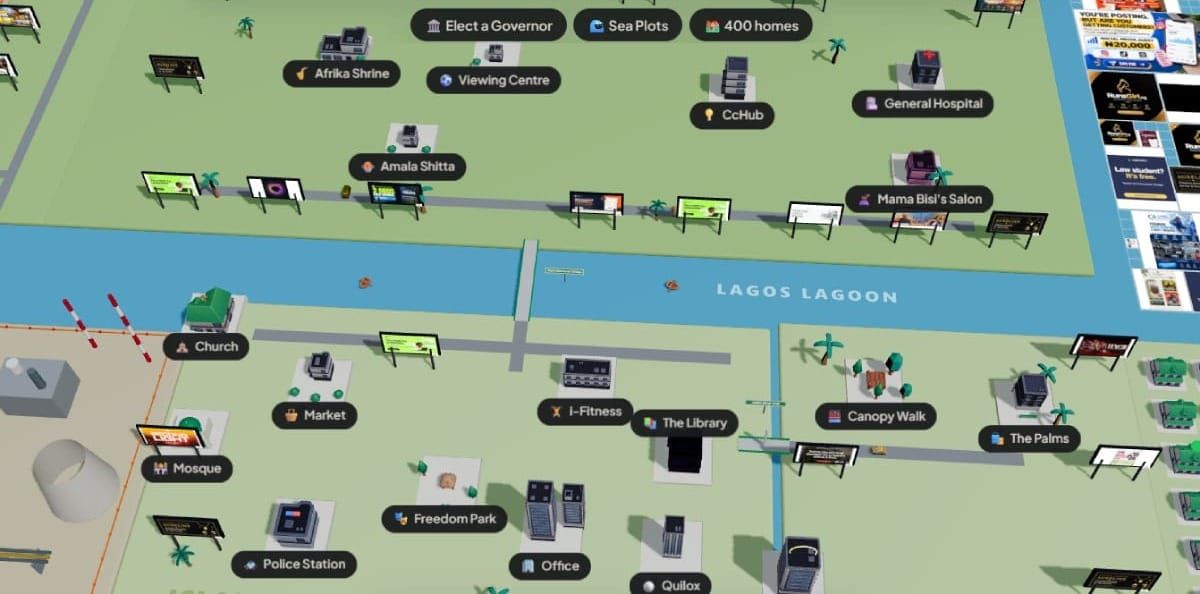
For many young Nigerians, Lagos Life is more than a browser game. The Nigerian‑made simulation, created by developer Ijeoma Shalom Rayhamen, also known online as Shalom Rayhamen or simply Shalom, offers a digital version of Lagos that lets players work, spend, socialise and build virtual lives in an environment shaped by local culture. The game launched in early October 2026 and has quickly attracted hundreds of thousands of players.
Lagos Life takes inspiration from life‑simulation games such as The Sims 3 but replaces fictional settings with a world built around Nigerian experiences. Players create characters, take jobs, buy properties and visit recognisable social and entertainment spots, including Amala Shitta and Quilox. At the start, players are randomly placed into one of two financial realities: “Nepo”, referencing wealth and nepotism, or “Lapo”, a playful reference to microfinance and financial struggle. From there, their virtual lives depend on how they manage money, energy, work and leisure.
The game is played directly through a web browser, so users do not need to download an app. Once inside, the first thing to check is the character’s financial position, as a “Nepo” or “Lapo” beginning determines how players approach the game. For players starting with limited funds, getting a job becomes an early priority. Working provides money but uses up energy, so players also need to buy food to restore their character’s energy before returning to work. As money accumulates, players can move beyond basic survival and begin investing in properties and other aspects of their virtual lifestyle. Social locations such as malls, clubs and other entertainment spots can also be used to improve a character’s mood.
Managing money is another important part of the game. Spending too much on luxury items too early can leave a player without enough cash to continue progressing, making it useful to build up savings before pursuing more expensive activities. The game also introduces unexpected situations, meaning players have to adjust their plans rather than simply follow a fixed routine. Keeping some money aside can help characters deal with those setbacks. For beginners, the basic strategy is therefore straightforward: find work, earn money, manage energy, buy food when necessary and gradually build enough savings to explore more of the virtual Lagos.
The game’s soundtrack adds another layer to the experience. Players can encounter music from emerging Nigerian artists in virtual clubs, connecting the game’s entertainment spaces to the country’s wider music culture.
Shalom has explained that the idea grew from her interest in life‑simulation games and seeing Lagos represented in another Nigerian‑made game. “I grew up playing The Sims 3 and always wondered what it would be like if the Sims lived in a world inspired by ours.” She later saw Nigerian developer Eureka’s Lagos Run, a browser game centred on driving a danfo through Lagos, which helped inspire the idea of expanding the concept into a broader virtual Lagos.
At the time of reporting, Lagos Life’s platform displays more than 670,000 total players, with tens of thousands online and millions of visits recorded since launch. The sudden popularity has exposed some challenges that can come with running a fast‑growing online game. An exploit allowed some players to generate large amounts of hacked virtual money, leading to chaotic moments in which users offered billions of naira in virtual funds. Some of the giveaways were even tied to political references, turning the game’s economic system into another source of online humour and conversation. Shalom responded by resetting the exploited funds and restoring legitimate player balances, while promising fixes to prevent the exploit from continuing. The incident briefly changed the game’s virtual economy, with players who had benefited from the hacked funds suddenly losing their unexpected wealth.
Part of Lagos Life’s appeal lies in that familiarity. Its humour, financial labels, social locations, music and everyday activities give young Nigerians a version of Lagos they already understand, while allowing them to experience it without the physical constraints of the city. In a city where conversations around hustle, money, social status and opportunity are part of everyday life, Lagos Life turns those realities into gameplay. Its growing player base suggests that for a generation accustomed to seeing Lagos through social media, the city can now be explored in another form: as a world they can enter, shape and play.