India
Government Considers Minimum Export Price for Cotton Yarn Amid Rising Costs
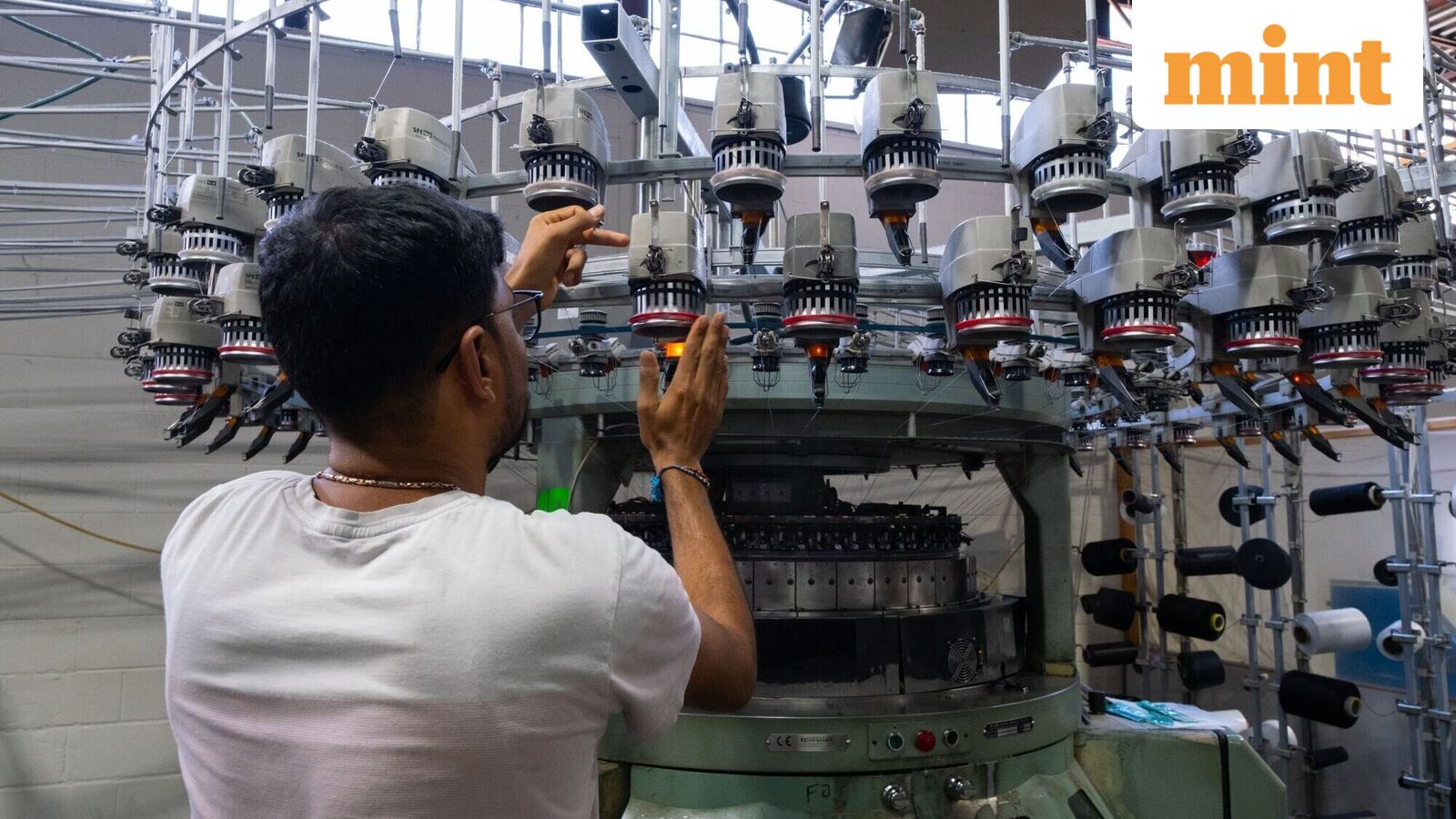
In a first, the Indian government is reviewing a proposal to impose a minimum export price (MEP) on cotton yarn to safeguard domestic supply and protect textile manufacturers from sharp raw‑material cost increases, according to two unnamed sources. The proposal follows a 60% rise in cotton yarn prices, from about ₹250 per kilogram in early 2026 to nearly ₹400 per kilogram now, driven by U.S. restrictions on cotton from China’s Xinjiang region. The increase has pressured manufacturers that use yarn to produce fabrics and garments.
The textiles ministry is evaluating industry submissions that highlight supply‑side constraints and growing overseas demand. One industry executive, who wished to remain anonymous, said the price hike is linked to these factors.
India’s cotton production has fallen sharply: from 325.22 lakh bales in 2023‑24 to 290.91 lakh bales in 2025‑26, according to ministry data. Area under cotton also declined from 126.88 lakh hectares in 2023‑24 to 114.82 lakh hectares in 2025‑26.
Export volumes of cotton yarn have risen this year, with the Cotton Association of India reporting increases of 11.9% in April, 22.6% in May, 15.8% in June and 34.1% in July.
A minimum export price sets a floor below which a product cannot be exported. Before imposing an MEP, the government considers domestic prices, availability, production and the need to augment domestic supplies. The textiles ministry has not yet announced a specific MEP level.
Cotton remains a major raw material for India’s textile and apparel industry, accounting for 41.2% of domestic textile and clothing demand in 2024. Experts argue that the government must act to safeguard domestic manufacturers.
The government has used MEPs in the past to regulate exports during domestic price or supply pressures, such as a $1,200‑per‑tonne MEP on basmati rice in August 2023 (later reduced to $950 and removed in September 2024) and a $550‑per‑tonne MEP on onion exports in May 2024 (removed in September 2024). It also imposed an MEP on natural honey, extending it through December 2025.
Some experts view an MEP as a temporary fix and advocate increasing cotton acreage and production instead. Former president of the Tirupur Exporters' Association, Raja M. Shanmugam, said the Cotton Corporation of India should act as a facilitator to support both industry and farmers.
The MEP proposal comes as India’s apparel exports fell 1.2% to $15.81 billion in FY26 from $16.01 billion in FY25, adding pressure on garment exporters to remain competitive amid higher input costs.