India
Delhi High Court Rejects Petition for Inquiry into Alleged Lathi Charges at CJP Protest
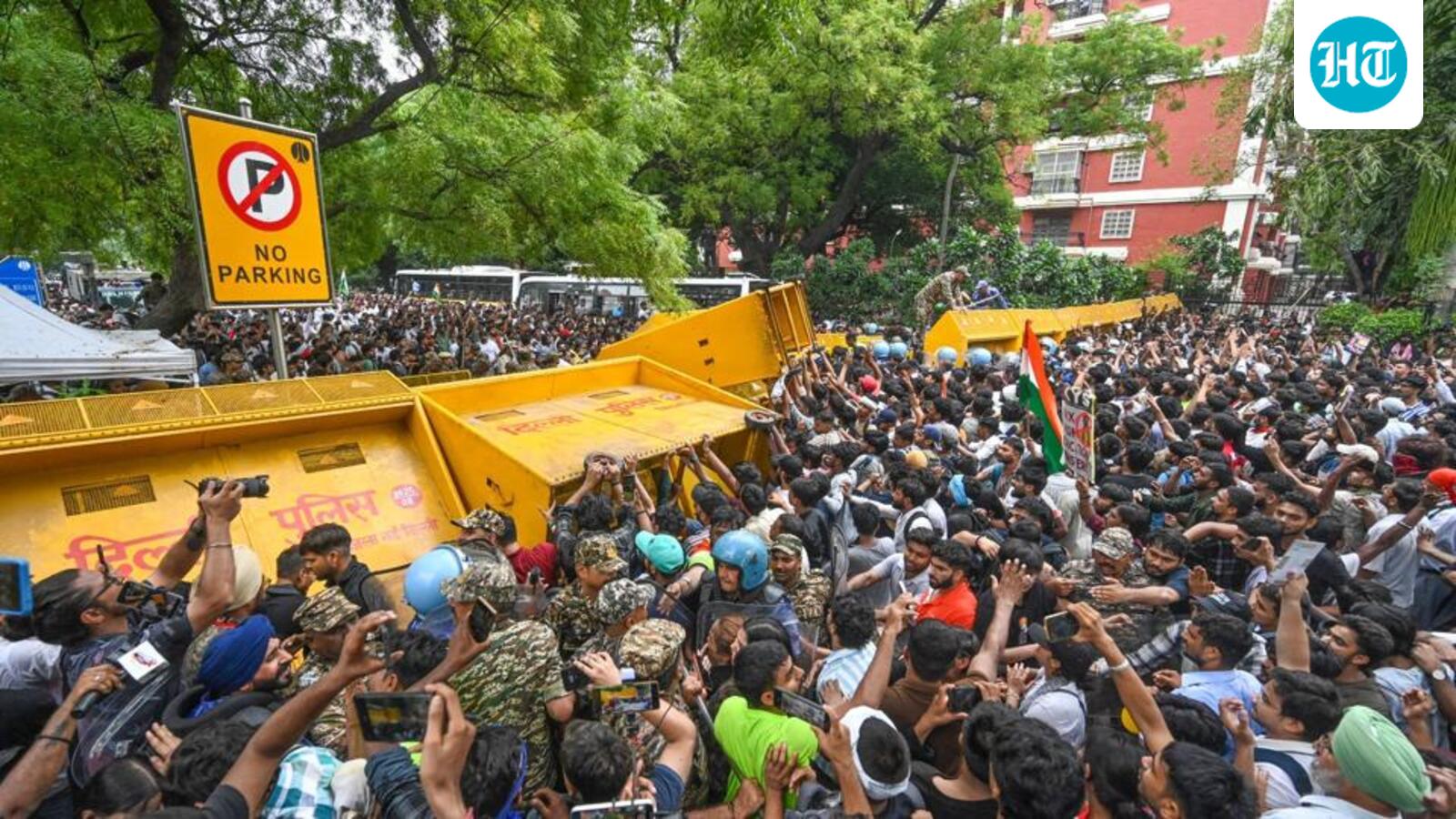
The Delhi High Court dismissed a petition filed by Naresh, who said he was linked to the media community, on Wednesday. Naresh had sought a fact‑finding inquiry into conflicting accounts of the use of lathis by Delhi police during the Cockroach Janta Party (CJP) student protest that marched toward Parliament. He alleged that a police statement posted on social media denied the use of lathis, while media reports claimed force had been used. After approaching the police for clarification and receiving no response, Naresh asked the court to direct the police to reply to his representation.
A bench comprising Chief Justice D.K. Upadhyaya and Justice Tejas Karia ruled that a public interest litigation (PIL) is not meant to adjudicate disputes arising from conflicting versions of events and that the petition did not involve any public interest. The bench noted that petitions filed on matters that merely echo headlines should not be treated as matters of accountability or transparency in isolation.
The CJP organized a “Sansad Chalo” march on July 20 after a three‑week hunger strike at Jantar Mantar. Thousands of demonstrators marched from Jantar Mantar toward Parliament demanding the resignation of the Prime Minister over alleged examination paper leaks, accountability for student suicides linked to the issue, and reforms in the examination system. As the protest reached central Delhi, police halted the march with barricades. A large group later breached the barricades and advanced toward the Parliament complex, prompting security personnel to fire tear gas shells and conduct a lathi‑charge to disperse the crowd. Social media videos showed several protesters, many unarmed, being beaten by police in riot gear, some sustaining head injuries. Police maintained that the crowd had turned violent and that protesters had pelted stones at security personnel, necessitating the use of force.
On August 18, the Supreme Court constituted a five‑member High‑Powered Enquiry Committee (HPEC) headed by former Supreme Court judge R. Subhash Reddy to examine the competing allegations from the protest. On September 10, the Supreme Court directed the HPEC to begin its probe into the July protests, focusing on the use of pellet guns, targeted violence, and harassment of police personnel, while reserving broader constitutional questions for the court itself.