Business & Finance
Adani Ports Reports 19% Cargo Growth in August, Expands International Footprint
By mint
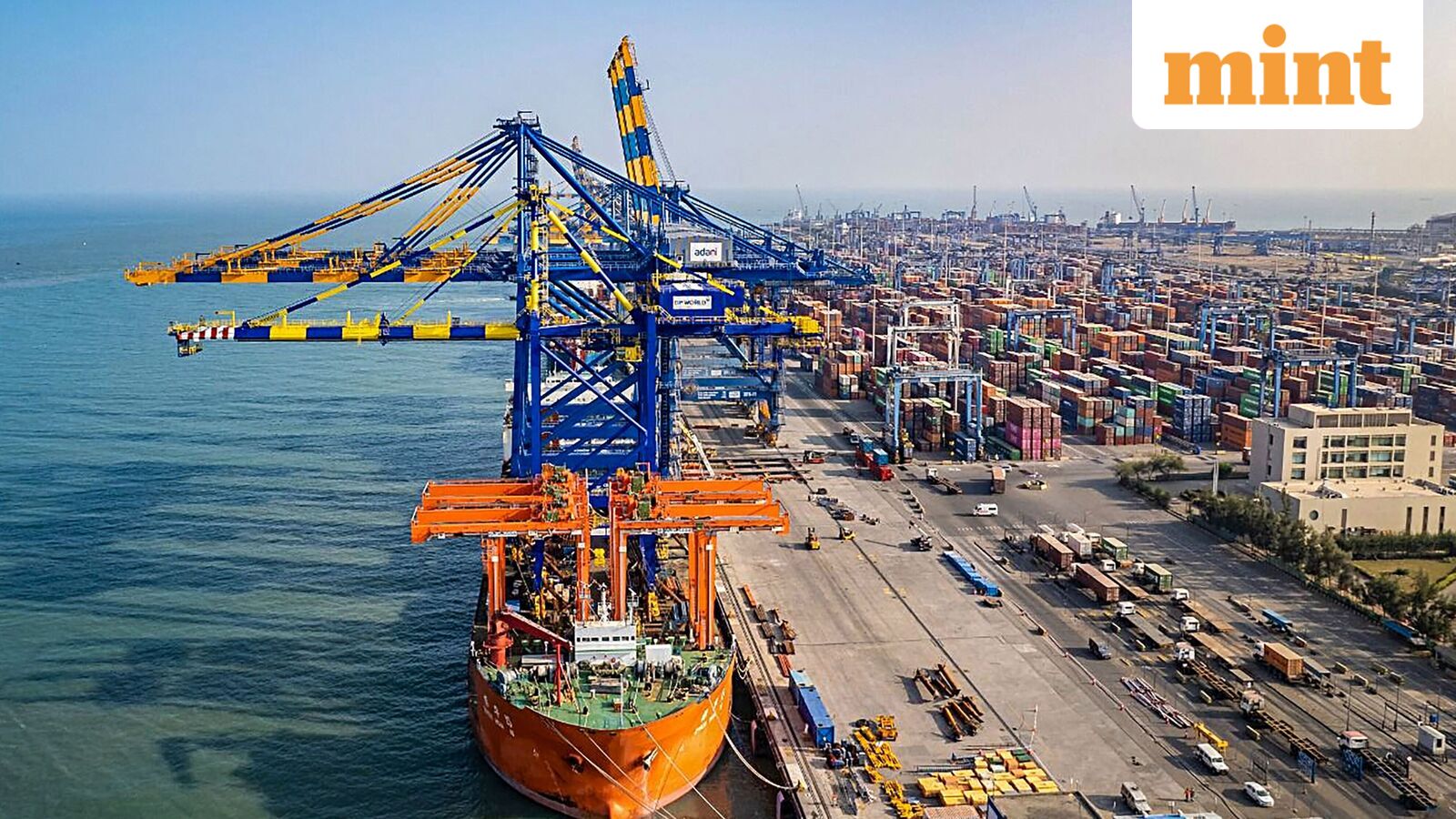
Adani Ports and Special Economic Zone Ltd released its business update for August, showing cargo volumes across its ports rising 19% year-on-year to 50 million tonnes. This brings growth for the first two months of the September quarter (Q2FY27) to more than 18%, up from 14.5% recorded in Q1FY27. Despite disruptions caused by the West Asia conflict, volumes remained relatively healthy, suggesting growth could strengthen further during the seasonally stronger second half of the year.
The August figures include contributions from the North Queensland Export Terminal (NQXT) in Australia, which Adani Ports acquired in December. According to JM Financial Institutional Securities, assuming a quarterly run rate of 10-11 million tonnes for NQXT similar to past trends, August volumes excluding NQXT stood at 46 million tonnes, marking a 10.5% year-on-year increase compared with an estimated 7% growth in July. This points to a possible improvement in underlying volume growth, especially since Q1FY27 volumes excluding NQXT had grown only 6.2%.
For the first five months of FY27, total cargo volumes rose 16% to 234 million tonnes, slightly above the 15% compound annual growth rate the company needs to sustain through FY26-31 to meet its target of handling 1 billion tonnes of cargo by FY31.
However, the company's logistics segment continues to underperform, with rail container volumes falling about 11% so far in Q2FY27, following a 19% decline in Q1. Despite contributing 11% of revenue in Q1, logistics accounted for just 3.3% of EBITDA, indicating the company may be shifting focus toward more profitable business segments.
Adani Ports posted a strong start to FY27, with consolidated EBITDA rising 19% year-on-year to ₹6,540 crore in Q1. This growth rate exceeds the 14% pace needed to meet the upper end of its FY27 EBITDA guidance of ₹25,000-26,000 crore, suggesting the company could surpass its own targets for the year.
The company has also ramped up its international expansion. Overseas operations accounted for 17% of total volumes in Q1FY27, up sharply from 6% a year earlier. While volumes at Haifa port in Israel fell 24% due to the West Asia war, total international volumes tripled overall, driven by the consolidation of NQXT and the ramp-up of Colombo port, which began operations in April 2025.
In a further sign of global expansion plans, Adani Ports incorporated a subsidiary in Saudi Arabia on 31 August, which may signal a future acquisition in the region. During the company's Q1 earnings call, management stated it was "studying a lot of assets around the world" as it plans its next phase of international growth.
Adani Ports' shares have risen about 15% so far in 2026 and currently trade at an enterprise value of 17.1 times estimated FY27 EBITDA, according to Bloomberg data. JP Morgan India maintains an 'overweight' rating on the stock, citing the company's first-mover advantage, scale, wide geographical presence, operational efficiency, and strong customer relationships within India's port sector.
However, the brokerage also flagged risks to its rating and target price, including a potential unexpected rise in related-party transactions and outstanding balances, as well as broader risks tied to adverse regulatory or legal developments concerning the Adani Group and its promoter entities.