Business & Finance
Crude Prices Climb to Six-Week Highs as US-Iran Confrontation Deepens
By Justina Lee
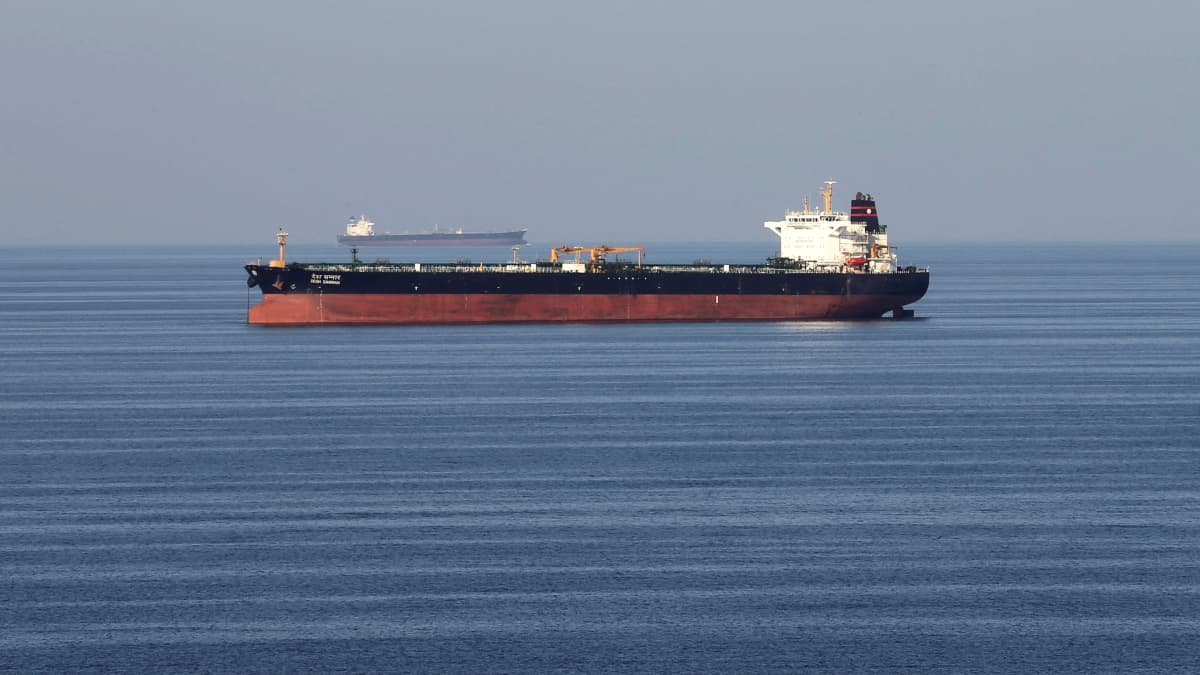
Oil prices rose further on Tuesday, reaching their highest levels in six weeks as fears grew over an intensifying conflict in the Middle East following weekend military exchanges between the United States and Iran. Brent crude futures for November delivery rose 1.1% to $97.00 a barrel, while U.S. West Texas Intermediate futures for October climbed 2.1% to $93.43 a barrel.
The price increases followed a U.S. military strike on three Iranian oil tankers on Saturday, carried out after Iran launched ballistic missiles at two U.S. Navy warships. Iran's Foreign Ministry condemned the strikes on the commercial vessels as a "war crime" and an act of "economic warfare."
David Morrison, senior market analyst at Trade Nation, described the exchange as a significant escalation, noting that tensions had risen sharply again. He also pointed to comments from U.S. Energy Secretary Chris Wright, who suggested it may no longer be possible to negotiate an agreement with Iran to prevent it from acquiring a nuclear weapon.
The weekend clashes also drove gasoline prices to record highs. Rhetoric between Washington and Tehran continued to escalate this week. Iranian Parliament Speaker Mohammad Bagher Ghalibaf warned on social media platform X on Monday, "Strike our assets and you get struck," responding to a statement from U.S. Defense Secretary Pete Hegseth, who said the United States would "destroy (and sink)" Iranian oil tankers if Iran attacked American vessels.
In response to the rising uncertainty, Goldman Sachs raised its oil price forecasts on Monday. The bank now projects Brent and WTI prices to reach $85 and $80 per barrel, respectively, by December 2026, and $80 and $75 per barrel, respectively, in 2027. Goldman said it expects shipping disruptions in the Middle East to persist into 2027, with production levels only recovering gradually by the latter half of that year.
The bank noted that markets are increasingly factoring in the possibility of a prolonged Middle East conflict, citing that tanker rates for routes from the Persian Gulf to China in the second quarter of 2027 already reflect expectations of continued disruptions during that period.
President Donald Trump commented on the situation Monday, stating that oil prices would drop sharply once the United States "wins the war with Iran."