World
Explaining How Sara Duterte Posted Bail on a Saturday Without a Mugshot
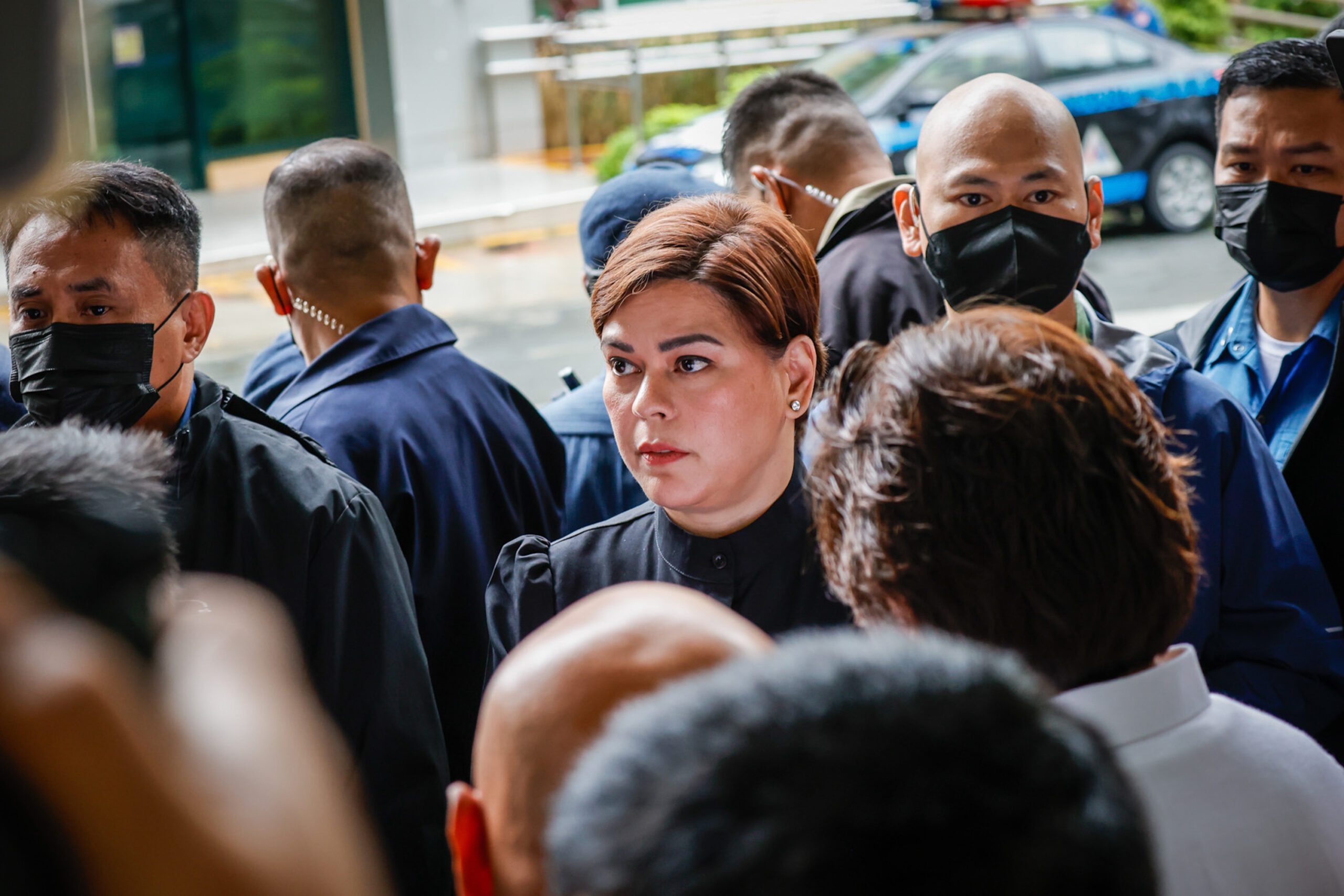
Vice President Sara Duterte posted bail on September 5, 2026, a Saturday, after being indicted on three counts of grave threats against President Ferdinand Marcos Jr. Bail was set at P120,000 for each count. The case stems from an alleged assassination threat Duterte made against Marcos and his family during a midnight press conference in 2024.
The Department of Justice indicted Duterte in August, while her impeachment trial was ongoing. On September 4, the Quezon City Regional Trial Court Branch 98 ordered her arrest and set the bail amount, though Duterte and her lawyers did not appear in court that day. She posted bail the following day.
Questions arose over how Duterte was able to post bail on a weekend. According to the Supreme Court, courts operate during nights and on Saturdays specifically to process bail applications. Night courts handle urgent matters such as bail petitions from nighttime arrests, while the Office of the Court Administrator's Circular No. 30, series of 2023, confirms that select courts remain open on weekends for this purpose.
Former court administrator and now Associate Justice Raul Villanueva stated that no person detained over a weekend, when government offices are closed, should be forced to endure prolonged detention as a result. The Supreme Court reinforced this position in the Rodriguez v. Hon. Noel Jr. case, noting that no law or rule prevents an executive judge from acting on bail applications during weekends.
Sources familiar with court operations said a single judge is typically assigned each Saturday, generally from 8 a.m. to 1 p.m., to process bail applications and sign release orders once bail has been posted. The Office of the Executive Judge publishes the list of judges assigned to specific dates. In Duterte's case, the judge on duty September 5 handled her bail application and signed her release order — a different judge from Presiding Judge Ma. Angelica de Ramos, who is overseeing the grave threats case.
Regarding the absence of a mugshot, Department of the Interior and Local Government Secretary Juanito Victor Remulla said Duterte was treated with the respect due her position. He confirmed that authorities knew of her whereabouts the night before her bail posting but chose not to enforce the arrest warrant, telling Rappler on Saturday, "We knew of her whereabouts the night before but we did not force the warrant of arrest."
This allowed Duterte to surrender voluntarily to the court's jurisdiction rather than being arrested — a distinction that matters legally, since voluntary surrender can serve as a mitigating circumstance in sentencing. Surrendering directly to a court, rather than to police, can also mean the accused avoids having a mugshot taken, since police typically take such photos only for those arrested or surrendered to police custody.
Duterte still underwent standard court booking procedures, including fingerprinting, but no mugshot was taken because she reported directly to the court. Her lawyer, Paul Lawrence Lim, said the Vice President's own photographs were submitted to the court in place of mugshots, a practice allowed under OCA Circular No. 204, series of 2022. The circular requires the accused to submit four sets of recently taken black-and-white 2x2 photographs showing the front, left, and right profiles, to be attached to all copies of the corresponding bail bond.