Entertainment
New Nathan Fielder Documentary Revisits Elizabeth Holmes' Fall From Theranos to Prison
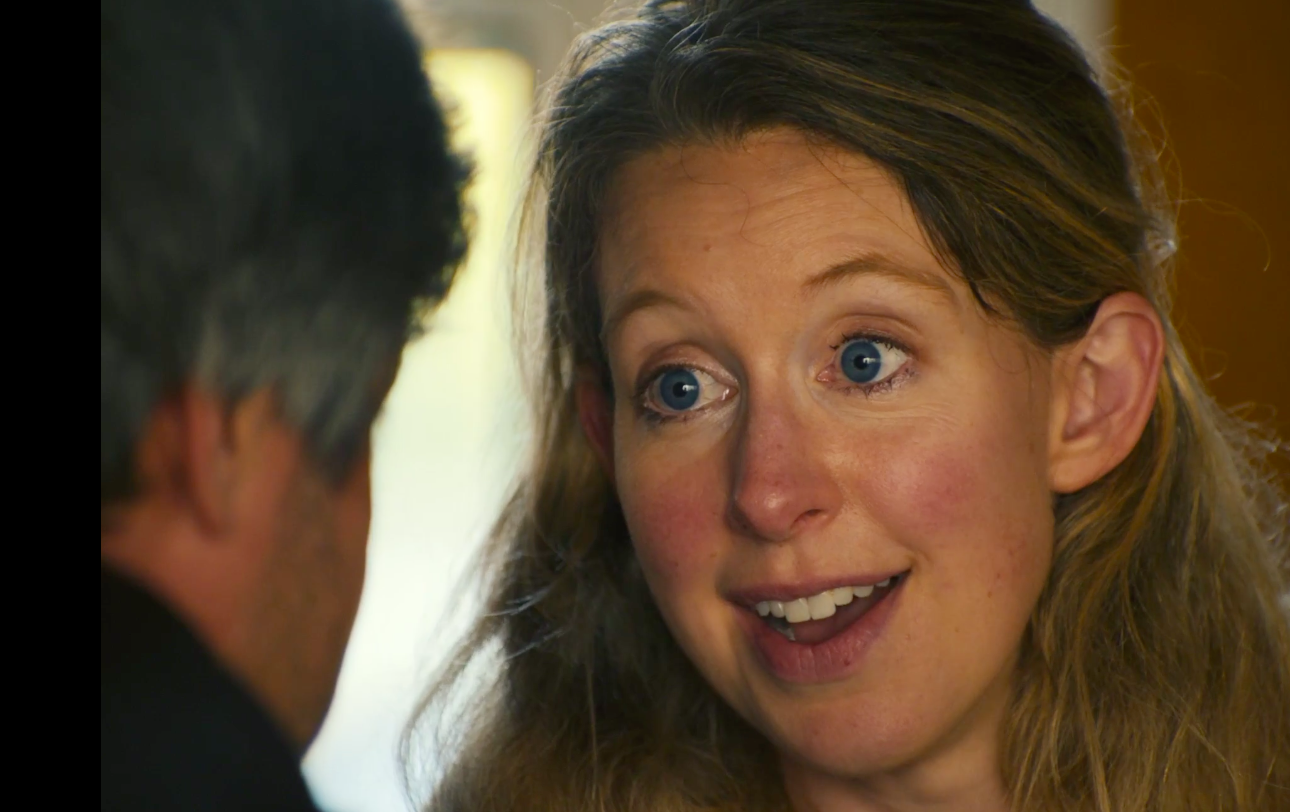
Elizabeth Holmes, the disgraced founder of failed blood-testing startup Theranos, is the subject of a new documentary from filmmakers Nathan Fielder and Lance Oppenheim titled You Can See Everything. The project was largely kept secret before making a surprise debut at the 2026 Telluride Film Festival, with distributor A24 releasing a teaser trailer and confirming a theatrical release for October 2026. According to reports, filming began just 34 days before Holmes was due to report to prison and grew into a three-year endeavor. The teaser shows Fielder speaking directly with Holmes, establishing an unusual dynamic between filmmaker and subject. Before the film's release, here is a look back at Holmes' rise and fall. Holmes was born on February 3, 1984, in Washington, D.C., and later studied chemical engineering at Stanford University. In 2003, at age 19, she dropped out after filing a patent for a wearable drug-delivery patch. Using her tuition money, she founded a company originally named Real-Time Cures, later renamed Theranos, a blend of 'therapy' and 'diagnosis.' Holmes claimed the company had developed technology capable of running hundreds of medical tests from just a few drops of blood taken via finger prick, promising faster, cheaper and more accessible testing. The company attracted significant investment, raising more than $92 million in venture capital by the end of 2010 and nearly $945 million over its lifetime. Backers included Oracle founder Larry Ellison, media executive Rupert Murdoch and members of the Walton family. Holmes cultivated a public persona reminiscent of Steve Jobs, often wearing black turtlenecks, and built a board that included former U.S. Secretary of State George Shultz. In 2014, Forbes named her the world's youngest self-made female billionaire, estimating her net worth at $4.5 billion, while Theranos was valued at roughly $9 billion at its peak. However, investigations later revealed that Theranos relied on modified commercial analyzers for many patient tests rather than its own proprietary technology, which produced unreliable results. This revelation raised concerns that Holmes and the company had misled investors, partners and patients. In 2018, the Securities and Exchange Commission charged Holmes, Theranos and former company president Ramesh 'Sunny' Balwani with fraud. Holmes settled with the SEC, agreeing to pay a $500,000 penalty, return millions of shares, relinquish voting control and accept a 10-year ban from serving as an officer or director of a public company. Theranos was dissolved in September 2018. Criminal charges followed, with prosecutors alleging Holmes misrepresented the company's technology and finances to secure investment while concealing its shortcomings. Her trial began on August 31, 2021, and she testified in her own defense, maintaining she believed her statements about Theranos were accurate at the time. On January 3, 2022, a jury convicted her on four counts of wire fraud and conspiracy related to defrauding investors, while acquitting her on four counts tied to defrauding patients; the jury deadlocked on three other counts. In November 2022, U.S. District Judge Edward Davila sentenced Holmes to 135 months, or 11 years and three months, in federal prison, plus three years of supervised release. She reported to Federal Prison Camp Bryan in Texas on May 30, 2023. Balwani, who was tried separately, was convicted on all 12 counts and sentenced to nearly 13 years in prison. Both were ordered to pay about $452 million in restitution to victims. Holmes remains incarcerated in Texas. In 2025, an appeals court upheld her conviction and sentence. In 2026, she sought a commutation of her sentence from President Donald Trump, a request that reportedly remains pending; without it, she is not eligible for release until December 2031. You Can See Everything focuses on this later period of Holmes' life, following her after Theranos' collapse and as she confronted the consequences of her conviction. Per its premise, Holmes invited a skeptical film crew into her life 34 days before entering prison, and the project expanded into a three-year documentary. The teaser suggests the film will explore the relationship between Holmes and the camera rather than simply retelling the Theranos scandal, with Fielder questioning her sincerity in one exchange. Fielder, known for Nathan for You and The Rehearsal, frequently examines themes of performance and the blurred line between authenticity and constructed image. While the Theranos saga has already been covered in books, podcasts and scripted adaptations such as Hulu's The Dropout, You Can See Everything is distinguished by its direct access to Holmes over several years, resulting in a reported 174-minute film that also examines her family and life after conviction. The documentary premiered unexpectedly at the 2026 Telluride Film Festival and is set for theatrical release through A24 in October 2026.